Best Hiking Gear for Iceland and What to Pack by Season
All the important information to help you choose the right hiking gear for Icelandic terrain, from boots to hats — plus the packing list, adapted per season.
Iceland is a country that punishes the wrong gear quickly. The good news is that the right kit isn't complicated — once you nail the footwear and the layering system, everything else falls into line.
The single decision that matters most are the boots.
Let’s start with what works on which terrain, what changes month to month, and the river-ford problem that catches first-time visitors.
Under that, we have prepared the full packing list, organized by season, so you can build your kit from the bottom up.
A Quick Rule of Thumb
If you're flying in for a summer hut-to-hut trek and only have the time and necessary gear to optimize three things, optimize the boots, the hard shell, and the sleeping bag. Everything else can be substituted, layered, or topped up at the gear shops in Reykjavík. Those three are what actually ruins trips when they fail.
For a deeper read on seasonal specifics — and which routes are open in which months — see our guide to the best time to hike in Iceland.
If you're looking for more detailed recommendations and information on weather, you can find them in our monthly guides covering the season from May to September in detail.
The Three Core Pieces
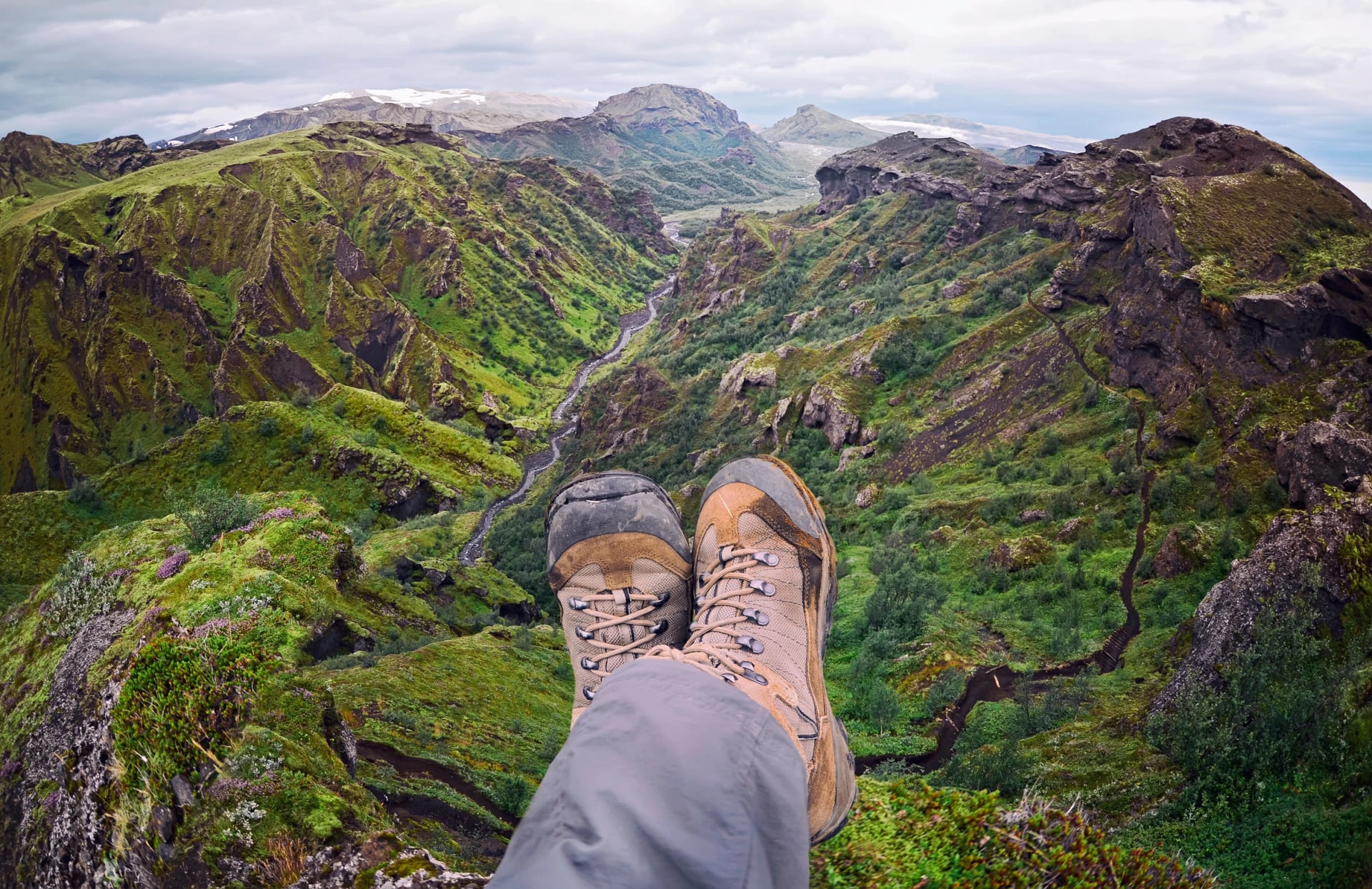
Hiking boots
Iceland's terrain is more punishing than people expect — sharp hardened lava, loose volcanic gravel, peat bog, river fords, late-season snow patches. Unlike some clothing, you can't fix bad boots mid-trip with a layer adjustment. Outdoor gear shops in Reykjavík can sell you clothing for your trek, but they can't break in a new pair of boots in a day.
What to look for:
Membrane
Gore-Tex (GTX) or a 3-layer equivalent. 2.5-layer fabrics are lighter and cheaper but wet through faster — fine for a day hike, not for a 4-day trek.
Upper
Full-grain leather, hybrid leather-synthetic, or technical synthetic. Leather lasts longer and stays warmer when wet; synthetic dries faster and breaks in quicker. Either works for Iceland; the difference is feel and lifespan.
Cuff height
Preferably above the ankle bone, with a padded collar that cinches down. More experienced hikers may find lower-cut shoes sufficient — easier to dry, lighter on the foot — a lower cut lets gravel in and offers less ankle support, especially under a loaded pack on uneven ground.
Sole stiffness
Try to bend the boot in your hands. If the sole flexes easily, the boot is too soft for Icelandic terrain. Look for "stiff" or semi-rigid in the description. Seek a B0 or B1 rating if it's listed.
Lug pattern
Vibram or equivalent rubber, aggressive 4–6 mm lugs. Smooth or shallow soles slide on wet basalt and peat.
Weight
Roughly 1,200–1,800 g per pair (men's), proportionally less for women's. Lighter and you're in trail-runner territory; heavier and it's a mountaineering boot, more than you need.
Fit
Try them on with the socks you'll actually hike in. Heel locked, toes free, no pressure points after 20–30 minutes of walking. Boots loosen slightly with wear; pressure points get worse, not better.
Any boot in that class — broken in — will get you across the Laugavegur in good order.
How to search: "Mid-weight waterproof trekking boot," "Gore-Tex backpacking boot," or "B1 hiking boot" all land you in the right shelf. On major outdoor retailers a good filter combination is trekking or backpacking + waterproof + mid- or high-cut. Shoes filed under trail running, approach, or day-hiking can be too soft.
By terrain
Highland multi-day hut treks (Laugavegur, Strútsstígur, Lónsöræfi, Víknaslóðir, Hornstrandir): mid-weight to heavy waterproof boot, leather or hybrid, full ankle cuff, stiff sole.
Volcanic and lava terrain (Fimmvörðuháls, Reykjanes, Eldhraun): stiff Vibram-style sole. Soft trail runners can shred their tread visibly inside a day on aggressive lava.
Lowland day hikes (Reykjadalur, Glymur, Esja, Skaftafell–Svartifoss, Hverfjall): trail runners or light hiking shoes are fine and sometimes preferable. Salomon X Ultra, Hoka Speedgoat, Altra Lone Peak, Merrell Moab.
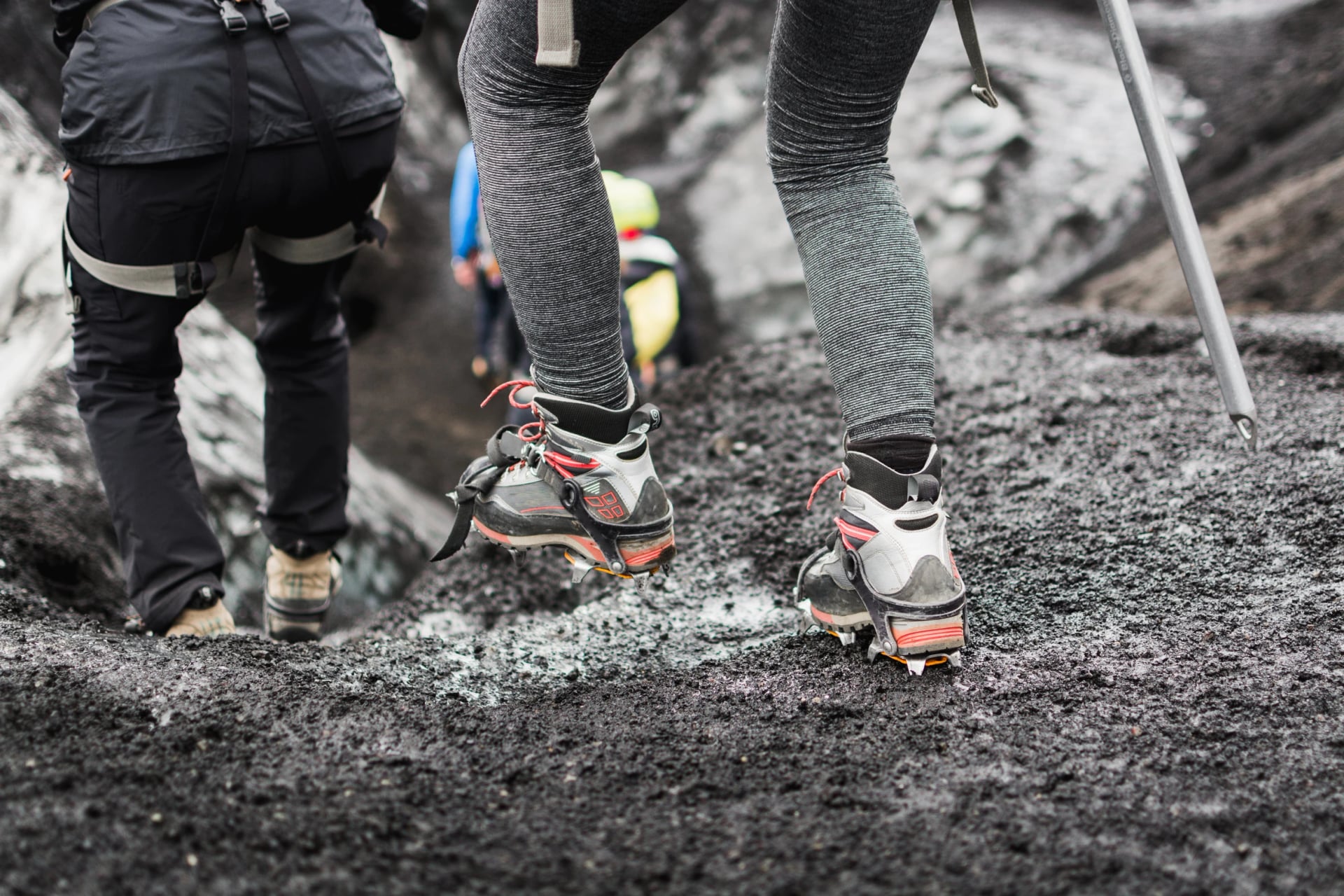
Glacier walks: stiff B1- or B2-rated mountaineering boots if you're using crampons. Most glacier tour operators supply these, so check with them before buying.
Coastal / Westfjords / Hornstrandir (deep tussock, peat bog): waterproof boots, full ankle cuff. Gaiters are common even in mid-summer.
By season
May and June ask for waterproof leather and microspikes if you're crossing high passes early in the month.
July and August forgive almost anything mid-weight and waterproof.
September puts gaiters back on the list.
October through April closes the highlands and asks for insulated boots, microspikes, and serious cold-weather competence.
Common mistakes
Brand-new boots on day one
Trail runners on lava
Cotton socks
Too few socks (one pair per day plus a spare — five pairs for a 4-day Laugavegur)
Fording in boots
The river-fording problem
This is the biggest mistake first-time visitors make: they ford glacial rivers in their hiking boots, hoping the waterproofing will hold. It won't. The Laugavegur fords are knee-deep, sometimes thigh-deep in high water, fast-moving, and cold enough to numb your legs in seconds. Boots fill from the top. Then you're walking the rest of the day in waterlogged boots and trying to dry them in a hut without a heat source strong enough to do it overnight.
The fix: carry good water shoes or 3 mm neoprene socks, and ford in those. Boots stay dry, off your feet, in your hand. Re-shoe on the far bank.
Hard shell jacket and pants
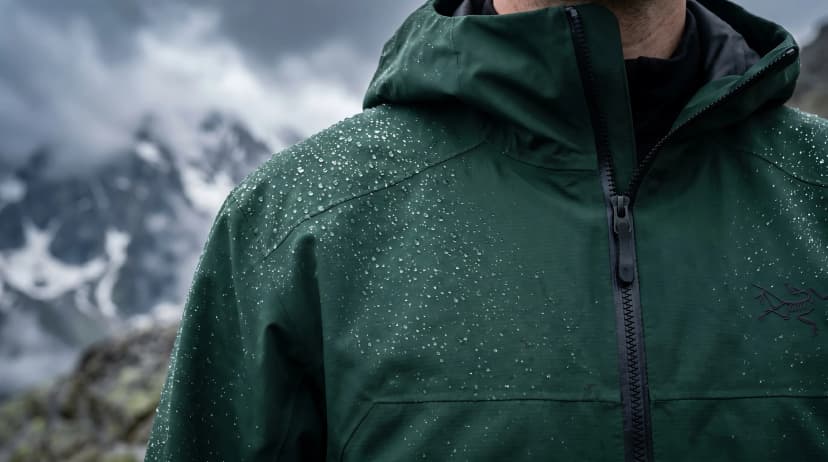
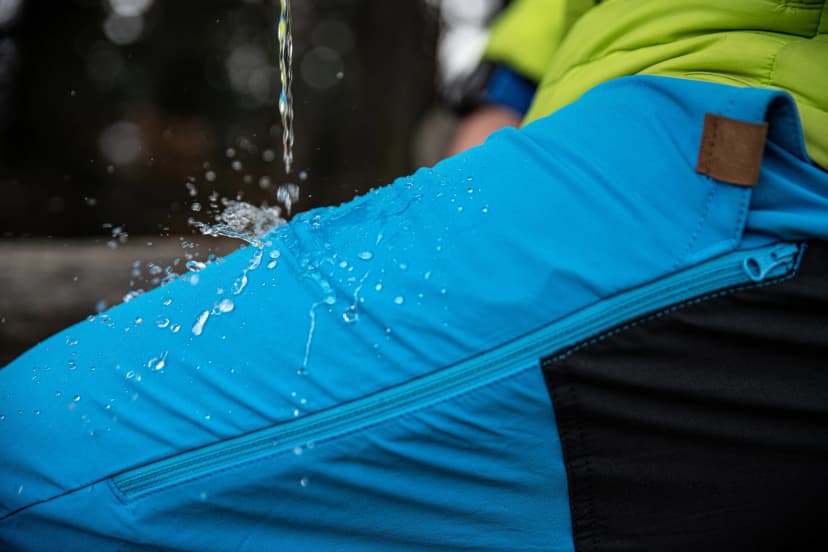
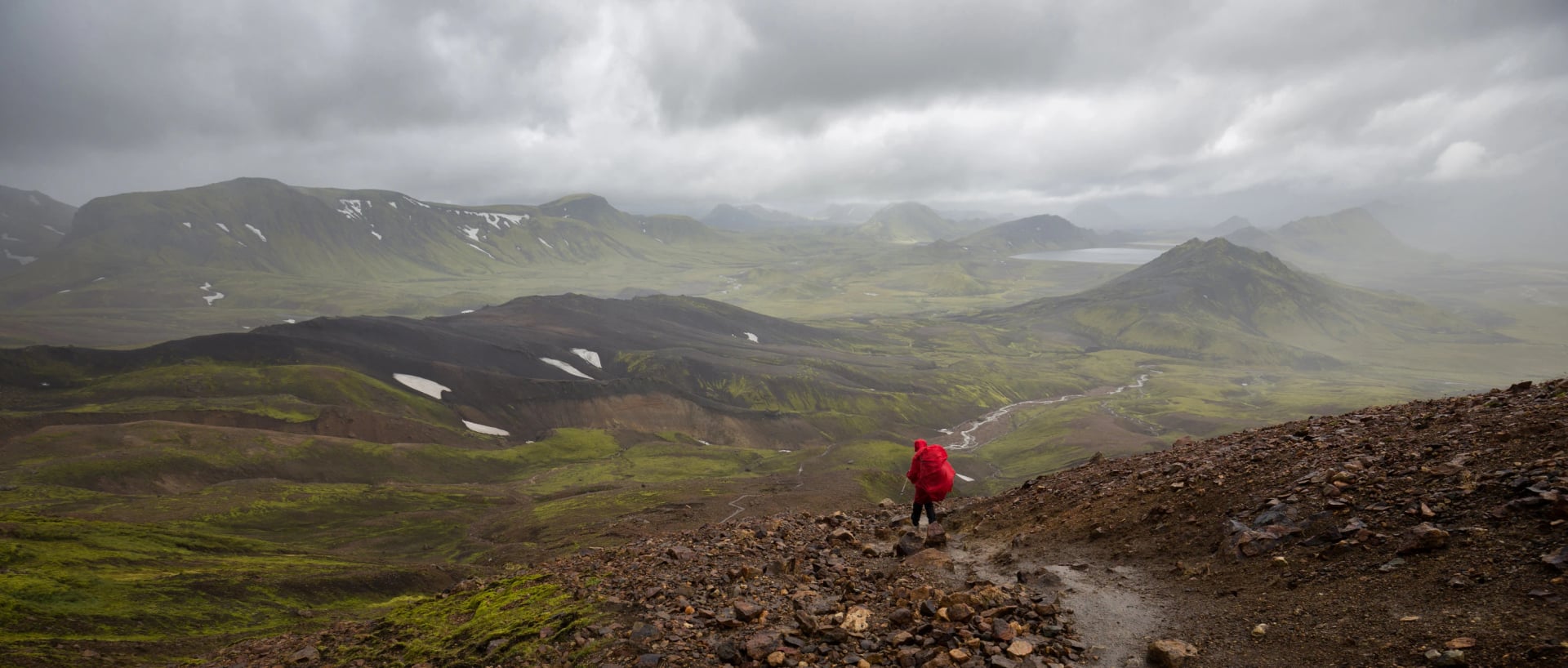
The reason a hard shell matters in Iceland more than it does in most countries: the rain comes sideways. Even a well-rated waterproof from a temperate climate can leak at the seams or push water through a hood that doesn't cinch tight. The shell is the one piece between you and a 60 km/h horizontal squall.
What to look for:
Membrane
Gore-Tex Pro or a 3-layer equivalent. 2.5-layer fabrics are lighter and cheaper but wet through faster.
Hood
Helmet-compatible cut, wired brim, a proper cinch system. A hood that flaps in the wind is useless.
Zippers
Waterproof, with storm flaps. Pit zips are valuable on warm climbs.
Cuffs
Velcro-adjustable. The wind drives water up your sleeves otherwise.
Hard shell pants are often skipped and often regretted. On the Laugavegur, your hiking pants will soak through in horizontal rain inside an hour. Full-zip pants you can pull on over boots without taking them off are worth the extra weight.
Common mistakes:
"Water-resistant" isn't waterproof — PU-coated softshells are not enough.
Skipping rain pants on multi-day.
A jacket without a proper cinching hood.
Storing the shell at the bottom of the pack.
Sleeping bag
If you're doing the Laugavegur, Víknaslóðir, Strútsstígur, or any multi-day FÍ hut route, the sleeping bag is your third make-or-break piece. The huts provide mattresses but no bedding. The temperature inside swings — heated when crowded, cold and drafty when empty or when wind drives through ventilation gaps.
Temperature rating
Look at the Comfort rating, not the Limit or Extreme temperature. For Iceland's mountain huts, aim for around 0°C Comfort.
Down vs synthetic
Synthetic wins for Iceland. Down has a better warmth-to-weight ratio but loses loft when wet, and Icelandic humidity is constant. If you're carrying a down bag, you need an absolutely reliable dry-bag system around it.
Liner
Useful for hygiene and for adding 3–5 °C of warmth, but not a substitute for a real bag. A liner alone in an FÍ hut is risky — the hut can be t-shirt-warm at 9 pm and 5 °C by 4 am if the wind shifts and the hut empties.
Pillow
Most people use a stuff sack of clothes. An inflatable camp pillow weighs ~80 g and makes a real difference if you're a side-sleeper.
How to Layer for Iceland
You don't bring more clothes for Iceland. You bring better-organized layers. The same five-piece system covers the whole summer-into-shoulder range — you just dial weight and warmth up or down.
The Full Packing List
With footwear sorted, the rest is the layering system, the accessories, and the season-specific extras. The principles are the same regardless of route — the only thing that changes meaningfully across summer, shoulder, and winter is the weight and warmth of the layers, not the structure.
Basics
Bottoms
Hiking pants — synthetic, quick-dry. Convertible zip-off pants are useful in summer. No denim.
Wool or synthetic socks. One pair per hiking day, plus a spare, plus a thicker pair for hut nights.
Accessories
Buff or neck gaiter — multi-purpose: face cover for wind, sun shield, hat substitute.
Beanie — useful in every season, including July evenings.
Gloves — light pair always; warmer pair for shoulder and winter.
Sunglasses — Iceland's summer light is bright and reflects off snow patches and water. UV is high.
Sun hat (or use the buff stretched).
Gear
Backpack with rain cover, or a pack liner inside. The rain cover alone usually fails in Icelandic wind; a liner inside the pack is more reliable.
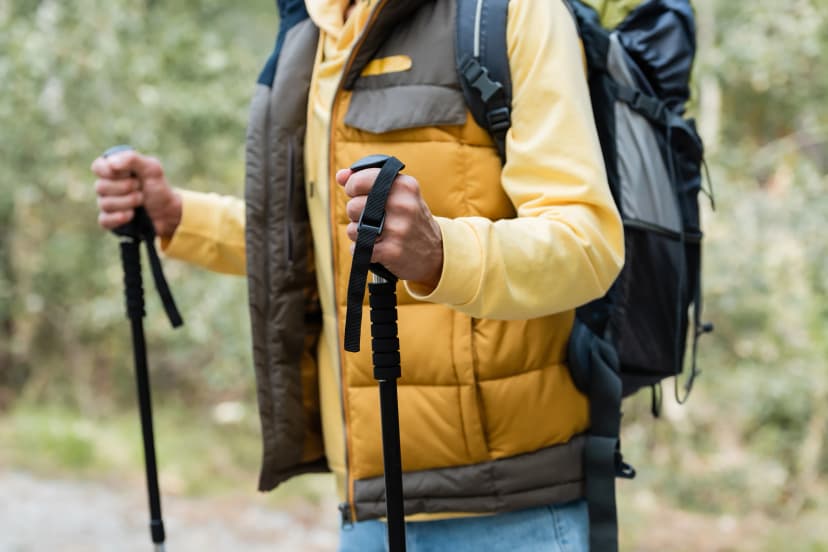
Trekking poles. Highly recommended for highland river fords and steep volcanic-gravel descents. Aluminum beats carbon for fords (carbon snaps when pushed sideways against current).
Water capacity of 1–2 L. Most highland routes have reliable streams, but verify the source — glacial silt is fine; geothermal water is not safe to drink.
Headlamp. Less critical in midsummer (24-hour light), essential for shoulder months and winter.
First aid kit. Blister care, painkillers, plasters, tape, antiseptic.
Season-specific extras
Summer-specific extras (June–August)
Sleep mask for hut nights or camping (24-hour daylight is a real sleep problem).
Bug net for the Mývatn area on calm windless days. Genuinely necessary in late June and July around the lake.
Sunscreen. UV is higher than people expect, especially with snow reflection in early summer.
Shoulder-season additions (May, September, early October)
Glove liners — you'll often want them under the lighter glove.
Warmer beanie (wool over thin synthetic).
Heavier puffy layer — synthetic preferred for the wet.
Microspikes for any highland route.
Aurora layers. If you're chasing northern lights, you'll be standing still outside in the cold for an hour at a time. That needs a warmer static-warmth setup than your hiking layers.
Winter additions (October–April)
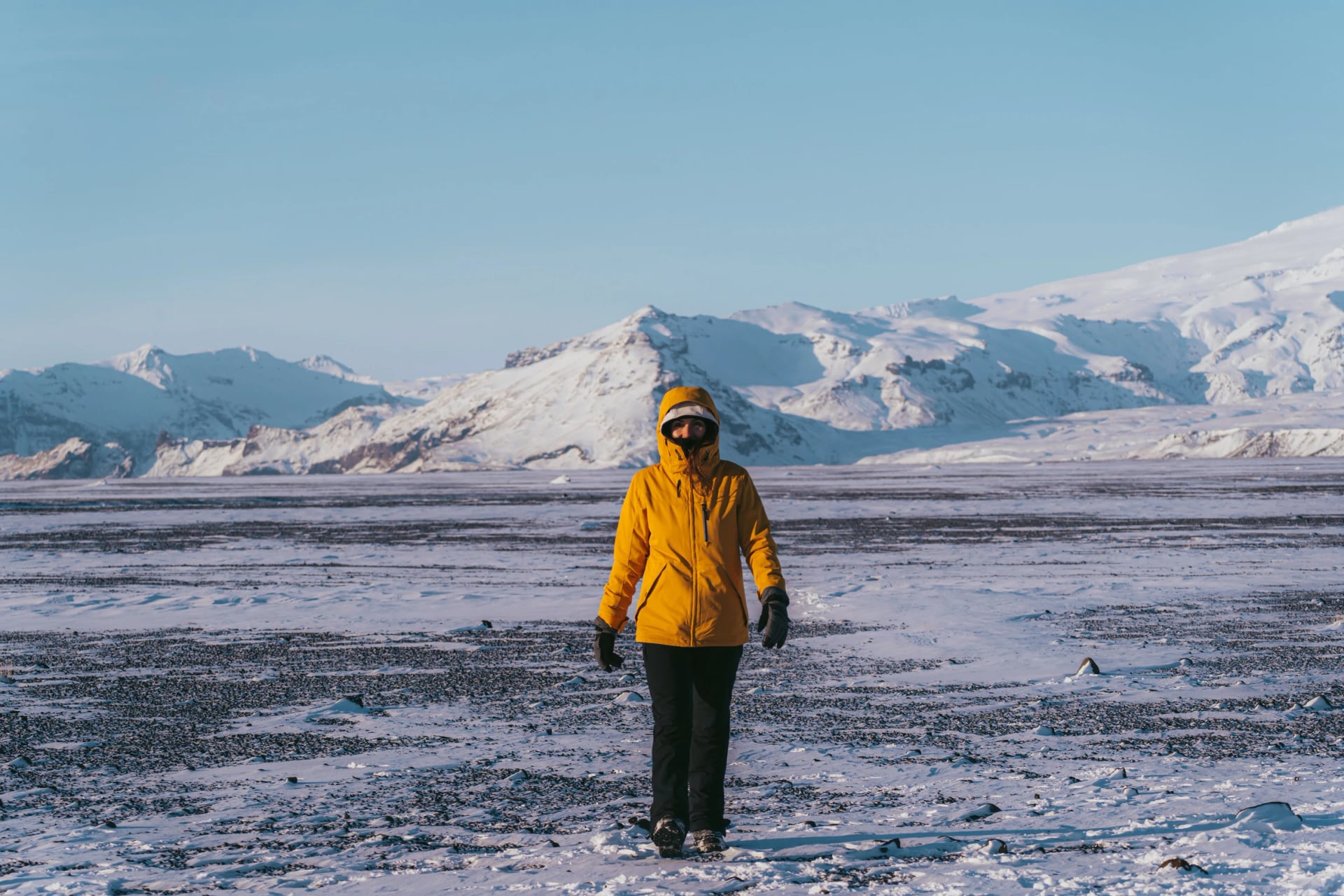
True insulated parka — your summer puffy isn't enough.
Insulated pants or thermal pant liners under hard shells.
Mountaineering gloves with shell.
Microspikes minimum; crampons and ice axe for any steep terrain.
Ski goggles — windblown snow blinds.
Balaclava.
Hut-specific extras
The huts on the Laugavegur and similar routes provide a mattress and a roof. They don't provide bedding, towels, soap, or food (except where pre-arranged with a guided trip).
Sleeping bag rated to about 0 °C. Huts provide mattresses but no bedding; the interior is heated and gets warm when crowded, but loses heat fast if windows open or the hut runs empty — risky for a liner alone.
Sleeping bag liner — useful but not a substitute for a proper bag.
Hut shoes. Boots stay outside or in the boot room. Crocs, light slippers, or down booties.
Earplugs. Forty-plus people in one room. Worth it.
Quick-dry towel.
Small bottle of soap or biodegradable wash.
Cash — some remote huts and ferries don't process cards reliably.
Headtorch for the bathroom in the night.
Food and cooking
Stove and fuel. Gas canisters can't be flown — buy in Reykjavík (or Akureyri and Egilsstaðir on the way). Most outdoor shops stock them.
Lightweight meals. Freeze-dried or DIY.
Snacks. Plan generously — calories burn faster in cold and wet. Aim for ~3,500 kcal/day on highland multi-day.
What you don't need
An umbrella. It will become a weapon in the wind.
Cotton anything.
Bear spray. No bears, no large predators. The arctic fox is the most aggressive land animal you'll meet, and it weighs three kilograms.
Heavy printed maps. Offline GPS is more reliable.
Brand-new boots.
Final Notes
The kit list looks long until you notice most of it is variations of the same layering system. Get the three make-or-break pieces right — boots broken in, shell tested in real rain, bag rated for the route — and everything else is a breeze, or a piece of gear to rent after landing.
Iceland punishes the wrong gear quickly, but choosing the right gear is straightforward. Pack honestly for the conditions you'll actually meet, not the ones you'd prefer. You can see recommended gear for each trail on our respective tour pages.
If you'd rather hand off the planning once the kit is sorted, browse our self-guided hut-to-hut tours in Iceland — same packing list, but all the other logistics handled.
Have more questions about conditions to expect on the trails included in our offer? Get in touch with our agent.


HASSLE FREE
We handle itineraries, accommodations, and anything else you prefer not to deal with, so you can enjoy a carefree hike.

BOOK WITH CONFIDENCE
We are a financially protected company, fully bonded and insured, keeping your money safe and allowing you to travel with confidence.

TRIED & TESTED ADVENTURES
Only the best hut to hut hikes in the USA, cherry-picked by our local team with an in-depth knowledge of the region.

UNBEATABLE SUPPORT
Our 24/7 customer support is where we show our passion, bringing you a better experience by making your well-being our number one priority.