Best Time to Hike in Iceland
Time your adventure right with our month-by-month guide, covering seasonal highlights, weather, and hiking conditions.
Don't want to read all this?
We've planned 2,000+ hiking trips. Send your dates, fitness and group size — we'll map the route and book every night.



While Iceland’s beauty is remarkable any time of the year, summer is the prime season for outdoor activities.
Late June to early September marks the main hiking season.
Best overall: August
Best for multi-day highland treks: July and August
Best for fewer crowds: May, early June, and September
Best for day hikes and coastal routes: May to September
What Makes Summer Best for Hiking?
Stable weather conditions
Huts opening
No need to worry about road closures
Safer river crossings
Midnight sun
Summer offers the most stable weather conditions. August tends to strike the best balance between trail conditions and crowd levels, while months between May and July see the lowest precipitation.
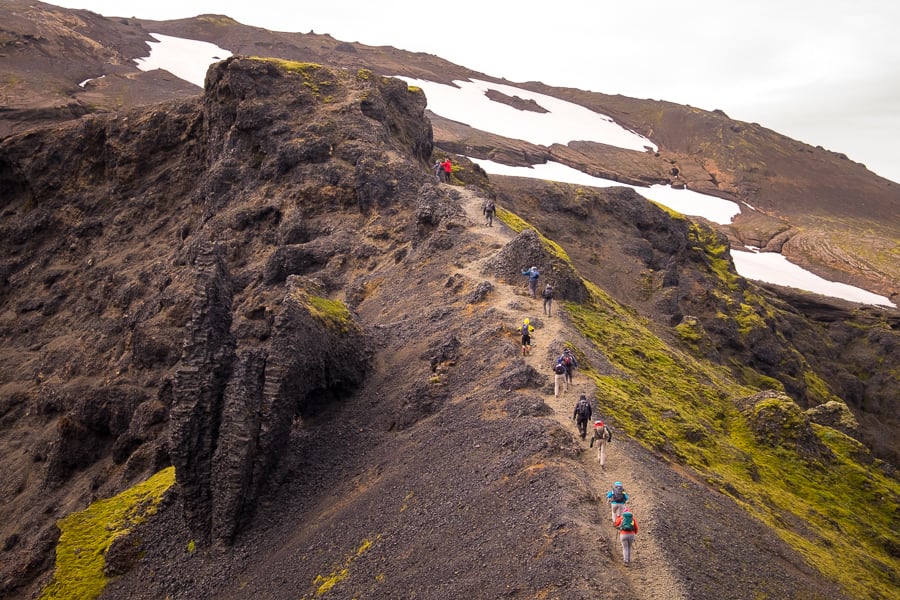
Iceland's highland interior, home to the most popular hiking routes in the country, is only accessible from late June when F-roads (Fjallvegir — mountainous gravel tracks closed due to snow and ice in winter) open up and mountain huts begin operating.
Glacial river crossings are one of the defining features of hiking in Iceland's highlands. In the early season rivers run fast and high from snowmelt, but by July and August water levels drop significantly, making crossings far more manageable and safer underfoot.
One more reason to visit in summer: you will certainly not run out of daylight. The midnight sun provides near-constant light from mid-June through late July — ideal for long days on the trail, though it can impact sleep quality.
Best Months for Hiking
Warmer months are particularly optimal in the highlands, where Iceland’s most iconic trails — the Laugavegur, Fimmvörðuháls, and Þórsmörk — are found.
The hiking season in Iceland's highlands encompasses roughly three months of the year — a narrower window than most people expect.
Coastal and lower-altitude routes like those comprising our South Coast Highlights tour extend that window somewhat, remaining accessible for five months in total, from late May through September. For visiting the signature highland routes, plan around the warmest summer months.
May
Average temperature: 3-9°C (37–48°F)
Daylight: 15-20 hours
Snow still covers the higher sections of trails like the Laugavegur, and most mountain huts haven’t opened yet. River levels run high from snowmelt, and highland routes are not yet viable for most hikers. That said, some of the most beautiful coastal trails are already accessible, offering near-empty paths and landscapes that feel entirely untouched. May is also among the sunniest months in the southern parts of Iceland.
Pros | Cons |
Fewer crowds | Most huts not open yet |
Best for coastal trails | Highland routes largely unreachable |
Among the sunniest months for southern trails | Riskier river crossings |
For early-season specifics, see our May hiking guide.
June
Average temperature: 7-12°C (45–54°F)
Daylight: 20-22 hours
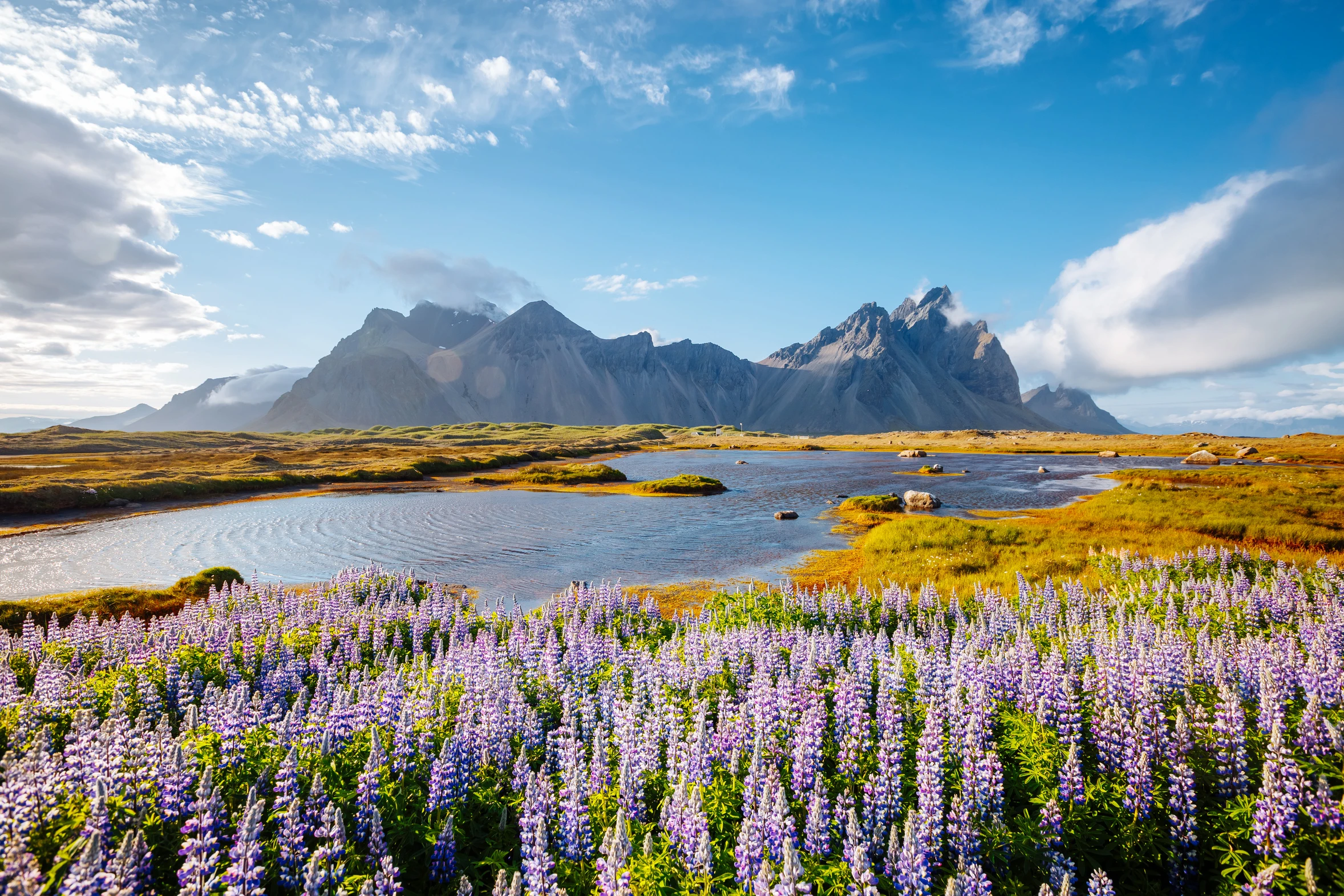
From around 20–25 June, conditions improve, temperatures rise, and the highlands open up. The midnight sun provides up to 22 hours of daylight around the summer solstice. Most huts begin operating, and the landscape erupts in color. Snow patches linger at higher elevations — for example around Hrafntinnusker, Laugavegur Trail's highest point — but add to the scenery rather than hinder progress.
Pros | Cons |
Most daylight | Huts are still closed for the first half of the month |
Some snow still visible (not restrictive) | Rivers might still run high |
Rising temperatures | / |
Our June hiking guide covers the month in detail.
July
Average temperature: 10-14°C (50–57°F)
Daylight: 18-21 hours
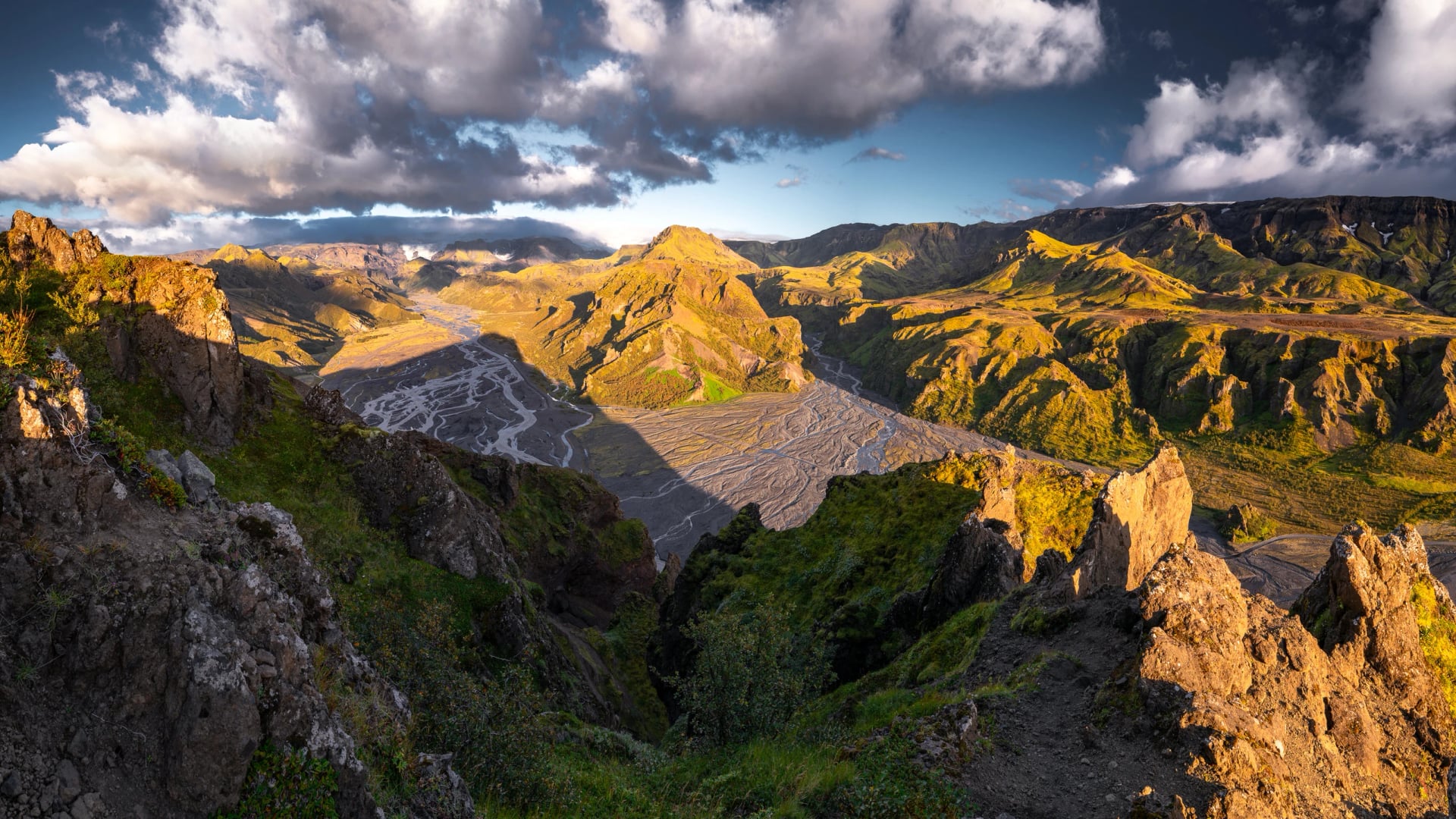
July offers the most stable conditions for hiking in Iceland. All trails and huts are fully operational, weather is at its most reliable, rivers have settled, and puffins, Arctic foxes, and wildflowers are easier to spot. This month offers the best conditions of the year, making it the busiest month on the trail. In the northern region, midges are often active in July and August, but they are much less problematic in the south, on the Laugavegur and Fimmvörðuháls trails.
Pros | Cons |
Vibrant wildlife | Most crowded |
Pleasant temperatures | Huts can sell out months in advance |
Best conditions | / |
Read our July hiking guide for peak-season notes on booking, trails and more.
August
Average temperature: 9-13°C (48–55°F)
Daylight: 14-18 hours
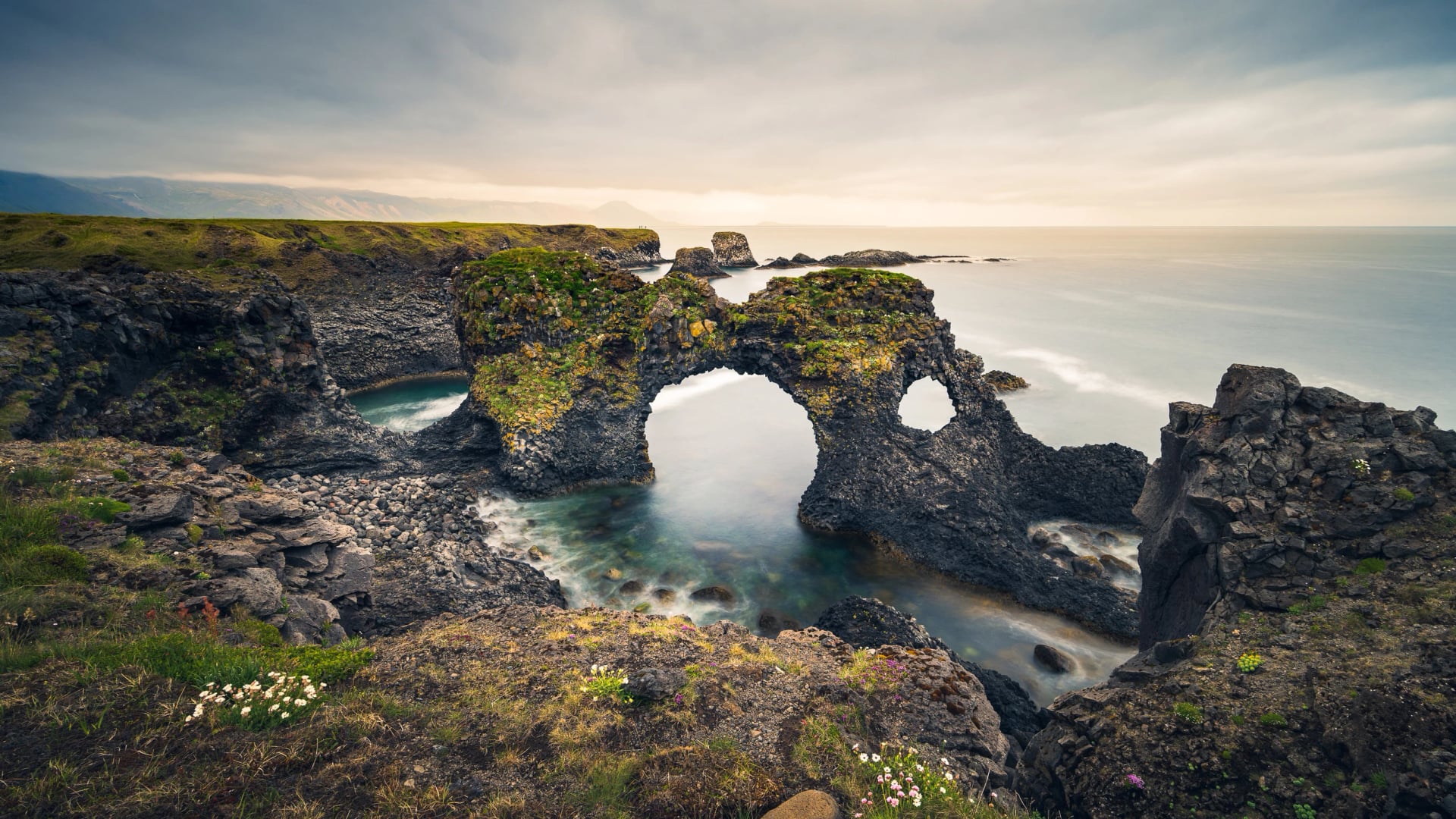
Many experienced hikers consider August the best time to hike in Iceland. Crowds thin from mid-month and river levels drop. The midnight sun gives way to golden evenings with real sunsets and longer nights. Excellent conditions keep hiking feasible on all major trails, with more breathing room than in July. With its stable weather and mild temperatures, August remains an excellent month for multi-day trekking. Midges can still present an annoyance in the northern parts.
Pros | Cons |
Fewer crowds than in July | Somewhat less daylight and lower temperatures |
Stable weather | / |
Lower river level | / |
Our August hiking guide covers late-summer timing.
September
Average temperature: 5-10°C (41–50°F)
Daylight: 11-14 hours
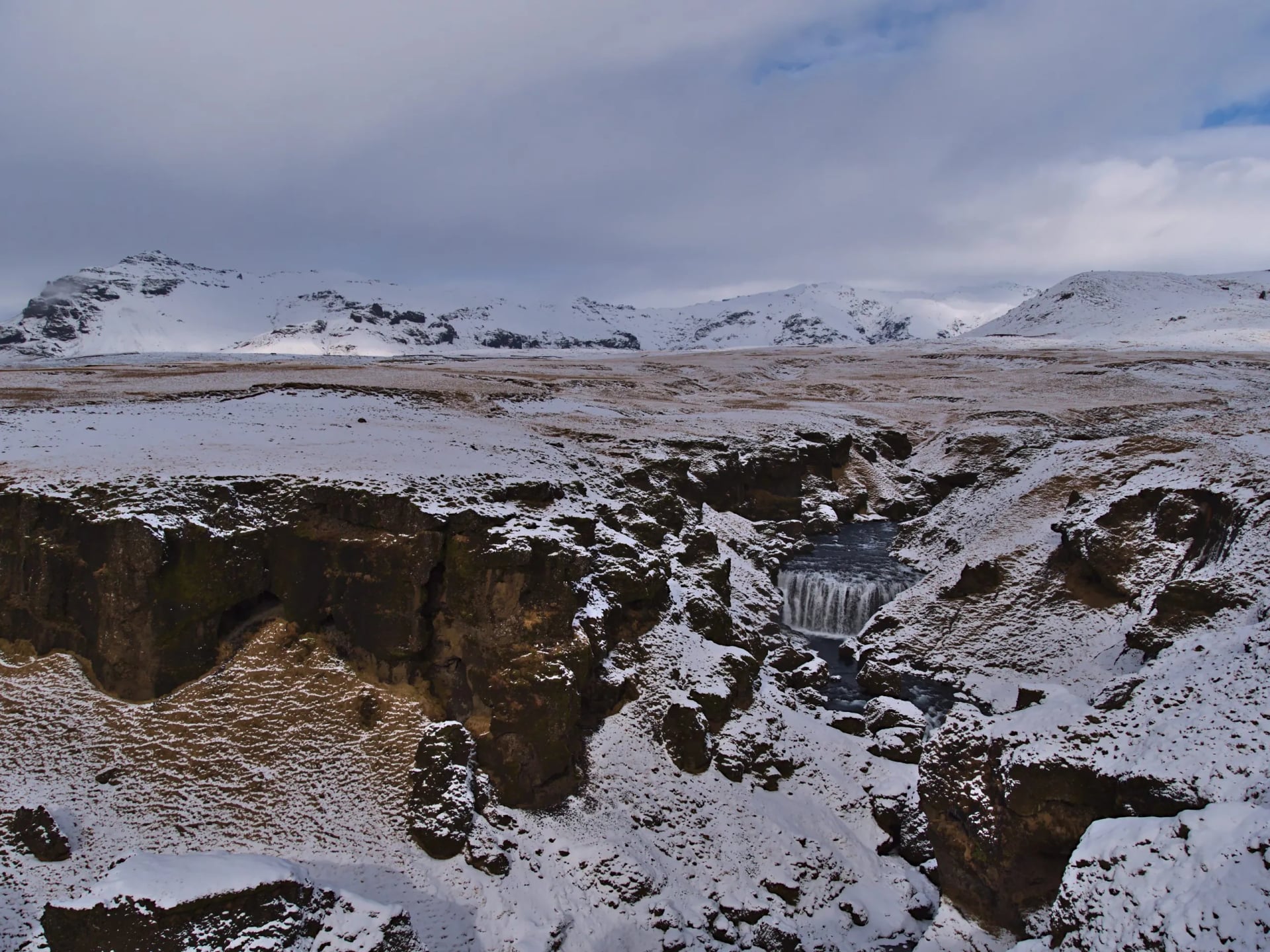
Early September offers quiet trails, dramatic skies, and the first northern lights. Vibrant autumn colors appear in the birch forests of Þórsmörk. If you want a chance of northern lights, September is when they return — but it provides less reliable conditions for classic highland hiking than July or August. Most huts close between 10–20 September, and snowfall becomes possible at elevation, making the highland routes unsuitable for beginners. The hiking spots included in our South Coast Highlights tour remain accessible and manageable throughout the month.
Pros | Cons |
Fewer crowds | Huts close mid-month |
Vivid colors | Possible snowfall |
A chance of seeing the northern lights | Less suitable for beginners |
For more about the aurora and Iceland’s autumn charms, see our September hiking guide.
Winter Hiking in Iceland
Generally speaking, winter months in Iceland are the domain of highly experienced hikers with specialised equipment. Highland roads close completely, huts shut down, temperatures drop, and daylight is reduced significantly.
However, the coldest season has its charms. The northern lights are most reliably visible in winter, and ice caves, glaciers, and snow-covered landscapes offer views unlike anything seen on the summer hikes.
For those drawn to Iceland’s trails outside main hiking seasons, spring offers more daylight and safer conditions, while multi-day highland treks remain inadvisable until late June.
Crowds & Hut Availability
Iceland's highland trails are popular, most noticeably in July — and the hut bookings reflect that.
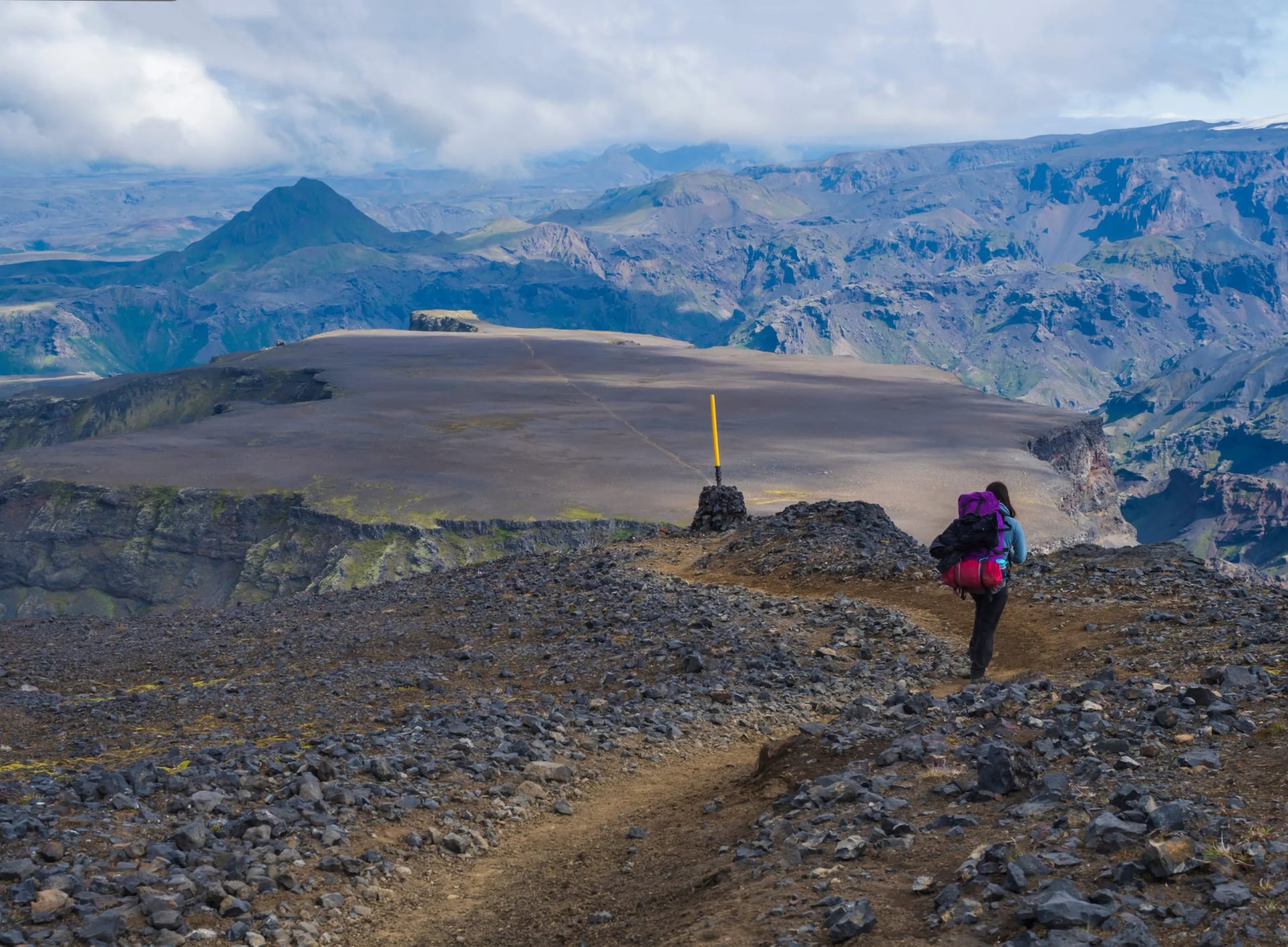
Most mountain huts are managed by FÍ (the Icelandic Touring Association) and operate from late June to mid-September. July is the busiest month on the trail and hut beds on the Laugavegur Trail in that month can sell out within hours of reservations opening — as early as January. August dates typically fill by March or April.
For those wishing to avoid the crowds, early June and September offer significantly quieter trails — though with trade-offs in weather reliability and huts not operating at either end of the season. For the best of both worlds, the second half of August tends to offer stable conditions, thinning crowds, and huts still fully operating.
If coordinating multiple hut bookings across a multi-day route sounds like a headache, our self-guided tours handle all of it for you.
Weather and What to Pack
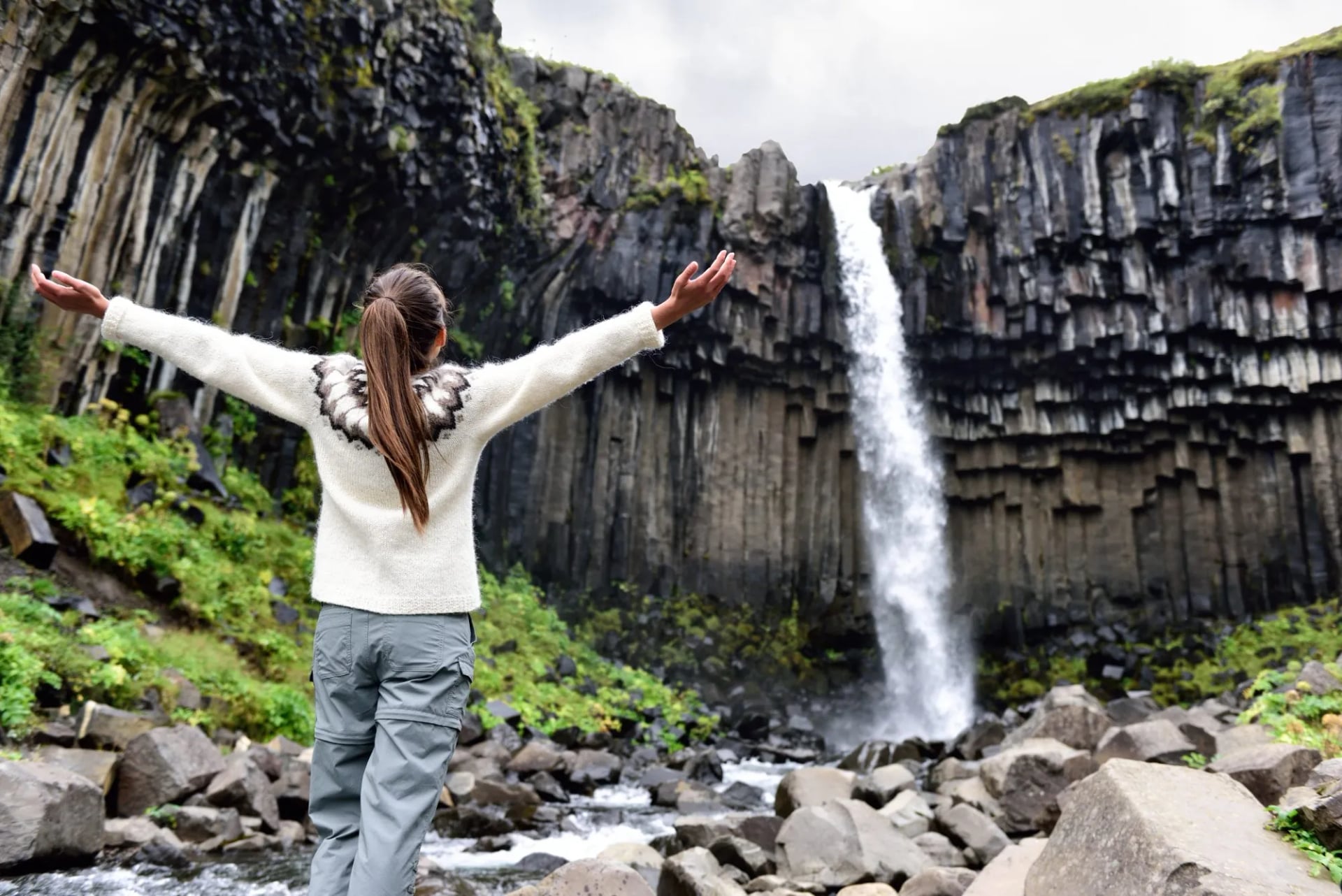
Unlike Iceland's coastal areas, the highlands are fully exposed to severe conditions. Sunshine can turn to wind and rain within minutes, and rapidly changing weather can have serious consequences for hikers on open trails. Understanding what to expect — and how to prepare — is essential for a safe and enjoyable hike.
Average highs in the highlands run from around 10–12°C (50–54°F) in July and August, dropping to 6–9°C (42–48°F) during the day in September, and as low as 0°C (32°F) during the night. Wind chill and elevation also make conditions feel considerably colder.
It is best to stay prepared for both warm and cold weather at all times. We recommend packing waterproof and windproof clothing, plus thermal underlayers for Iceland’s variable weather conditions. See the full recommended packing list in our blog.
Part of good preparation is checking reliable weather forecasts — the Icelandic Met Office provides the most accurate and up-to-date information.
Best Time for Safe River Crossing
Unbridged river crossings are another defining feature of hiking in Iceland. On routes like the Laugavegur Trail and Fimmvörðuháls, they are part of the journey.
Rivers are highly season-dependent. In spring, they run fast and high from snowmelt; by peak summer months water levels drop and crossings become significantly more manageable — making July to August the safest window for routes with unbridged crossings.
Lightweight water shoes are essential to protect your feet from the cold, rocky riverbeds. If a crossing looks dangerous, turn back or wait — glacial rivers drop significantly between morning and afternoon on warm days.
For more advice on safe river crossings and other trail specifics, read our ultimate guide to hiking in Iceland.
If you can only choose one month, August offers the best balance of mild weather, excellent trail conditions, and low crowd levels.
Planning Your Hike
Remember, getting the timing right can improve your experience — and in some cases determine whether the hike is feasible at all.
Ready to plan your Iceland hike? Browse our self-guided Iceland hiking tours, or book a free consultation. We will help you match the right trail to the right time of year, and make sure every hut bed is waiting for you when you arrive.



Plan with a hiking expert
Free advice from a team that knows these routes inside out - real people, not a bot

HASSLE FREE
We handle itineraries, accommodations, and anything else you prefer not to deal with, so you can enjoy a carefree hike.

BOOK WITH CONFIDENCE
We are a financially protected company, fully bonded and insured, keeping your money safe and allowing you to travel with confidence.

TRIED & TESTED ADVENTURES
Only the best hut to hut hikes in the USA, cherry-picked by our local team with an in-depth knowledge of the region.

UNBEATABLE SUPPORT
Our 24/7 customer support is where we show our passion, bringing you a better experience by making your well-being our number one priority.