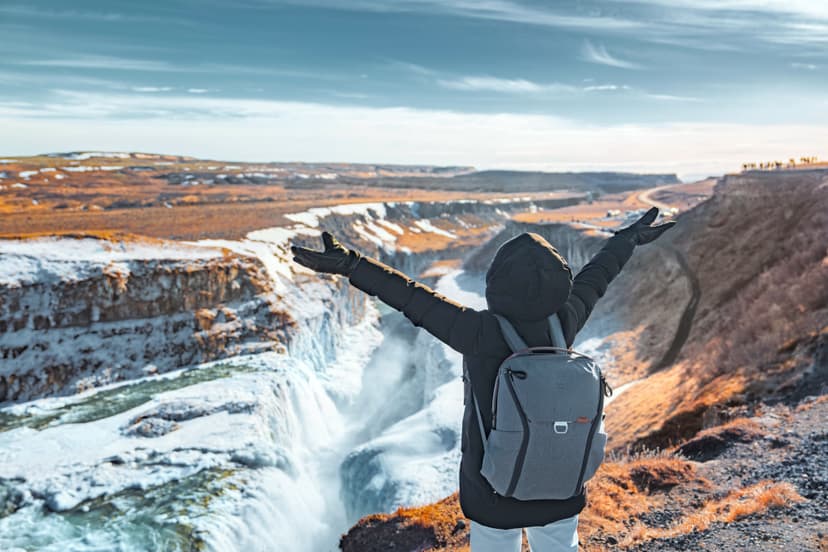
Iceland in September: The Last Highland Hikes and the Aurora
Best routes, how to prepare for unstable weather and chances of the northern lights: everything you must know when planning an Iceland trip in September.

Anja
Published February 11, 2026
Edited April 16, 2026
12 min read
Don't want to read all this?
We've planned 2,000+ hiking trips. Send your dates, fitness and group size — we'll map the route and book every night.



September is the month where the hiking window is closing. Still, there is much on offer for those willing to plan with some caveats in mind.
The first half still follows August's rhythm — F-roads open, Laugavegur huts staffed, full bus and boat connections. In the second half of the month, it is winding down. A trip booked for 28 September looks meaningfully different from one booked for 5 September, and the route choices that work in one week may not work in the next.
What you trade for that complexity is autumn light, real darkness returning to the night sky, far fewer people on every trail, and softer pricing across the board. September is the hiking month for travelers willing to plan around a closing window — and who'd rather have empty trails and golden birch valleys than peak-summer reliability.
How to Time Iceland Hiking in September
If you've decided you want a hut-to-hut trip, and you'd rather have empty trails and autumn light than peak-summer reliability, September is the month to plan around. But the planning matters more than in any other month — because the system is in active wind-down.
Highland closures
There is no single "Icelandic highlands closing” date. Different parts of the system shut down on different schedules:
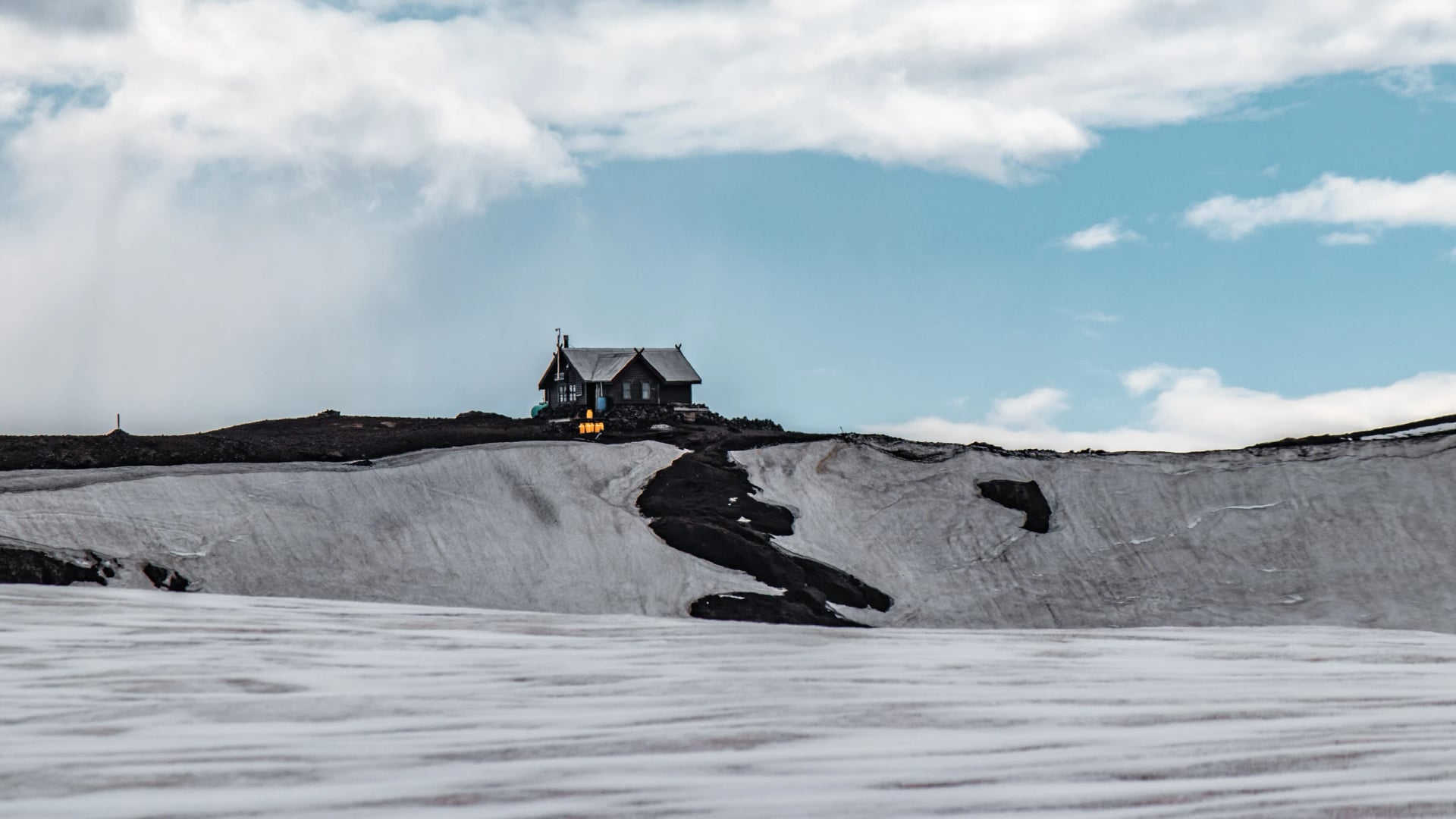
The huts on the Laugavegur typically run through about 10–15 September. Hrafntinnusker, the highest hut on the trail at ~1,100 m, often closes first; Þórsmörk-Skagfjörðsskáli runs a few days longer than the others.
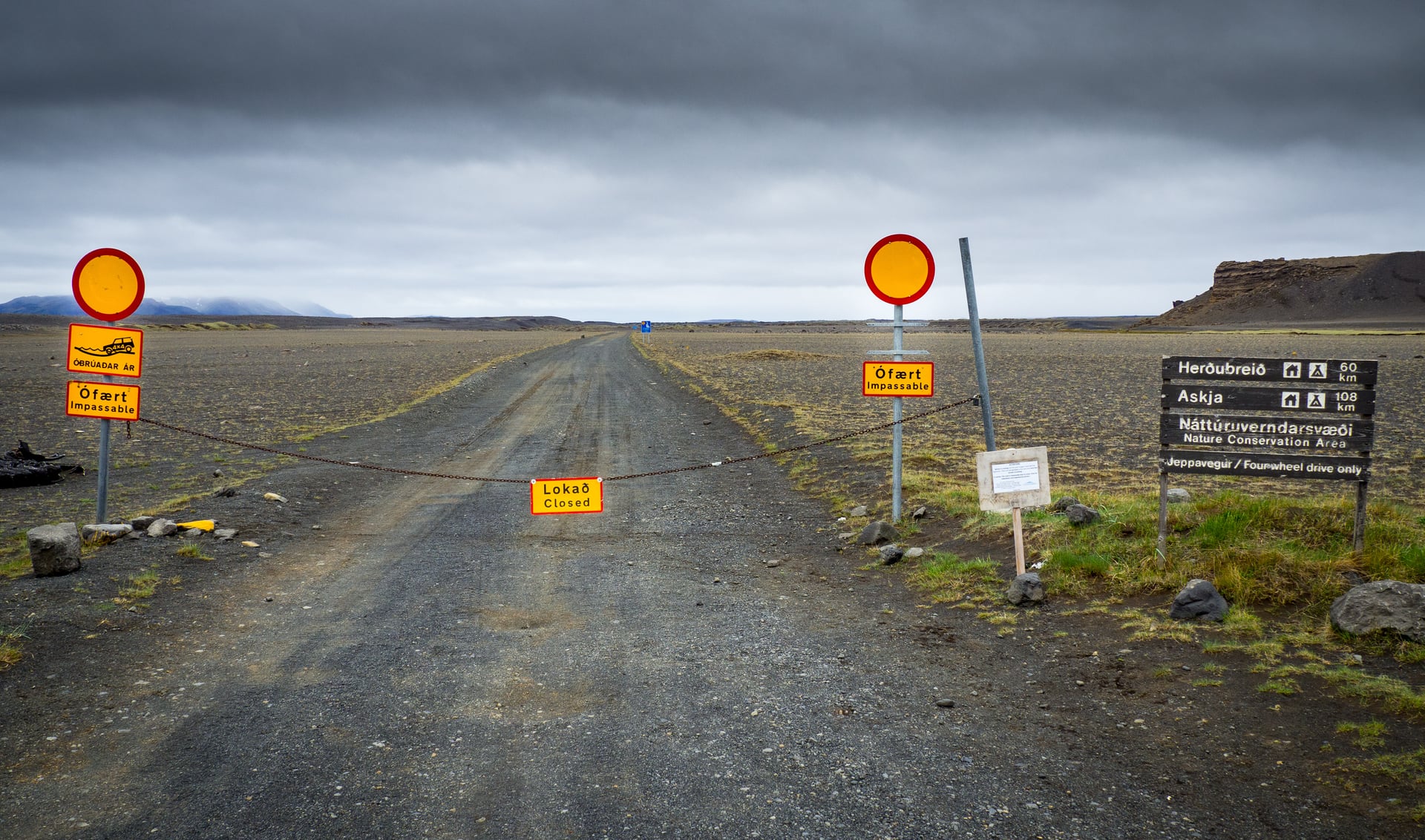
Roads F208 (Landmannalaugar) and F26 (Sprengisandur) typically close to general traffic in the last week of September to early October, weather depending. Vegagerðin (the road authority) makes the call on the day, and a sudden storm can bring the date forward. F35 (Kjölur) and the F-roads to Þórsmörk usually persist a week or two longer than the higher routes.
Boats to Hornstrandir typically run their last departures mid-September, with the West Tours and Borea schedules tapering through the first half of the month.
The Skaftafell visitor center and the lowland trails of Vatnajökull National Park stay open year-round — only the highland-side access closes.
First vs. second half of the month
September is a mirror image of June as the other shoulder month of the season, with two distinct halves:
First two weeks: the country is still in summer mode. F-roads open, huts running, daylight at ~13 hours, weather often workable. The Laugavegur is fully hikable.
Last two weeks: closures accelerating, daylight under 12 hours, first snow possible in the highlands, Atlantic depressions more frequent. The lowlands stay open; the highlands wind down.
In practical terms, the first two weeks of September are still the highlands' summer. Booking for the early half buys you a near-August trip with autumn color and aurora returning. A trip booked for 20–25 September is operating in a different season — quieter, cheaper, more atmospheric, and meaningfully more weather-dependent.
The aurora overlap
September is the only month of the standard hiking calendar where the night has extended enough for the aurora to become a genuine part of the trip. From around the first week of September, an aurora forecast of KP 3 or higher is enough to give a real chance of seeing the lights from a mountain hut.
This is the only stretch of the year where you can do a multi-day hut-to-hut hike and have a realistic shot at seeing the northern lights without making a separate winter trip. The atmospheric forecast at Icelandic Met Office is the standard reference. Cloud cover matters as much as solar activity.
The honest caveat: aurora is never guaranteed in any month. September gives you the darkness; weather and solar activity decide the rest.
What's Open and What Isn't
A short reference for the system's actual state through the month.
Still running:
Laugavegur huts and the trail itself, through about 10–15 September.
Þórsmörk Glacier Valley huts and bus service, typically through late September.
F208 and Landmannalaugar, typically through the last week of September (Vegagerðin willing).
Boats to Hornstrandir, with last departures around mid-September.
The 7-day South Coast Highlights inn-based route — runs through into October.
Skaftafell, the south-coast waterfalls, the Golden Circle, and Snæfellsnes — year-round access.
Whale-watching from Húsavík and Reykjavík, through into October.
Reykjavík hot springs and pools — year-round.
Closing or closed:
Hrafntinnusker hut — first to shut, usually around 10 September.
Highest F-roads (F26 Sprengisandur, F88 Askja) — typically closed by end of September.
Most seabird colonies — puffins left by mid-August; cliffs largely empty.
Some Westfjords summer-only services (Látrabjarg road, smaller boat routes) — winding down.
Recommended Routes
September is the month for hikers who want the autumn version of Iceland — fewer people, golden birch valleys, hot springs at their most atmospheric, real darkness, and a closing window that creates urgency.
Not every route runs all month; the list below distinguishes the early-September choices from the late-September ones.
Early September (1–15)
Early September is the closing window for Iceland's highland hut-to-hut treks — the same routes as in midsummer, but with fewer hikers, the first hints of autumn in the light, and a sense that the season is visibly tipping toward its end.
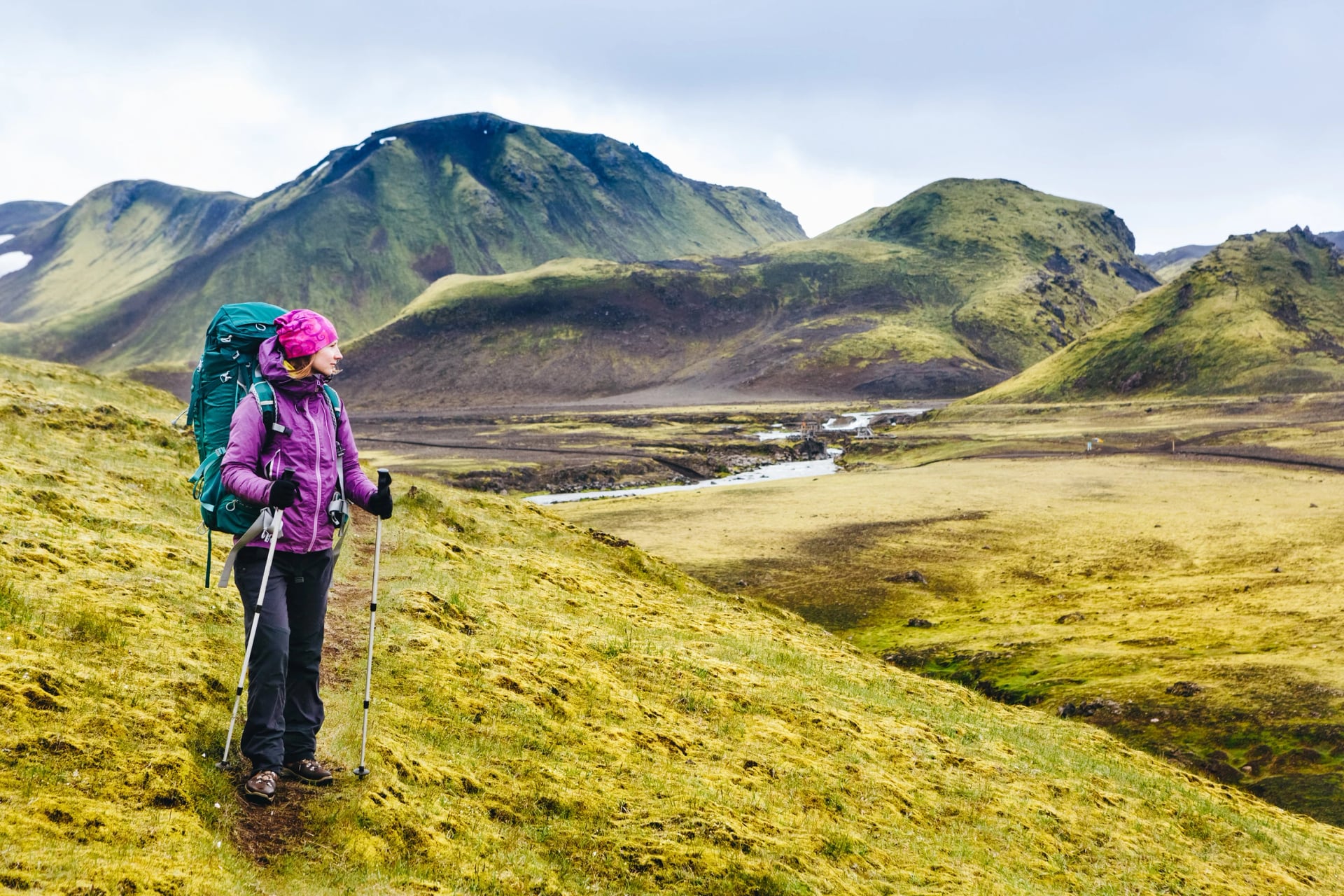
The Laugavegur Trail is fully hikable through about 10–15 September, with the same 55 km route between Landmannalaugar and Þórsmörk, the same hut-to-hut format, and meaningfully fewer people on the trail than in August. A Fimmvörðuháls-only trek as a standalone is similarly first-half-only. The Laugavegur + Fimmvörðuháls combination still works in early September, but the Fimmvörðuháls high pass becomes weather-dependent — the first dusting of snow can land any time from mid-September.
The Þórsmörk Glacier Valley Hike is at its photographic peak in September — autumn color in the birch valleys, lower light angle, fewer hikers in the Krossá basin. The valley remains accessible by Trex and Reykjavík Excursions buses through late September in mild years.
The Víknaslóðir Trail in the East Fjords runs through into mid-September depending on the operator. Hut staffing and bus connections taper; check with your provider before booking. The puffin colonies at Borgarfjörður Eystri have already left for the winter.
Late September (15–30)
By the second half of September, the multi-day hut-to-hut routes are mostly closed. What remains is a strong shoulder-season selection of inn-based and lowland routes:
A multi-day South Coast route — Þingvellir, the south coast waterfalls, Skaftafell, Jökulsárlón — runs strongly through September and into October. Fewer crowds at every site, autumn light, real darkness for evening aurora opportunities, and inn accommodation that side-steps the closing huts.
For travelers willing to prioritize the lowlands, the Snæfellsnes Peninsula is a particularly strong September choice: comparable to the Golden Circle in concentration of sights, but with fewer visitors, a real coastline of seabird cliffs and lava fields, and short hikes year-round.
Weather in September: What to Expect
September is the bridge from settled summer to active autumn. Daylight shrinks faster than in any other hiking month, weather windows shorten, and the first highland snow becomes a real possibility in the last week.
Daytime averages around 7–11 °C (45–52 °F)
Atlantic depressions are more frequent than in summer — every 5–7 days versus every 7–10
Daylight from ~13 hours on 1 September to ~11 hours on 30 September
First highland snow is possible from mid-month onward
September weather is meaningfully less settled than July or August.
Atlantic systems are picking up. Expect a multi-day weather change every 5–7 days rather than every 7–10.
Wind strengthens. Strong gusts on exposed passes are not unusual.
First highland snow typically arrives at the end of September.
September loses daylight faster than any other hiking month — about 5–6 minutes per day.
1 September: ~13h of daylight, sunset ~20:30, twilight to around 22:00.
15 September: ~12h, sunset ~19:30, true darkness from around 21:30.
30 September: ~11h, sunset ~18:30, full darkness by 20:30.
Be prepared
September weather changes faster than July or August weather, and a Laugavegur or Fimmvörðuháls trip needs a plan for it. Three practical responses:
Build a buffer day. A single day of slack lets you wait out a 24-hour storm without compressing the rest of the schedule.
Know the bail-out points. Most Laugavegur stages have an emergency hut or vehicle-accessible road within 5–10 km. Read the route notes before you leave.
Trust Safetravel's alerts. When a yellow or orange weather warning lands on a route, postpone the day. Icelanders postpone — visitors should too.
What to Pack
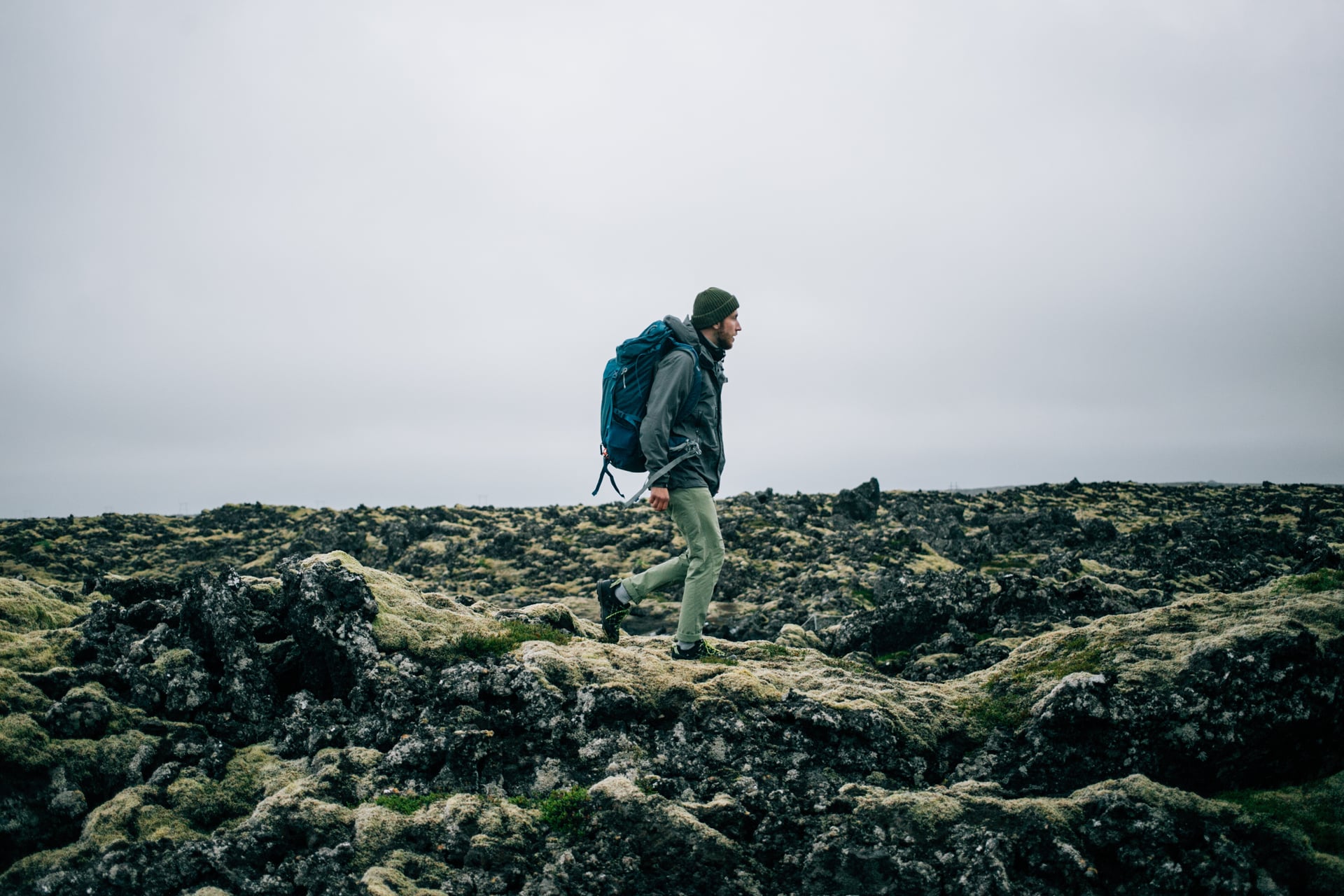
September packing is summer kit plus real cold-weather margin. Prepare for the thermometer to read 14 °C and sunny in the morning and 4 °C with squally rain by mid-afternoon — and that can dip near freezing overnight at altitude.
Clothing essentials
Waterproof, windproof shell jacket with hood (umbrellas are useless in Iceland)
Insulating mid-layer — fleece and a light down or synthetic puffy
Thermal base layers, ideally merino wool
Waterproof hiking boots, broken in
Wool socks, four to six pairs
Warm hat, gloves (not just light ones), buff
Quick-dry hiking pants + warm pants for evenings
Long-sleeve and thermal tops for layering
Other essentials
Reusable water bottle (Iceland's tap water is excellent)
Power adapter, Type F
Sunglasses and SPF — autumn light is low-angle and surprisingly bright
Swimsuit and quick-dry towel for hot springs
Headlamp — actually useful in September, especially the second half
Camera with spare batteries (cold drains them)
For the first half of the month (highland trips)
50–65 L pack
Sleeping bag rated to ~-5 °C (huts provide mattresses, not bedding)
Trekking poles
Gaiters for boggy ground and river edges
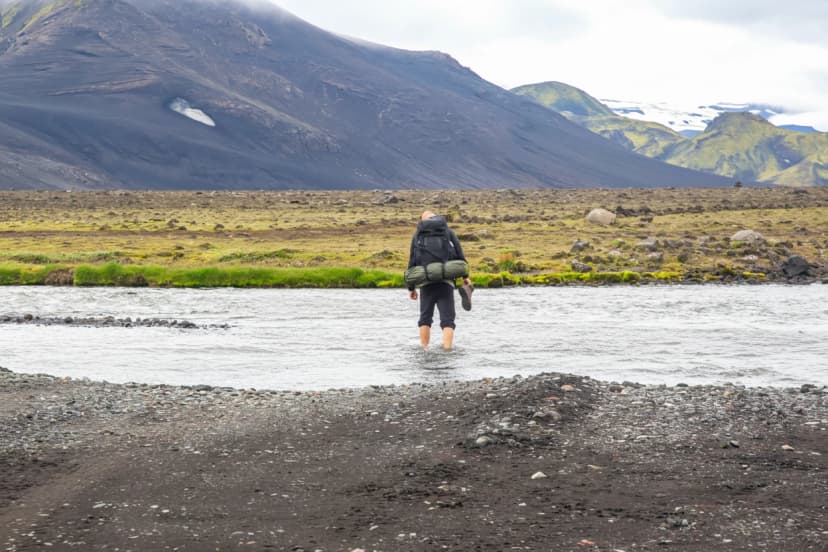
Sandals or quick-dry shoes for river crossings
For the second half of the month (lowland and inn-based trips)
A smaller daypack is fine
Warmer layers — the days are cool and the evenings are properly cold
Plan for shorter hiking days; build evenings into the itinerary
For more packing tips, see our complete hiker's packing guide for Iceland.
Nature and Life on the Trail
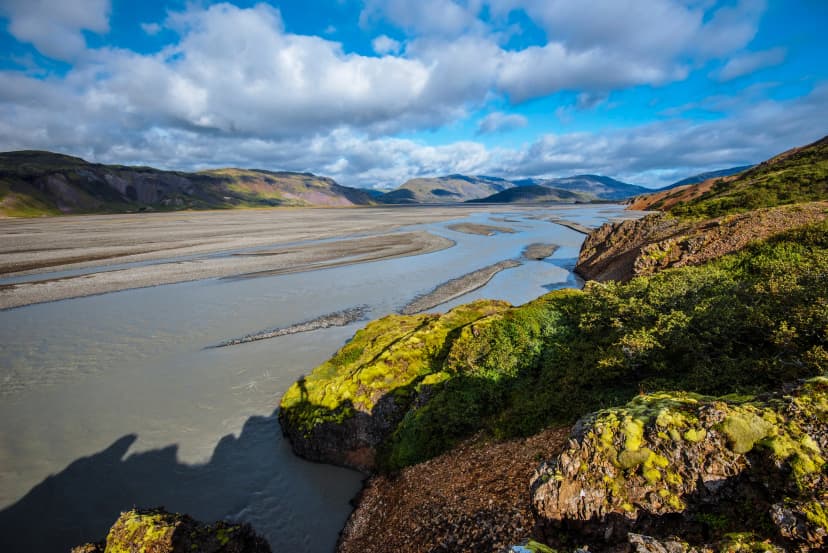
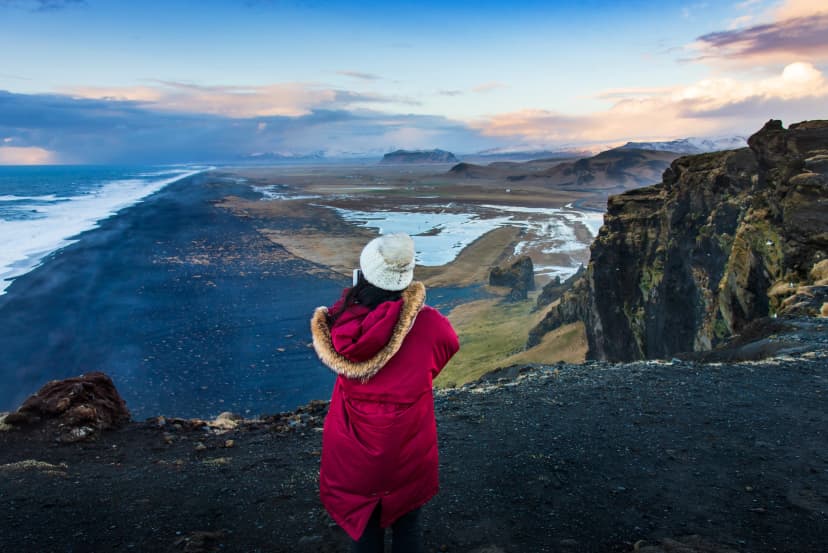
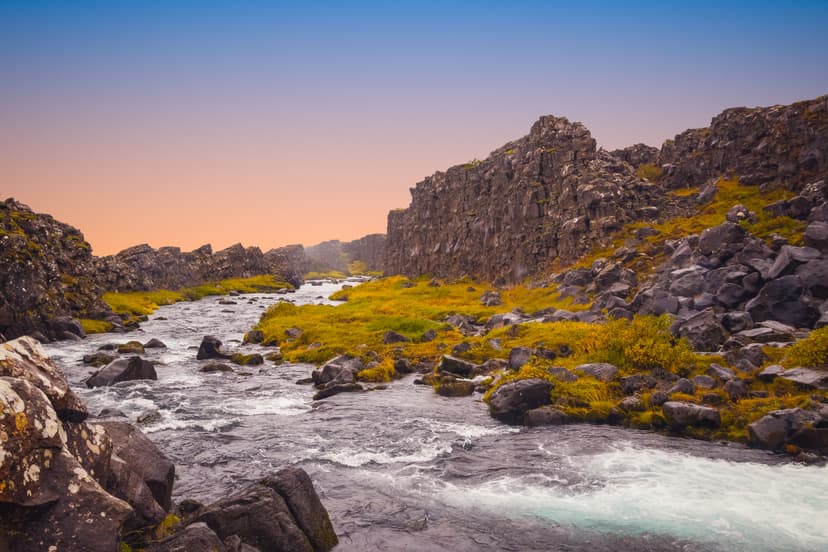
September is when the country looks most photogenic. Lower light angle, autumn color in the lowland valleys, steam visible against cool air at every hot spring, and the moody Atlantic weather that produces Iceland's most atmospheric photographs.
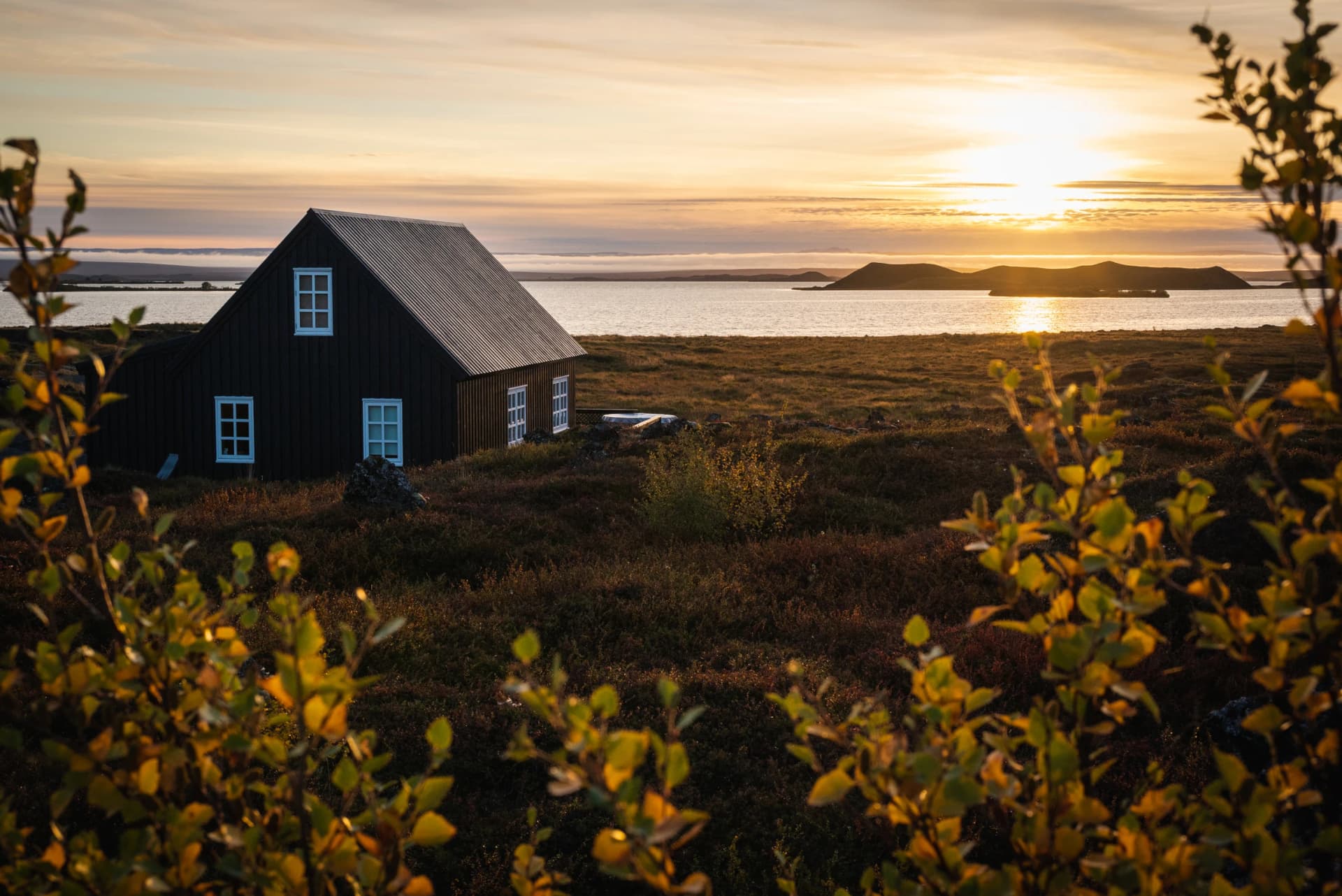
Iceland is famously treeless — but the small pockets of native birch woodland turn vivid yellow, orange, and copper through mid-to-late September.
Þórsmörk is the headline location, with the Krossá valley walls and the Húsadalur basin at peak in mid-late September. Skaftafell beneath Vatnajökull, Ásbyrgi in the north, and Húsafell in the west produce such colors on a smaller scale.
Iceland's mid-September réttir (sheep round-up) is one of the country's quintessential rural events. Farms across the country bring their sheep down from highland pasture, and the sorting takes place in communal stone-walled corrals. It's a working day, not a tourist event, but visitors are sometimes welcome if discussed beforehand.
For hikers: expect sheep on rural roads and on trails. Drive carefully on the Ring Road and the highland approaches.
September is when the northern lights may become a part of the hiking calendar. The lights are visible from anywhere with dark sky and clear weather. See auroral activity (the KP index) with cloud cover in the forecast. KP 3 or higher under clear skies is enough.
Keep in mind that a four-night trip in September has a better chance of producing one viewable display; a single night is a coin flip. Plan for it as a possibility, not the headline.
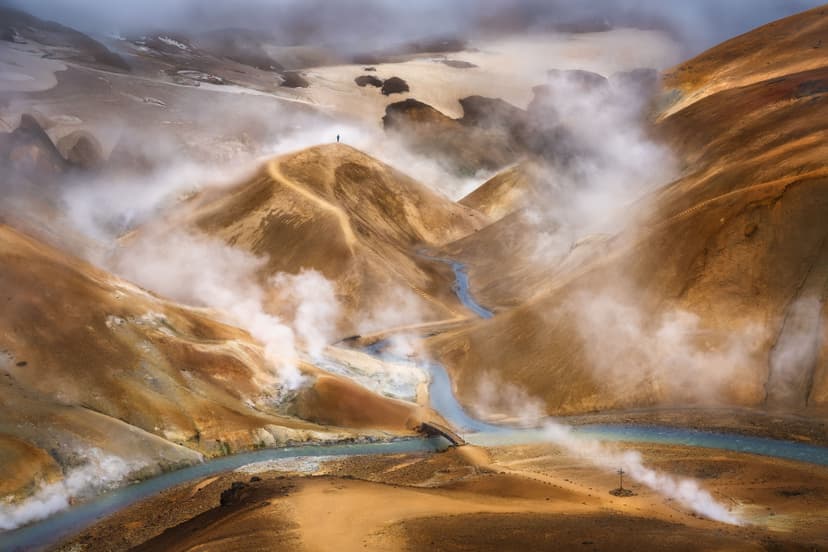
The temperature contrast between hot water and cool autumn air produces the steam you see in every Iceland-in-the-cold-season photograph.
Reykjadalur above Hveragerði stays open and is at its most atmospheric. Landmannalaugar's geothermal pool runs while F208 is open, typically until late September. Mývatn Nature Baths and the Sky Lagoon in Reykjavík run year-round.
Crowberries (krækiber), bilberries, and blueberries continue through September on lowland heaths and along trail margins. Trail-side picking is part of the rhythm of a Þórsmörk or Skaftafell day.
The legal rule is the standard Icelandic right of public access: pick what you'll eat that day, leave bushes intact, ask permission on private farmland.
Húsavík and Reykjavík run trips through mid-October, with sightings rates lower than July but still strong.
Humpbacks remain in the bays for most of September; the smaller cetaceans (minke, white-beaked dolphin) thin out earlier.
Driving in September
September driving sits between summer and winter conditions, and conditions can shift inside a single day. Three things to know:
First frost lands overnight from mid-month. Slick patches on bridges and shaded curves are the most common single-vehicle accident in September — drive to the conditions, not the speed limit.
Sheep on rural roads through the first half of the month as réttir flocks move down from highland pasture. The Ring Road through the south, the East Fjords, and the highland approaches see the most. Slow down on blind crests.
F-road closures can land within hours of a forecast change. Check traffic info on Umferdin on the morning of any highland drive, and don't commit to an F-road route without a backup plan if it closes behind you.
Booking a Late Season Trip
September is still a month with plenty to offer for hikers willing to plan around a closing calendar — autumn color, returning aurora, soft pricing, and far fewer people on the trail. Book the first half if you want the highlands; book the second half if you want the lowlands at their atmospheric best.
Send an inquiry to get in touch with us — we'll help you find the right tour for your dates and how late in the month you can travel.
For more on choosing the right month, see our guide to the best time for hiking in Iceland.

About this author
Anja is our lead travel advisor and a lifelong hiker who has planned countless adventures across Europe. She prefers sunsets to sunrises — unless coffee is involved — and, ever since her first rock-climbing course, joins friends on climbing trips whenever she can.
.jpeg&w=828&q=75)