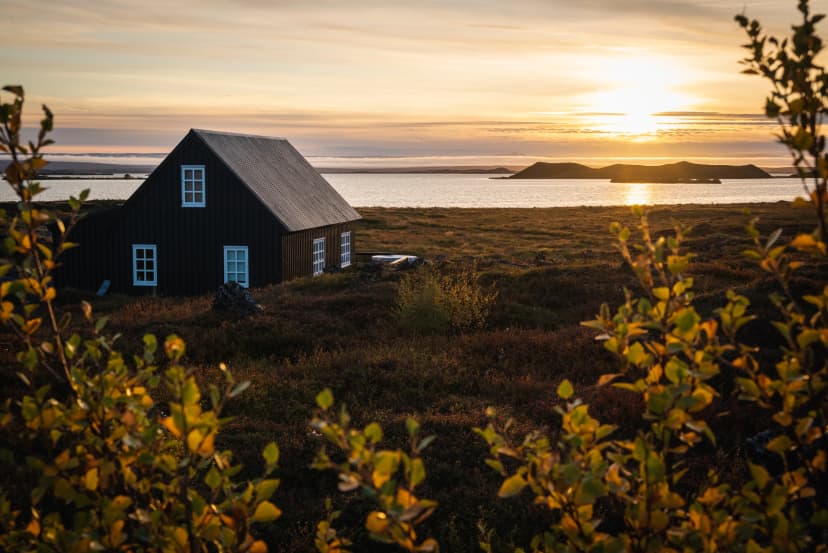
Going Alone: A Complete Guide to Solo Hiking in Iceland
Your ultimate guide to solo hiking in Iceland — which routes work for walking alone and which don’t, safety considerations, when to go, what to pack and more.

Ajda
Published February 4, 2026
Edited March 19, 2026
13 min read
Quick links
Don't want to read all this?
We've planned 2,000+ hiking trips. Send your dates, fitness and group size — we'll map the route and book every night.



Solo hiking in Iceland is one of Europe's great solitude experiences on the right trail — and the serious mountain environment rewards experience and preparedness, but punishes their absence on the wrong one.
Why Hike Solo in Iceland?
Walking in Iceland still means walking through genuine wilderness — long evenings in mountain huts where you choose when to talk, the unmistakable quiet of an empty highland valley, the scale of a glacier seen from below.
The country is small, safe, low-crime, and structured around a network of staffed huts and a national safety service that makes a solo trip feasible without making it sterile. The trade-off is that every safety call is yours alone, every booking goes through the queue last, and weather windows a group could push through can shut a single hiker down for a day.
Pros
Unmatched solitude on some trails
No pressure to keep group pace
Hut wardens and fellow hikers function as informal safety net on popular trails
Iceland ranks among the safest countries in the world
Self-guided tours available as a peace-of-mind option, combining freedom and safety
Cons
No group savings on bus, hut, or gear costs
River crossings and navigation riskier without a partner
Patchy mobile signal in the highlands
Weather windows a group could push through, you can't
Is Solo Hiking in Iceland Safe?
Short answer: solo hiking in Iceland is safe on the popular long-distance trails with some sound preparation. It is not as safe on remote routes and outside the main season without a hiking partner.
The risk profile is different from a typical European trail. Iceland is a serious mountainous environment with cold-water river crossings, weather that turns within an hour, little natural cover for shelter, and patchy reception in the highlands. None of those become more dangerous because you're alone, but the consequences of a problem get bigger when there's no one to help, and rescue is weather-dependent.
Secondly, Iceland is one of the safest countries in the world for solo women travelers, and the trails are no exception. The risk profile on Iceland's hiking trails is overwhelmingly environmental rather than personal.
The trail you pick matters more than any other planning decision.
Best trails for solo hikers in Iceland
Best trail for first solo trip
Laugavegur (hut-based, late June to early September)
Solo-friendly
Laugavegur
Fimmvörðuháls
Víknaslóðir
Day hikes from Þórsmörk and Skaftafell
Solo with experience:
Kjölur
The Laugavegur + Fimmvörðuháls combination
Not recommended solo
Strútsstígur
Öskjuvegur
Most Hornstrandir routes
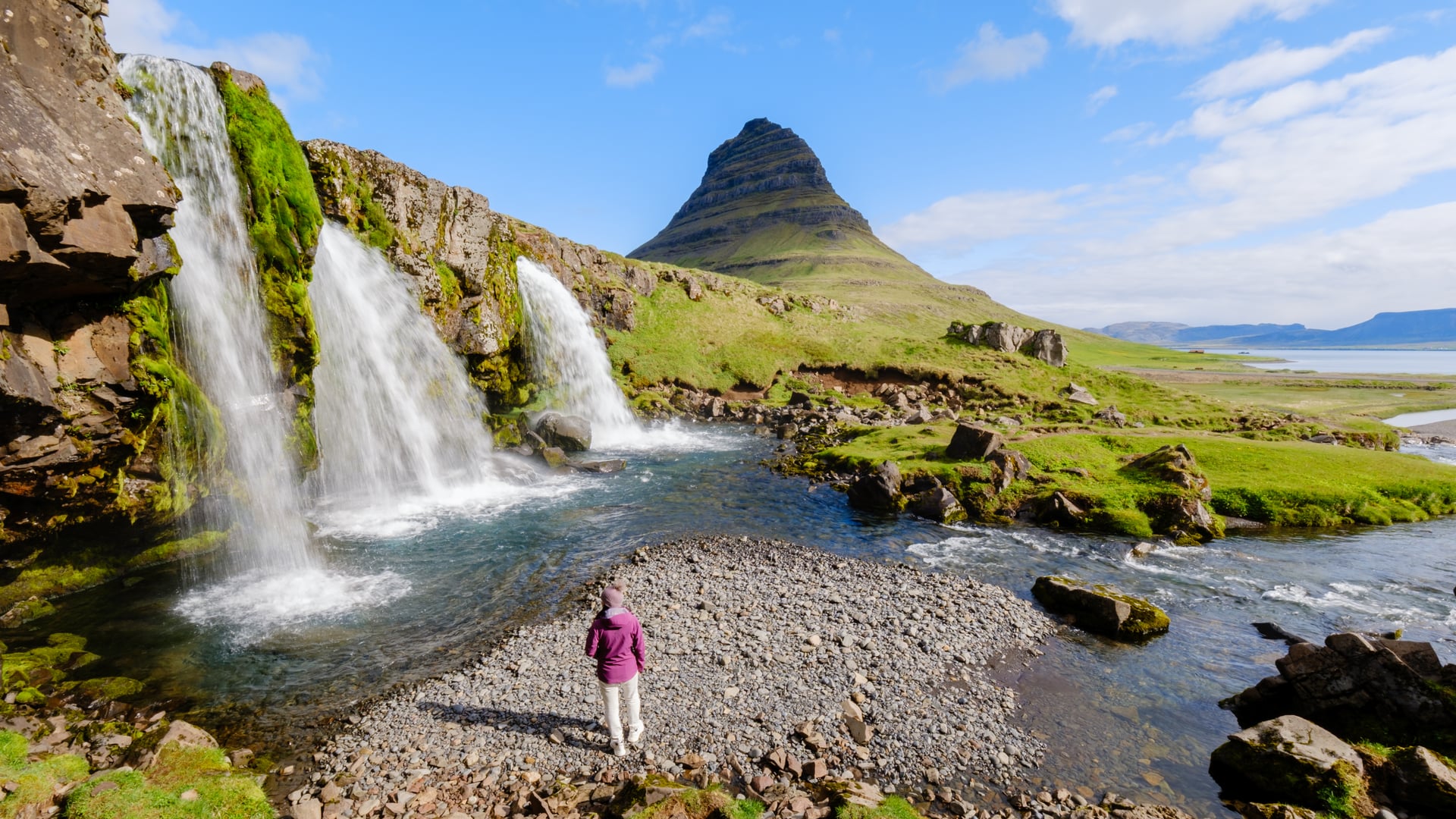
1. Laugavegur Trail — the obvious solo pick
Distance: 55 km | Days: 4–5 | Difficulty: Moderate | Solo rating: Excellent | When to go: Mid-July to mid-August
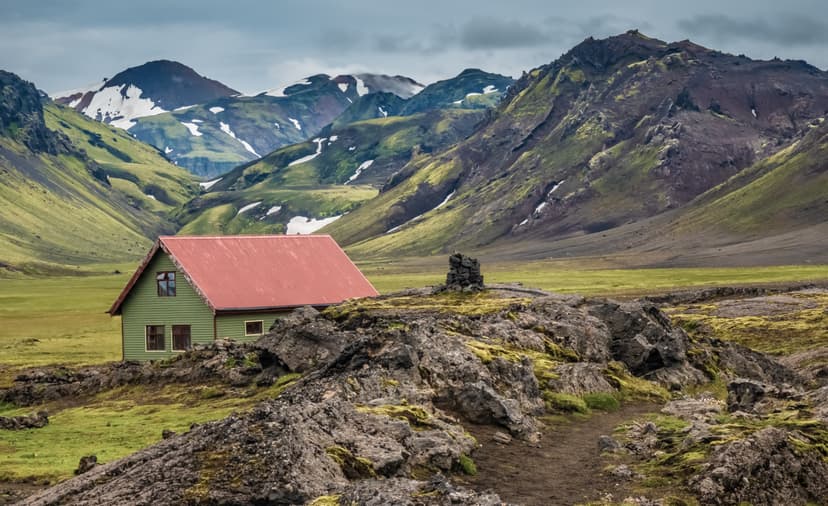
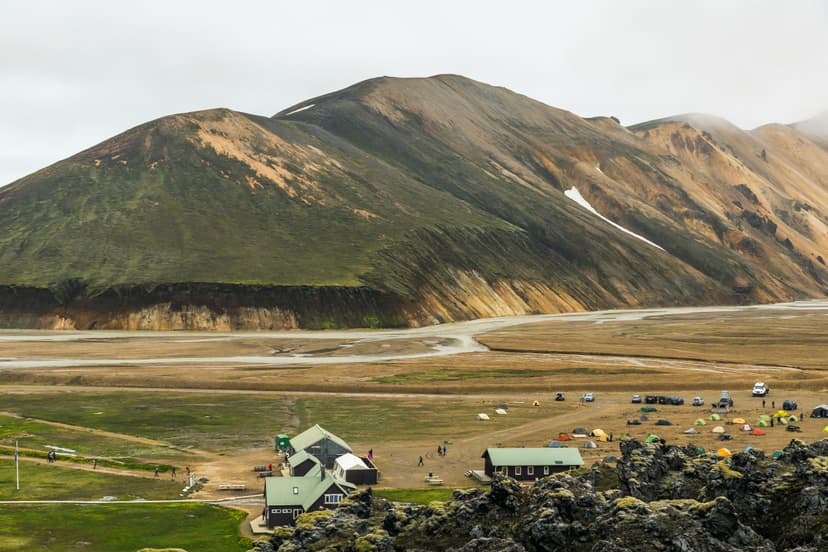
The trail almost every solo hiker in Iceland walks first — well-marked, six huts run by Ferðafélags Íslands (FÍ) spaced 12–16 km apart, busy enough that you're rarely truly alone. Huts sell out months ahead in peak season.
Best for: First-time solo hikers in Iceland, anyone wanting an independent trip with a built-in safety net.
If you wish to avoid the logistics of booking at the right time, a self-guided Laugavegur package includes hut booking.
2. Fimmvörðuháls — solo with a clear weather window
Distance: 25 km | Days: 1–2 | Difficulty: Moderate–strenuous | Solo rating: Good in clear weather; risky in cloud | When to go: Late July to mid-August
Runs between Eyjafjallajökull and Mýrdalsjökull across a 1,116 m pass that holds snow into July; spectacular in clear weather, a stake-marked saddle that solo hikers should skip in cloud. A 2-day Fimmvörðuháls trek handles the tiny Baldvinsskáli and Fimmvörðuskáli huts that book up months ahead.
Best for: Experienced solo hikers in good cardiovascular shape, ideally as a final day onto Laugavegur.
A self-guided 2-day Fimmvörðuháls trek takes the booking pain off the table.
3. Laugavegur + Fimmvörðuháls — the classic Iceland traverse
Distance: ~80 km | Days: 6–7 | Difficulty: Moderate–strenuous | Solo rating: Good with prior multi-day experience | When to go: Late July to mid-August
The Landmannalaugar-to-Skógar end-to-end traverse — Laugavegur first, Fimmvörðuháls as the closing day onto the south coast — is the country's most-walked long-distance route taken in one bite. Solo hikers should plan at least one buffer day for weather on the Fimmvörðuháls pass.
Best for: Solo hikers wanting one trip that hits every Icelandic landscape — rhyolite, glacier, lava field, waterfall canyon.
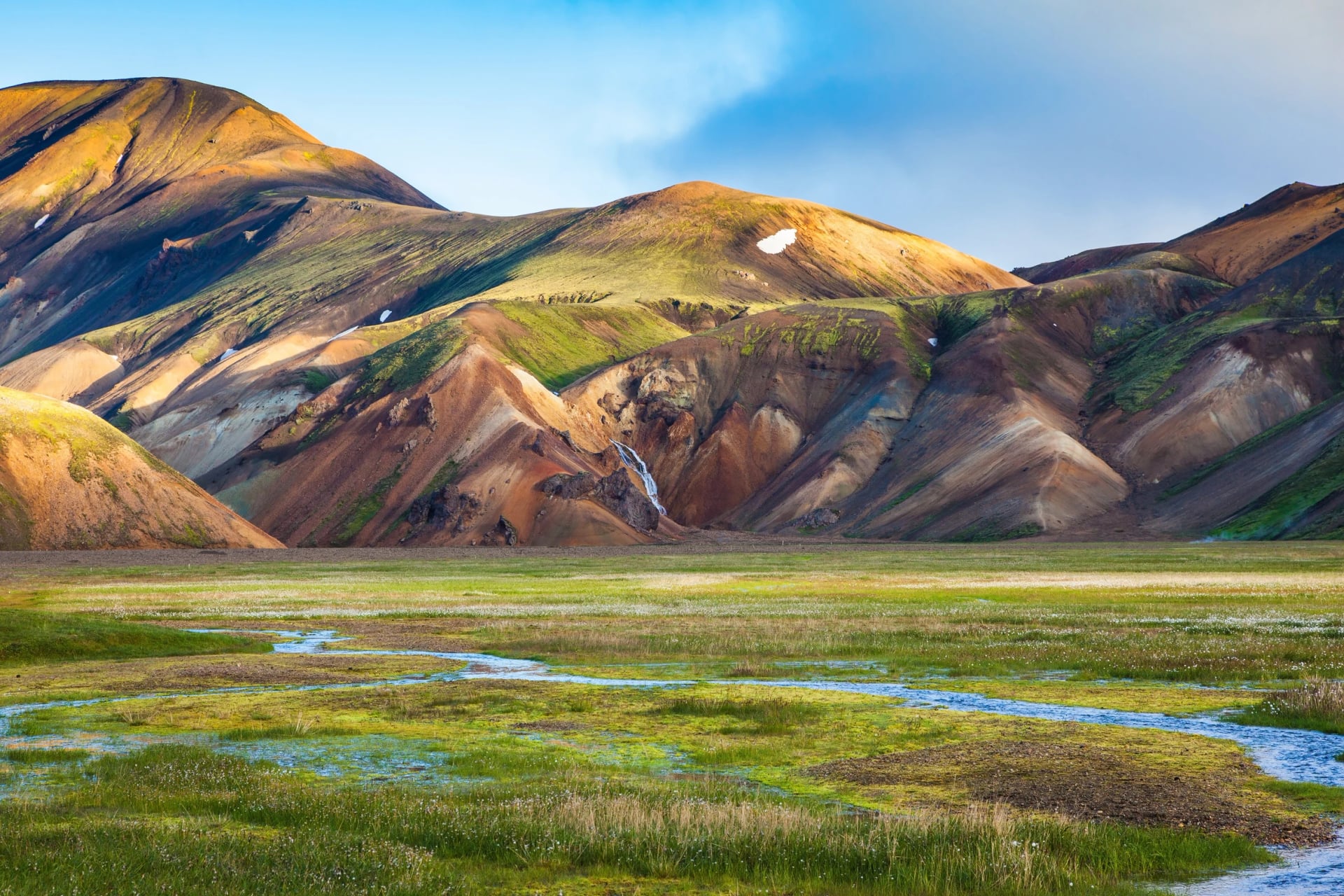
4. Víknaslóðir — east-coast solitude
Distance: ~74 km classic (loops from 45 km) | Days: 4–5 · Difficulty: Moderate | Solo rating: Good for confident solos | When to go: Mid-July to early August (puffins nest June–August)
The east-coast antidote to Laugavegur crowds — gentle distances, former-farmstead huts, and full days without seeing another walker. Our 4-day Víknaslóðir self-guided trip handles the Egilsstaðir flight and Borgarfjörður Eystri logistics that make the east hard to organize solo.
Best for: Returning solo hikers, photographers and birders.
Our 4-day Víknaslóðir trek handles the most cumbersome logistics.
5. Skaftafell day hikes — south-coast, glacier-front
Distance: 4–18 km | Days: 1 (over a 2–3 day stay) | Difficulty: Easy–moderate | Solo rating: Excellent | When to go: May to October
Svartifoss for the basalt-column waterfall, the longer Kristínartindar ridge for views over Skaftafellsjökull, and easy walks to the glacier toe — all from the staffed Skaftafell base in Vatnajökull National Park. Reachable by Reykjavík–Höfn bus and a strong pair-up with Þórsmörk on a longer trip.
Best for: Solo hikers wanting variety beyond the highlands; early- and late-season trips.
6. Þórsmörk day hikes — the underrated basecamp
Distance: Variable, 6–18 km | Days: 1 (over a 2–4 day stay) | Difficulty: Easy–moderate | Solo rating: Excellent | When to go: Late June to early September
Valahnúkur for the panorama, Tindfjöll for the volcanic close-up, Stakkholtsgjá for an easy half-day canyon walk — all from a single staffed basecamp, day pack only. The Þórsmörk Glacier Valley trip is built around this rhythm.
Best for: Solo hikers new to Iceland, anyone testing conditions before committing to a multi-day trail.
Our Þórsmörk Glacier Valley tour is built around this rhythm.
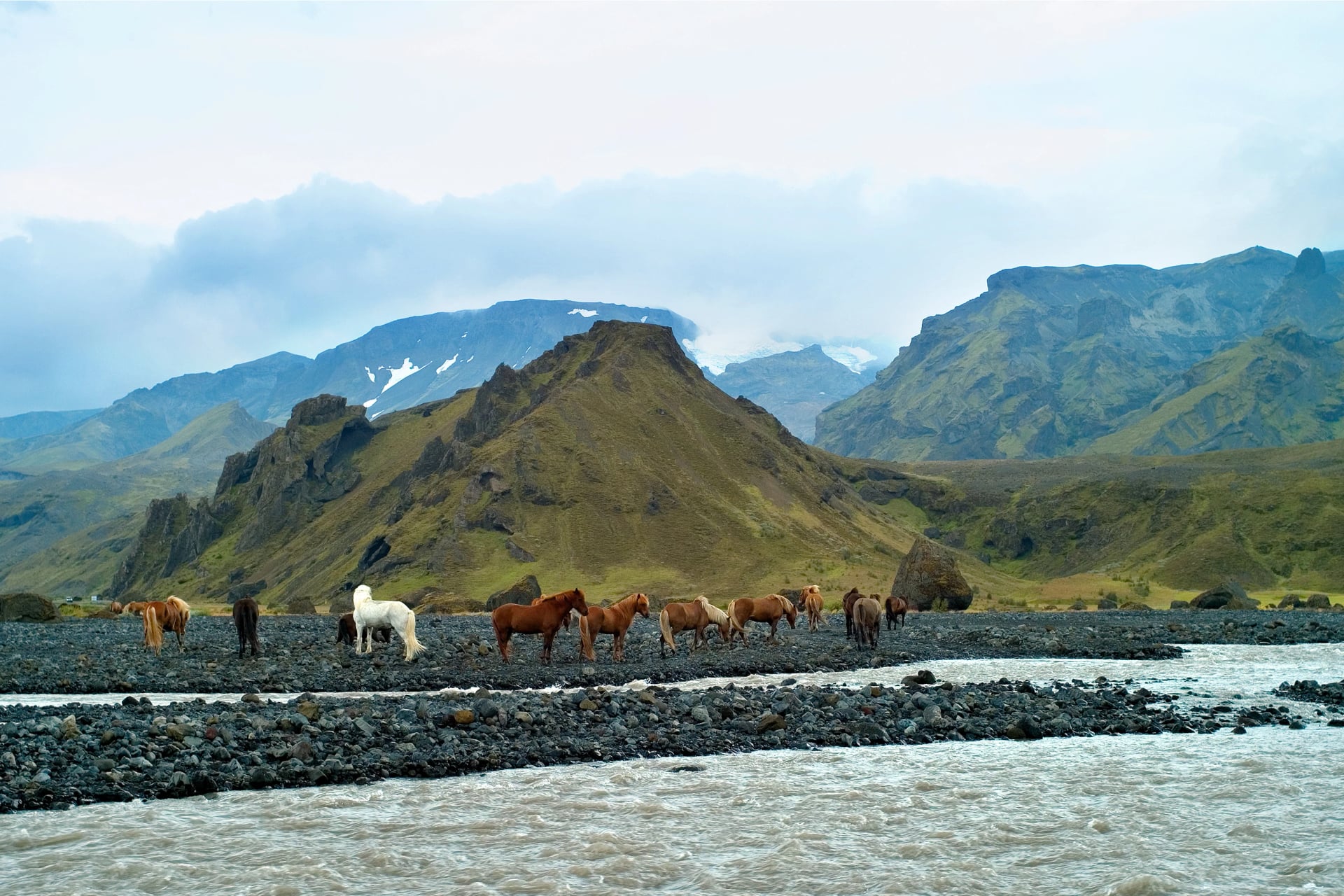
7. Kjölur (Kjalvegur) — the quieter highland route
Distance: ~40–50 km | Days: 3–4 | Difficulty: Moderate | Solo rating: Good with prior Iceland highland experience | When to go: Mid-July to mid-August
Runs between the Langjökull and Hofsjökull glaciers across the west-central plateau — quieter than Laugavegur, fewer rivers, more open ground, with hut nights at Hvítárnes, Þverbrekknamúli, and Hveravellir. Less waymarked, so navigation skills matter more than on the Laugavegur.
Best for: Returning solo hikers who've done the Laugavegur and want a quieter highland trip.
8. Reykjadalur — geothermal half-day from Reykjavík
Distance: ~7 km return | Days: Half-day | Difficulty: Easy | Solo rating: Excellent | When to go: May to October
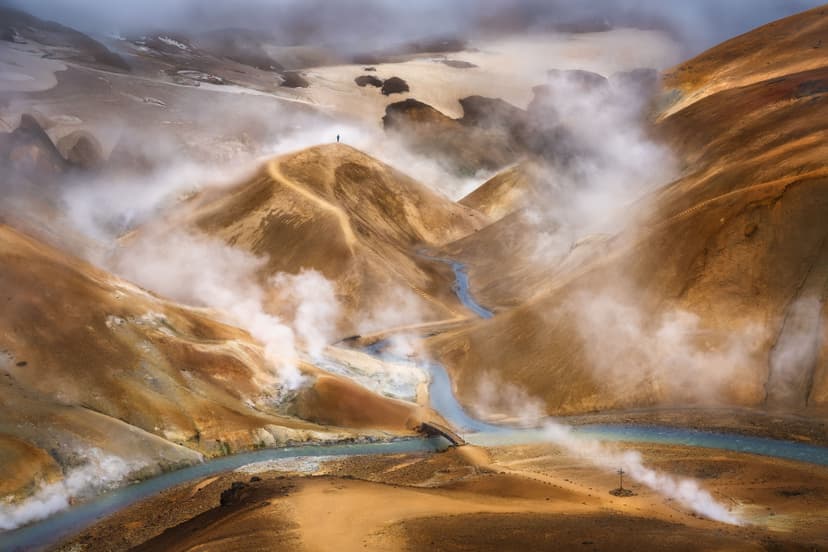
A 45-minute drive from Reykjavík to a steaming valley with a warm bathing river — well-marked, popular, and the easiest possible first solo Iceland hike with no logistics to organize. Bring a swimsuit and a towel.
Best for: Day-zero arrival, Reykjavík-base trips, easing into the country before a longer trail.
9. Glymur — Iceland's second-highest waterfall
Distance: ~7.5 km loop | Days: Half-day | Difficulty: Moderate | Solo rating: Good in summer (closed/dangerous otherwise) | When to go: June to September (log river crossing required)
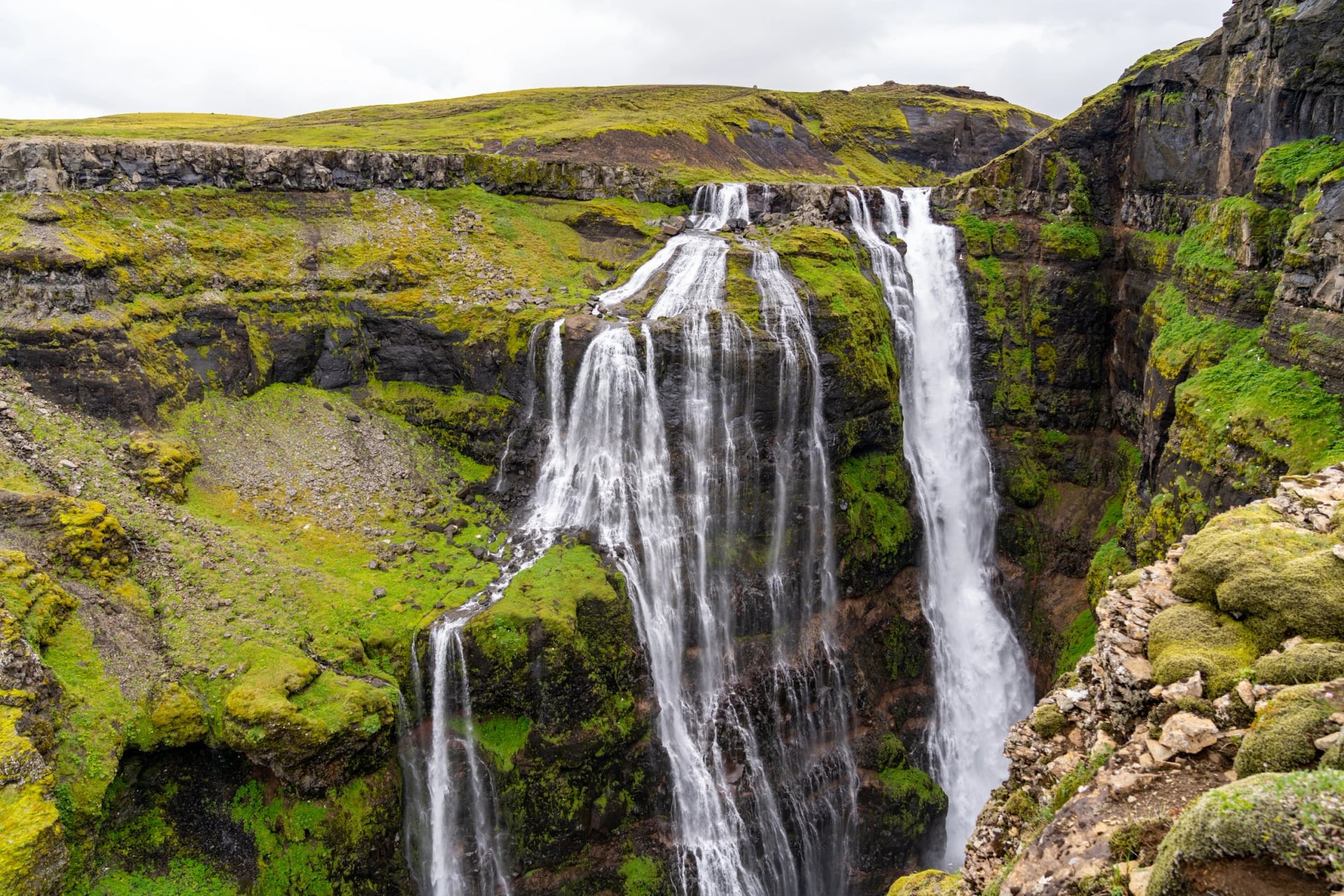
Hike the Botnsá canyon to the 198 m falls — chains, a log crossing of the river, and dramatic views from the rim. About an hour from Reykjavík, busy on weekends but quiet midweek; the log is removed in winter, which closes the standard loop.
Best for: Solo hikers wanting one bigger day-hike on a Reykjavík-base itinerary.
Trails to avoid going solo
Three trails on the standard Iceland backpacking shortlist are not appropriate for solo travel without serious experience and equipment:
Strútsstígur
Unmarked in long sections. Multiple consequential river crossings. No reliable mobile signal. A navigation error or twisted ankle here is a real problem.
Öskjuvegur (Askja Trail)
100 km across the high interior, reaching 1,300 m on the Dyngjufjöll massif where summer snowstorms with low visibility are routine. The lava plain between huts has almost no shelter and limited water. Bail-out options mid-route are essentially non-existent.
Most Hornstrandir routes
No roads, no cell signal in most areas, no huts on most routes, and the only way in or out is by scheduled summer boat from Ísafjörður — which weather can cancel for days. "Stranded" is a real possibility, not a metaphor.
Plenty of experienced solo backpackers walk these trails every year. If you're considering one, the question to ask is not about your physical ability — it's the preparedness for complete self-sufficiency days at a time, including proper safety measures, gear and preparation.
Safety planning
Four things matter, in order:
File a trip plan with Safetravel. It takes ten minutes, it's the official Icelandic safety service, and it triggers a search if you don't check in by your stated end date. There is no good reason for any solo hiker not to do this. Update the plan if your route changes.
Carry a satellite messenger. A Garmin inReach Mini, ZOLEO, or equivalent. Your phone will lose signal in the highlands; a satellite messenger sends an SOS even when nothing else works. Rent one in Reykjavík if you don't own one — gear shops have them for around €10–€15 per day.
Set a daily check-in with someone at home. A simple "I'm at hut X, weather Y, plan for tomorrow Z" message via your messenger every evening. If they don't hear from you for a predetermined amount of time, they call ICE-SAR (the Icelandic Association for Search and Rescue). This catches problems your trip plan won't — like deciding to push to the next hut because the weather looked good and getting stuck halfway.
Check the forecast within 24 hours of starting. Icelandic Met Office for weather, IRCA (Icelandic Road and Coastal Administration) for road status. If the forecast is bad, change your start day. Solo hikers don't have the option of "we'll push through" that a group of three does — your worst day is your weakest day.
A note on emergency response: ICE-SAR is world-class but reaches you in the shortest time possible, not on your own timeline. They are volunteer-staffed, and need to account for additional risks for each search and rescue. Self-sufficiency is important.
Solo packing list for Iceland
Iceland-specific gear, in order of importance for a hut-based solo trip.
Non-negotiable for solo travel
Satellite messenger (Garmin inReach Mini, ZOLEO, or equivalent). Phone signal is unreliable in the highlands. Rentable in Reykjavík for €10–€15/day.
Waterproof shell jacket and pants (Gore-Tex or equivalent, taped seams). The weather changes within an hour and there's almost no tree cover.
Insulating mid-layer — a synthetic or down jacket and a fleece. For break stops and inside huts.
Sturdy waterproof hiking boots, fully broken in. Not trail runners, not new pairs.
Sleeping bag rated to 0 °C / 32 °F or warmer. Huts provide mattresses, not bedding.
Trekking poles. Make every river crossing safer.
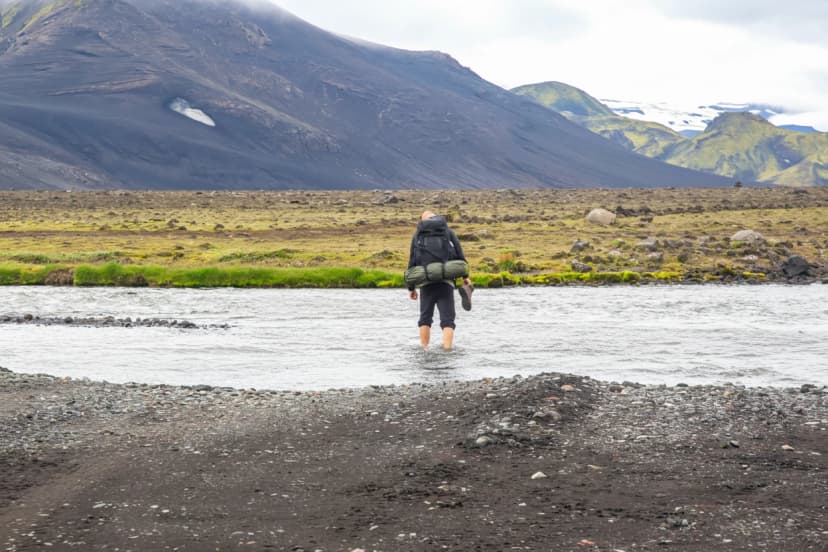
River-crossing shoes (sandals, neoprene booties, or old trainers). Never cross barefoot.
Should-have
3–4 L water capacity (most highland streams are drinkable; a backup filter is sensible)
Headlamp and spare batteries
Buff and warm hat — even in July
Sunglasses and sunscreen (snow on the passes; UV is high)
Quick-drying base layers — merino or synthetic, no cotton
Two pairs liner socks + two pairs hiking socks
High-energy snacks for at least one extra day beyond your itinerary
Earplugs (huts are dorm-style, 30+ strangers)
Power bank (huts have limited charging)
Small first-aid kit including blister care
Cash in ISK for hut showers and small payments where card readers fail
Don't bring
A tent if you've booked huts — the weight isn't worth it.
Cotton anything (t-shirts, jeans, hoodies). Wet cotton is dangerous in Iceland's conditions.
Bear spray. There are no bears.
For a more detailed breakdown, see our complete packing guide for hiking in Iceland. See also official gear recommendations and FÍ's hiking checklists.
Solo logistics: huts, transport, river crossings
The practical questions that catch solo hikers out:
Best Time for Solo Hiking
The main hiking season runs from late June through early September, and the safest window for first solo trips is mid-July to mid-August.
F-roads (the highland routes serving Laugavegur, Kjölur, and the rest) open between roughly 5 June and 25 June depending on snowmelt. The Icelandic Road Administration publishes opening dates as they happen.
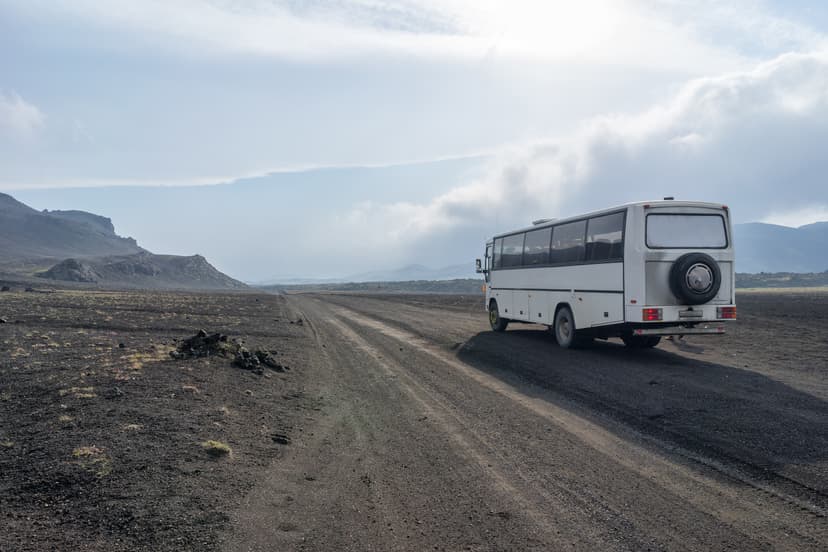
Until F-roads open, the Reykjavík ↔ Landmannalaugar bus does not run.
Peak season. Longest daylight (close to 24 hours through early July), warmest temperatures (typically 8–14 °C in the highlands), most fellow hikers on trail, all huts staffed and open.
The window runs four to six weeks.
Shoulder season. Fewer hikers en route, the first dark nights, more variable weather.
Experienced solo hikers can still go, but the margin for error shrinks.
For a first Iceland trip alone, target the second week of July through the third week of August. Pressure systems are most stable, river levels have settled past peak meltwater, and you'll have hut neighbors every night. Always cross-check conditions and forecasts within 24 hours of starting.
Find best time to hike with our month-by-month guide.
Is solo hiking in Iceland in winter possible?
For all but the most experienced winter mountaineers: no.
From mid-September to mid-June, F-roads are closed, huts are locked, daylight is short, and storms are routine. Winter solo travel in the Icelandic highlands is a different sport — and not one this guide is written for.
Planning a Solo Hiking Trip to Iceland?
For most solo travelers, a self-guided package — not a fully independent trip, not a guided group — is the right structural fit.
If you'd like the trip booked, the huts secured, and the logistics handled — without giving up the feel of walking it yourself — take a look at our hut-to-hut hiking tours in Iceland.
For more information, get in touch with us. We are happy to help you choose the tour suitable for your pace and preferences with safety en route as a priority.

About this author
Ajda is our travel advisor, raised in a village surrounded by mountain peaks. Hiking entered her life early on and remains her favorite way to reconnect with nature.
.jpeg&w=828&q=75)