Iceland in August: Late Summer Hiking and the Season’s End
August is one of the best times of year for hiking in Iceland — here is what to know if you're visiting in the last full month of the hiking season.

Anja
Published March 18, 2026
Edited April 16, 2026
12 min read
Quick links
Don't want to read all this?
We've planned 2,000+ hiking trips. Send your dates, fitness and group size — we'll map the route and book every night.



As the calmest pitch of the high season, August is the best month for hikers who want July's full access without the peak-season congestion.
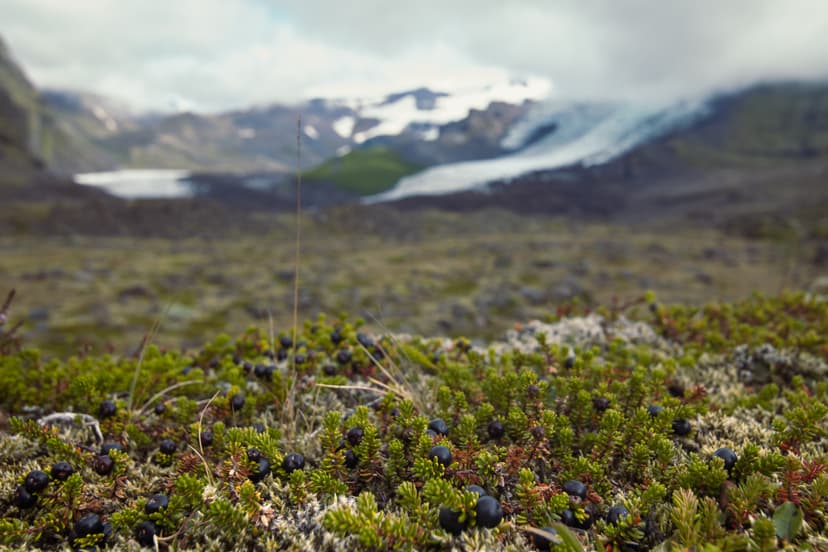
The Laugavegur, Fimmvörðuháls, Þórsmörk, and Víknaslóðir are all in their main season and mountain roads are all open. Glacier-fed rivers have settled to their most predictable levels of the year. The lowlands are warm, the highland weather is still mild, and along the trails the blueberries and crowberries are ripening.
None of that is unique to August — most of it is true in July as well — but August quietly hands you something July cannot: room to breathe. By the third week of the month, European school holidays are ending, accommodation prices begin to taper from their July ceiling, and popular trailheads finally feel less elbow-to-elbow.
What to do in August
Routes still depend on day-by-day conditions, but in a typical year nothing closes through the month.
Viable all month
Every classic hiking route — the Laugavegur, Fimmvörðuháls, Þórsmörk valley, Víknaslóðir
All Ferðafélag Íslands and Útivist mountain huts (operating window runs to mid-September)
All highland mountain roads, including Sprengisandur (F26), Askja (F88), and Lakagígar (F206) — open through August in a typical year
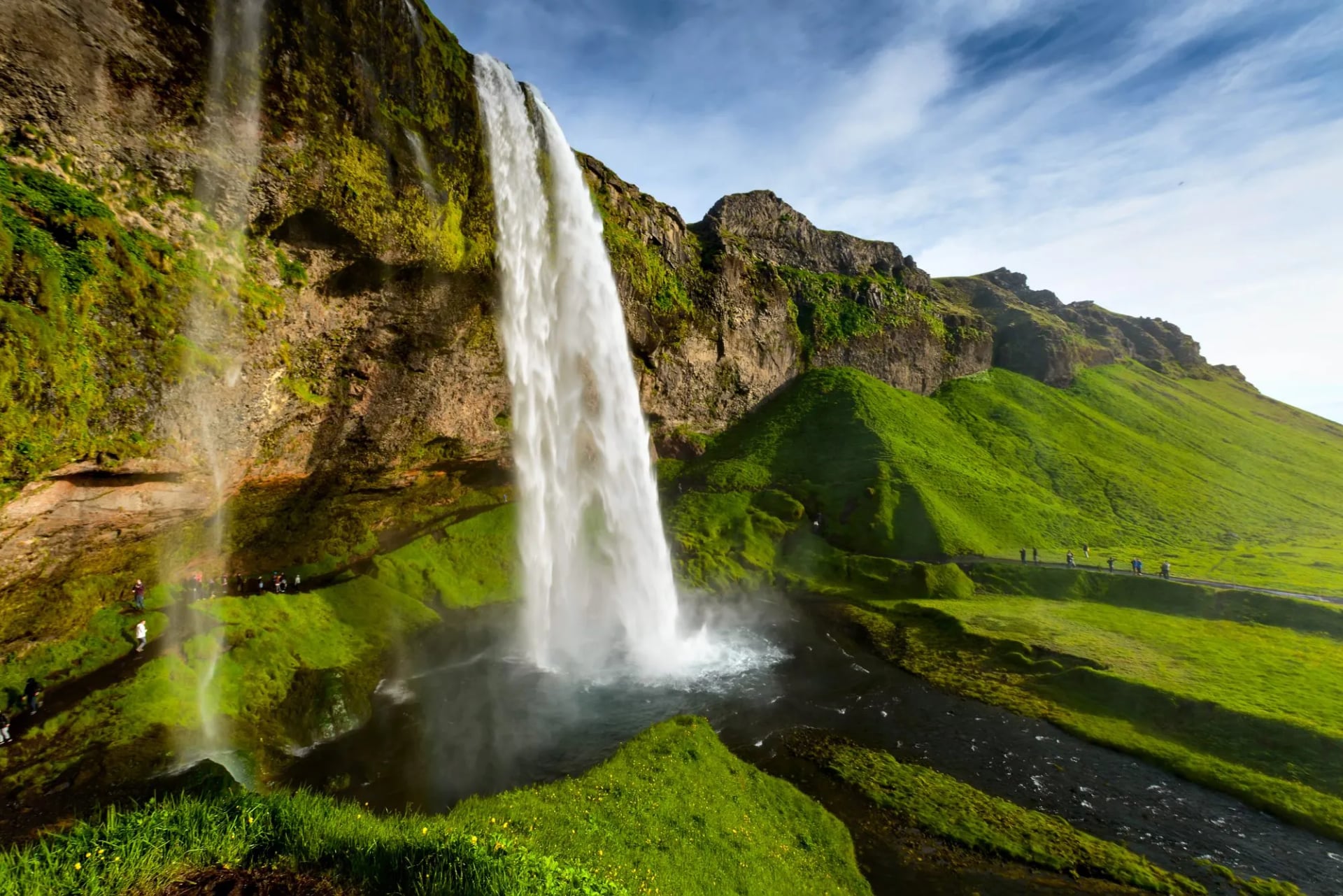
South coast hikes — Seljalandsfoss, Gljúfrabúi, Skógafoss, Reynisfjara, Dyrhólaey
Golden Circle — Þingvellir, Gullfoss, the Geysir area
Reykjavík and the Reykjanes peninsula
Snæfellsnes peninsula trails
Skaftafell National Park, both lowland and higher trails
East Fjords coastal routes
Whale watching from Reykjavík and Húsavík (humpbacks at peak in Skjálfandi Bay)
Tapering through the month
The deepest interior connectors — F910 Austurleið in particular — start closing from early September; book any tour using them in the first two-thirds of August to be safe
Highland bus services (Reykjavík Excursions, Sterna) run their full schedule until mid-September
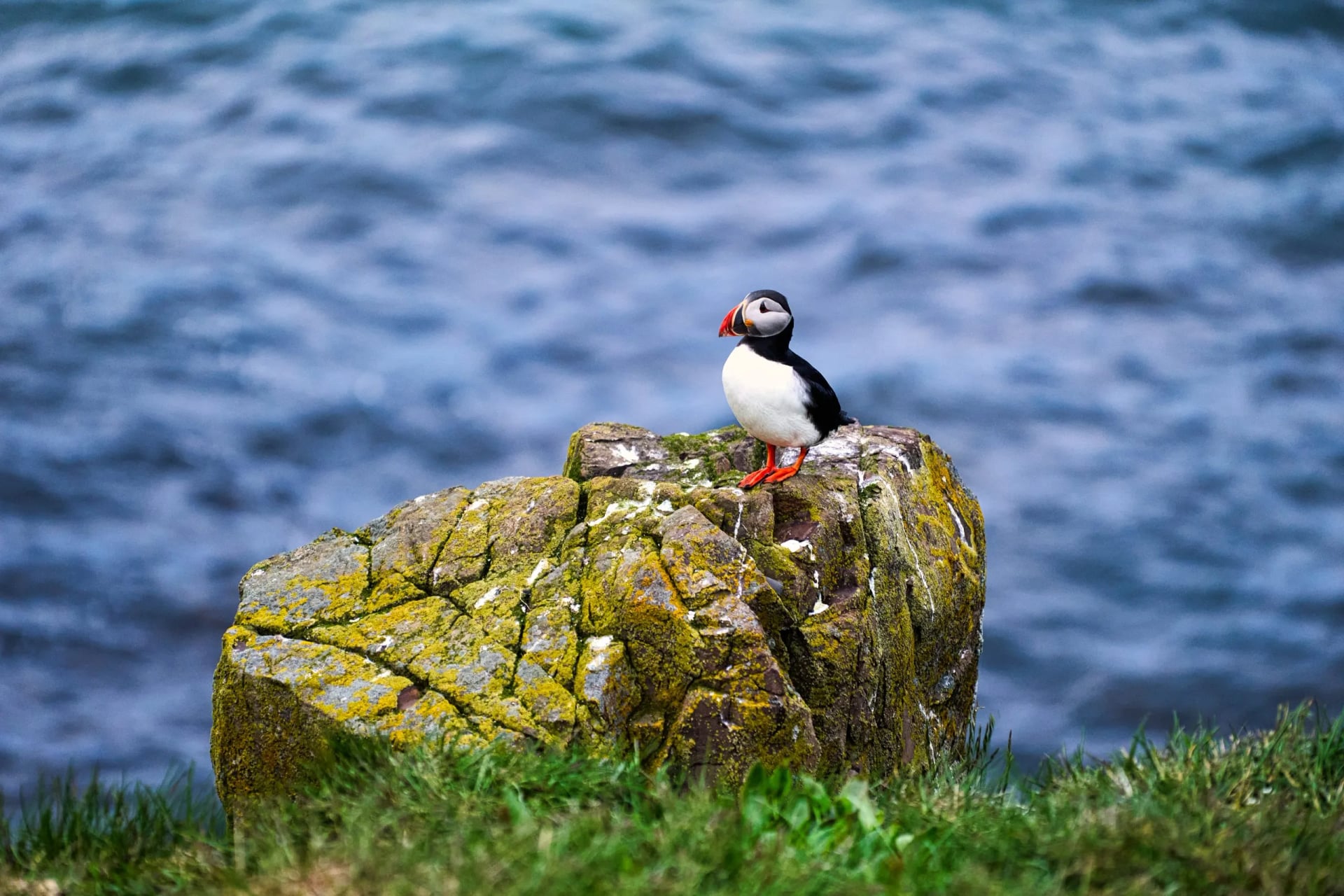
Atlantic puffins begin leaving the cliffs from mid-August. Late-month puffin viewing is no longer reliable; if puffins are a goal, plan for the first ten days at the latest.
-(1).jpeg&w=1920&q=85)
First vs. Second Half of August: Crowds, Prices, and Domestic Rhythm
August has a more distinct internal split than July. The first half and the second half feel like two different trips, and which one you book has a meaningful effect on price, congestion, and atmosphere.
The first half: peak summer, peak prices
The first ten days of August are part of the busiest stretch of the Icelandic tourist year — European school holidays, peak Verslunarmannahelgi (Merchant's Weekend, Iceland's largest holiday weekend) domestic travel, and peak prices on flights, car rentals, and accommodation. Reykjavík restaurants are full, the Golden Circle is shoulder-to-shoulder, and the South Coast feels genuinely peak-summer.
That said, the first weekend has a quirk worth using. With most domestic travel funnelled to Vestmannaeyjar for Þjóðhátíð, popular highland trailheads can be unusually quiet that weekend — counter-intuitively, sometimes the calmest highland nights of the month. If you can secure huts and an F-road tour for that weekend, you get July-grade weather with August's first hint of breathing room.
The second half: thinning crowds, easing prices
From around 18–20 August, the country exhales. The wave of European family travel pulls back and by the final week of August, popular spots feel closer to their June availability than to their early-August one.
Prices follow the same curve. Most accommodation operators begin softening rates in the third week, and the back-end of the month — especially after about 25 August — is meaningfully cheaper than the first ten days. If your dates are flexible, the last week of August buys you a full-season experience at better rates.
Iceland Weather in August: What to Expect
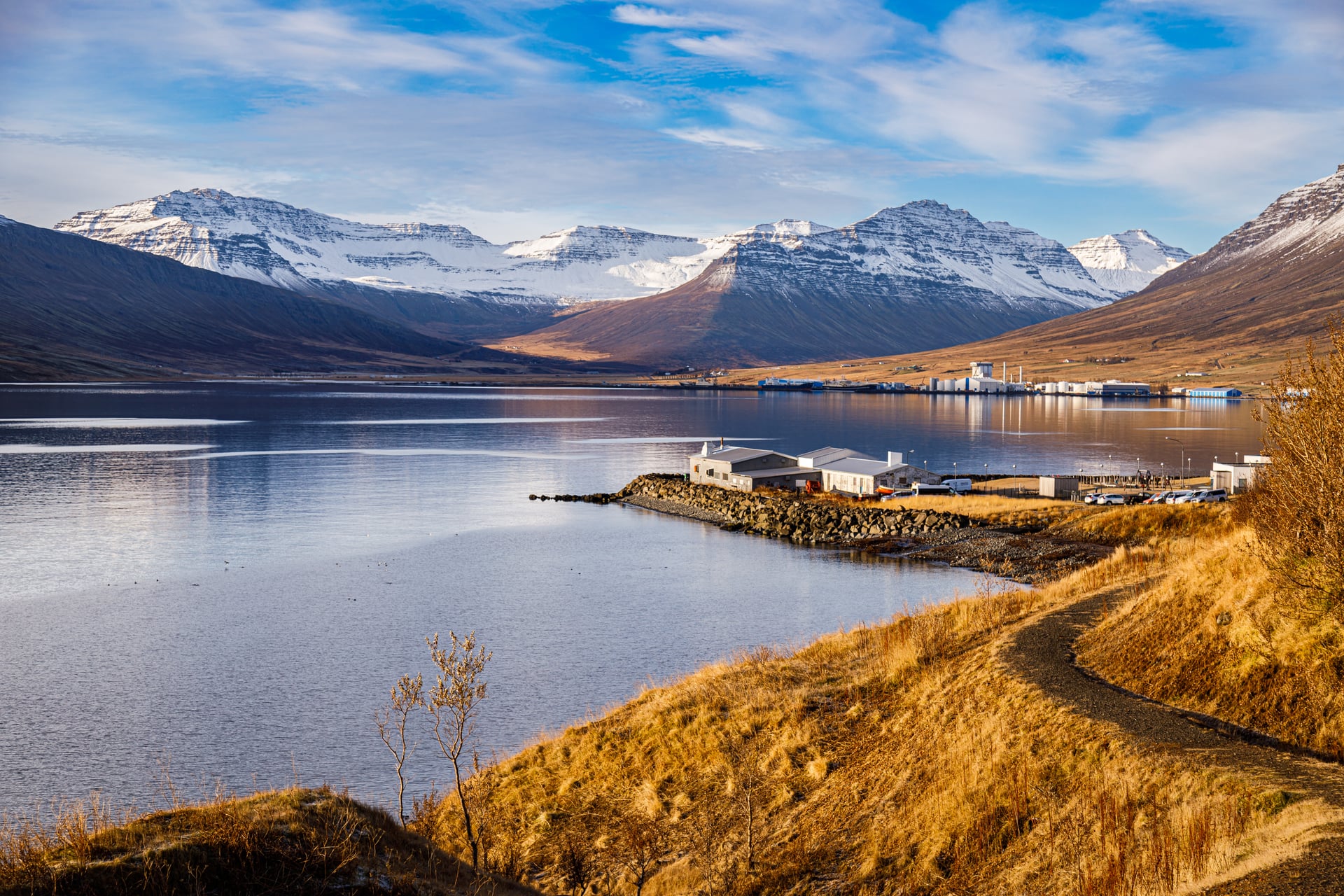
August is mild, generally pleasant, and slightly less settled than July as the first Atlantic systems of the autumn begin pushing in. Daylight is still long but visibly receding.
Daytime averages typically 9–13 °C (48–55 °F)
Slightly more frequent rain than July, but mostly in passing fronts
Daylight shrinks rapidly — about four hours lost over the month
Daytime temperatures typically run 9–13 °C (48–55 °F), with the south a degree or two warmer than the north. Nights are cool but rarely freezing in lowland areas; frost is uncommon below ~700 m through August.
Highland temperatures sit several degrees below the lowland forecast, and can drop 8–10 °C below what's predicted in lowlands.
High-pressure-locked stretches are less reliable in August, though the month rarely brings severe conditions.
Exposed trails can still get wind gusts of 15–20 m/s.
Rain is more frequent than in July. It still tends to pass through rather than settle in, but late-August washouts are more plausible.
The best weather forecasts source is the Icelandic Met Office.
Daylight shrinks faster than in any earlier summer month.
On 1 August, Reykjavík sees roughly 17h of daylight; by 31 August, that's down to about 13h and 30 min. The country loses around eight minutes of daylight per day through the month.
A head torch becomes useful again in the last week of the month, especially for early starts or evenings out on the trail.
Best Hiking Trails in August
August offers the widest choice of any month in the year. Every route is operating, the weather is workable, and the only real question is what kind of trip you want.
Best overall: Laugavegur Trail — the country's headline hike, at its most reliable in August.
Best multi-day: Laugavegur + Fimmvörðuháls — same trail, plus the dramatic high-pass extension to Skógar.
Best day hike: Kristínartindar circuit, Skaftafell — glacier-tongue views without the Svartifoss crowds.
Best hidden gem: Hornstrandir — Westfjords wilderness with no permanent population, boat access only, largely uncrowded.
1. Laugavegur Trail
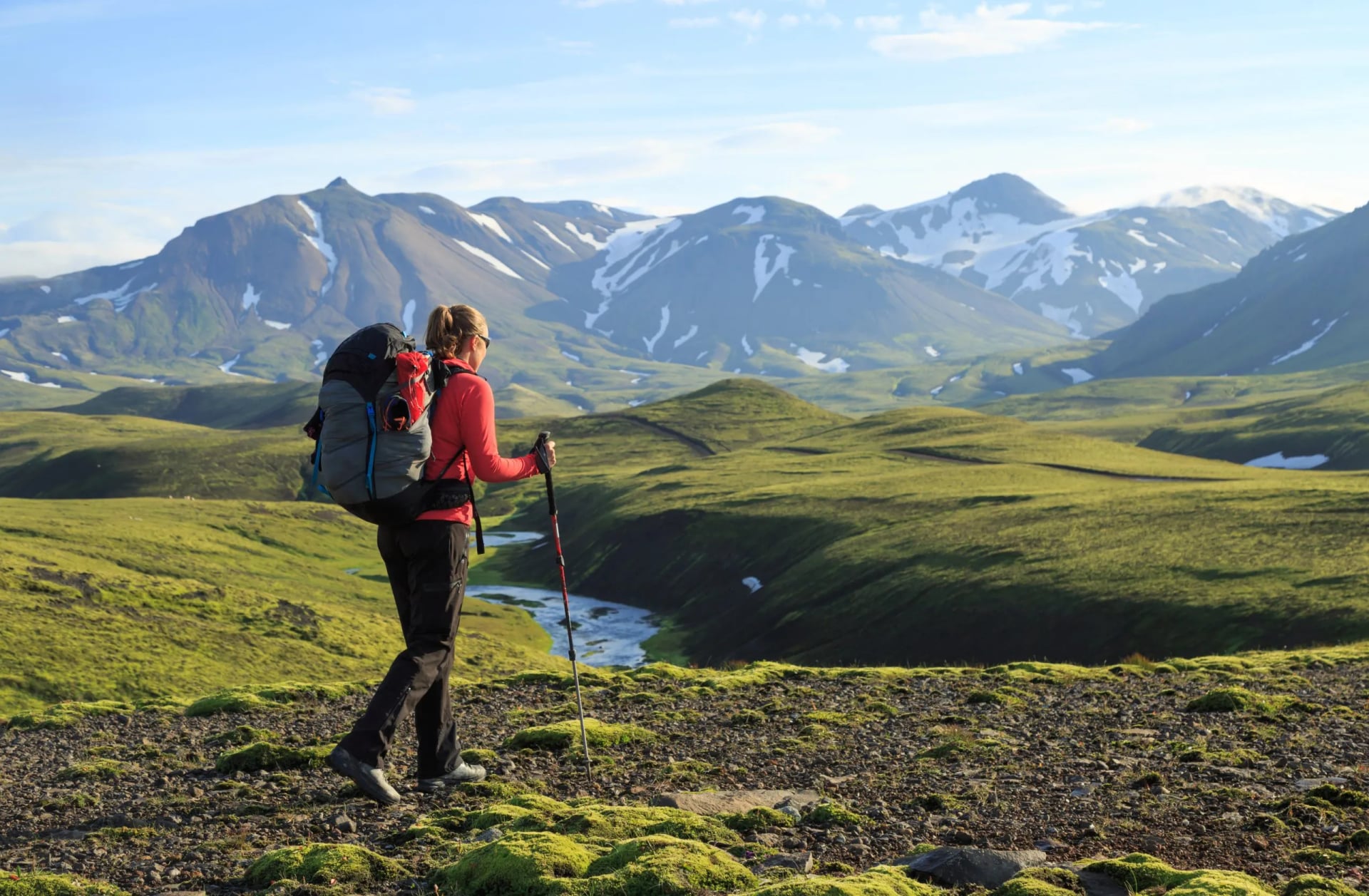
The country's most famous trek — rhyolite mountains, geothermal valleys, and obsidian lava fields between Landmannalaugar and Þórsmörk, sleeping in mountain huts each night.
Distance: 55 km · Duration: 4–5 days · Difficulty: ⅗
Why August: rivers at their most predictable, hut nights still bookable.
Who it's for: intermediate hikers who want Iceland's signature hut-to-hut experience.
2. Fimmvörðuháls
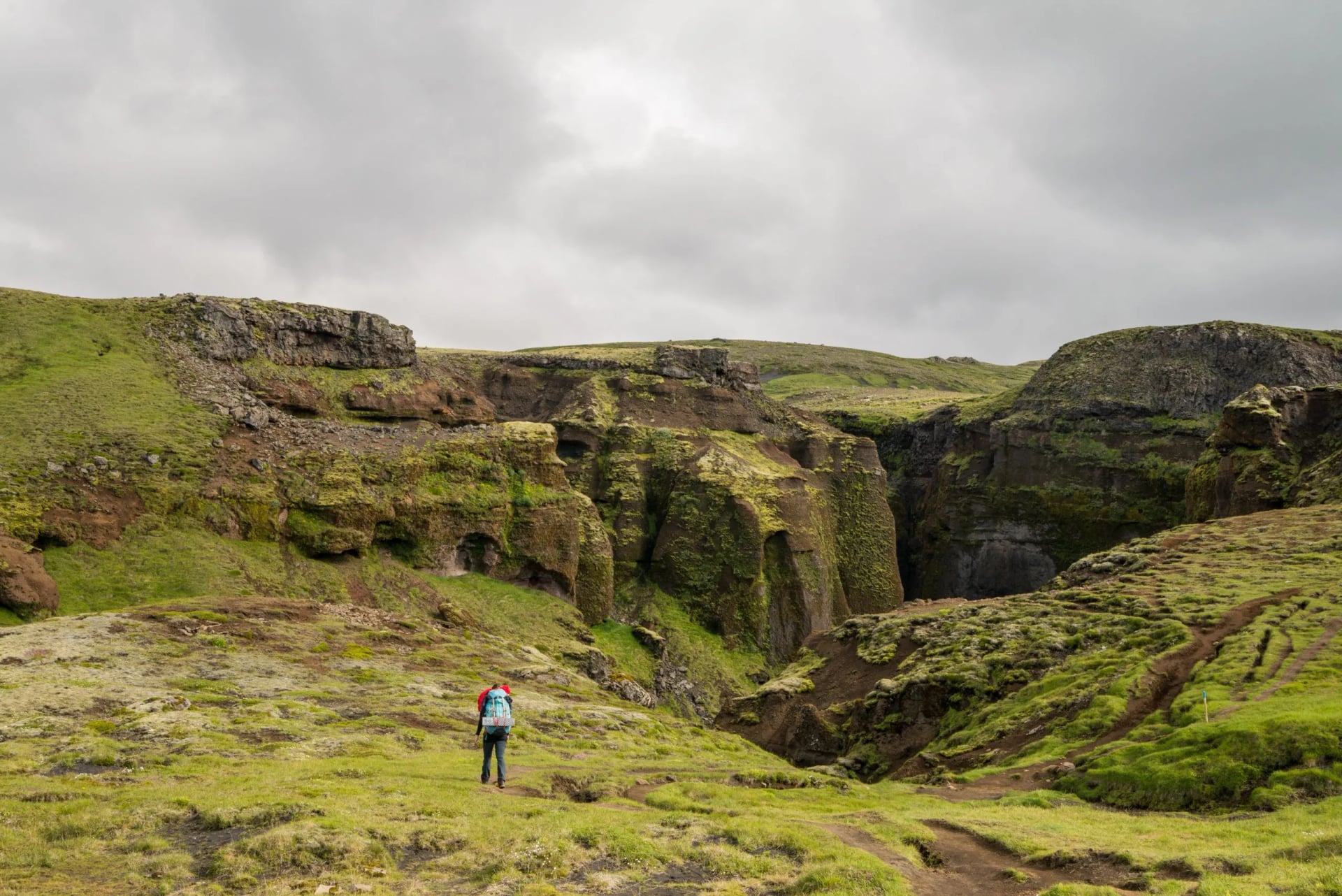
The volcanic pass between Þórsmörk and Skógar, past the 2010 Eyjafjallajökull eruption sites. It is often combined with Laugavegur by extending the trek.
Distance: ~25 km · Duration: 2 days · Difficulty: ⅘
Why August: the pass is at its clearest of the year, and the route works as a standalone short trip.
Who it's for: hikers with limited dates who still want a real highland day.
3. Lónsöræfi traverse
A wild traverse from Snæfell — across colored rhyolite, deep canyons, and unbridged glacial rivers, with a small network of huts — down to Stafafell near the southeast coast.
Distance: ~85 km · Duration: 4–5 days · Difficulty: ⅘
Why August: snowmelt has settled, the unbridged rivers are mostly predictable.
Who it's for: experienced hikers looking for a Laugavegur alternative in the east.
4. Víknaslóðir Trail
A 4-day point-to-point through the deserted East Fjords — abandoned farms, coastal cliffs, and puffin colonies, with hut accommodation each night.
Distance: ~60 km · Duration: 4 days · Difficulty: ⅖
Why August: meaningfully less trafficked than the Laugavegur, with the same hut-to-hut format.
Who it's for: hikers who want a multi-day with huts but not the crowds.
5. Strútsstígur
The closest spiritual equivalent to the Laugavegur with a fraction of the people — a remote highland traverse through black-sand desert, geothermal valleys, and into Þórsmörk.
Distance: ~45-55 km · Duration: ~4 days · Difficulty: ⅘
Why August: river levels favorable, huts at full operation, weather windows generous. · Who it's for: experienced hikers who've done the Laugavegur or want serious solitude.
6. Þórsmörk Glacier Valley Hike
A hub-based trek using Þórsmörk as the base for day hikes into the surrounding mountains — Valahnúkur, Tindfjöll, the Krossá river system, and the Fimmvörðuháls flanks.
Distance: varied (5–15 km/day) · Duration: 5 days · Difficulty: ⅘
Why August: river fords most predictable, valley at peak green, bus connections reliable.
Who it's for: hikers who prefer staying in one place and walking out from it each day.
7. Hornstrandir Nature Reserve
Iceland's most remote hiking area — an uninhabited peninsula in the far Westfjords, accessible only by boat from Ísafjörður, with no roads, no shops, and almost no other hikers.
Distance: varied (40–80 km depending on route) · Duration: 3–7 days · Difficulty: ⅘
Why August: boat schedules still running their summer service, weather stable enough for a multi-day before the September turn.
Who it's for: experienced backpackers comfortable with self-sufficiency and tent camping.
8. Iceland's South Coast Highlights
A 7-day inn-based route covering Þingvellir, the south coast waterfalls, Skaftafell beneath Vatnajökull, and Jökulsárlón — comfortable accommodation, breakfast included, GPS app for navigation.
Distance: mixed driving + day hikes · Duration: 7 days · Difficulty: ⅖
Why August: long-evening light, expansive feel after the third week of the month.
Who it's for: travelers who want Iceland's headline scenery without committing to mountain huts.
Day hikes
For shorter outings, four day hikes are at their best in August.
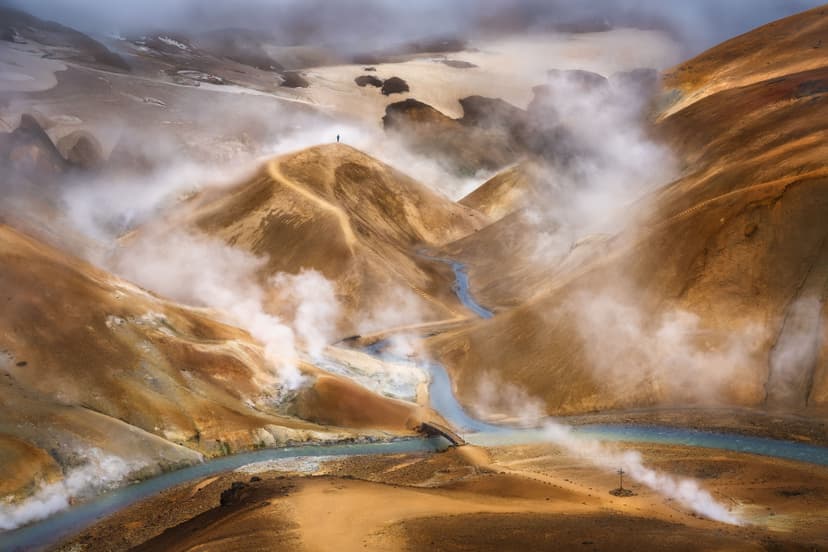
The Kristínartindar circuit at Skaftafell (~17 km) loops up to viewpoints over the Skaftafellsjökull and Morsárjökull glacier tongues, passing Svartifoss waterfall along the way. Hveradalir at Kerlingarfjöll (~11 km) traces one of Iceland's most photogenic geothermal valleys, with a comfortable lodge at the trailhead.
Closer to Reykjavík, Reykjadalur (~7 km return) walks up to a bath-warm geothermal river above Hveragerði, and Glymur (~8 km loop) — the country's second-tallest waterfall — is only accessible in summer, when the seasonal log bridge is in place.
We still recommend making the best of the season and choosing multi-day hikes. Our self-guided tours cover various popular trails. You can choose the one that suits you best, and have all the booking and transfers taken care of for you in advance, with 24/7 support en route.
Best hikes for your goal
Beginners
Reykjadalur hot river, Glymur waterfall, Hveradalir geothermal loop, the South Coast Highlights tour, and the Víknaslóðir Trail (the gentlest of the multi-day hut treks).
Experienced hikers
Laugavegur + Fimmvörðuháls for the full traverse, Strútsstígur or Lónsöræfi for serious solitude on a Laugavegur-grade highland route, and Hornstrandir for genuine self-supported wilderness.
Avoiding crowds
Hornstrandir, Strútsstígur, Lónsöræfi, and the Víknaslóðir Trail in the East Fjords — all genuinely uncrowded even in peak August. For day-hike alternatives, the Kristínartindar circuit at Skaftafell consistently has fewer people than the Svartifoss base trail despite starting at the same trailhead.
Wildlife
Víknaslóðir Trail (puffin colonies at Borgarfjörður Eystri until mid-August) and Hornstrandir (arctic foxes, seabirds, the only place in Iceland where the foxes are protected).
Limited time
2-day Fimmvörðuháls trek for a real highland trip in 48 hours, or a single day in Þórsmörk for the most concentrated mountain scenery accessible by bus from Reykjavík.
What You Will See When Hiking
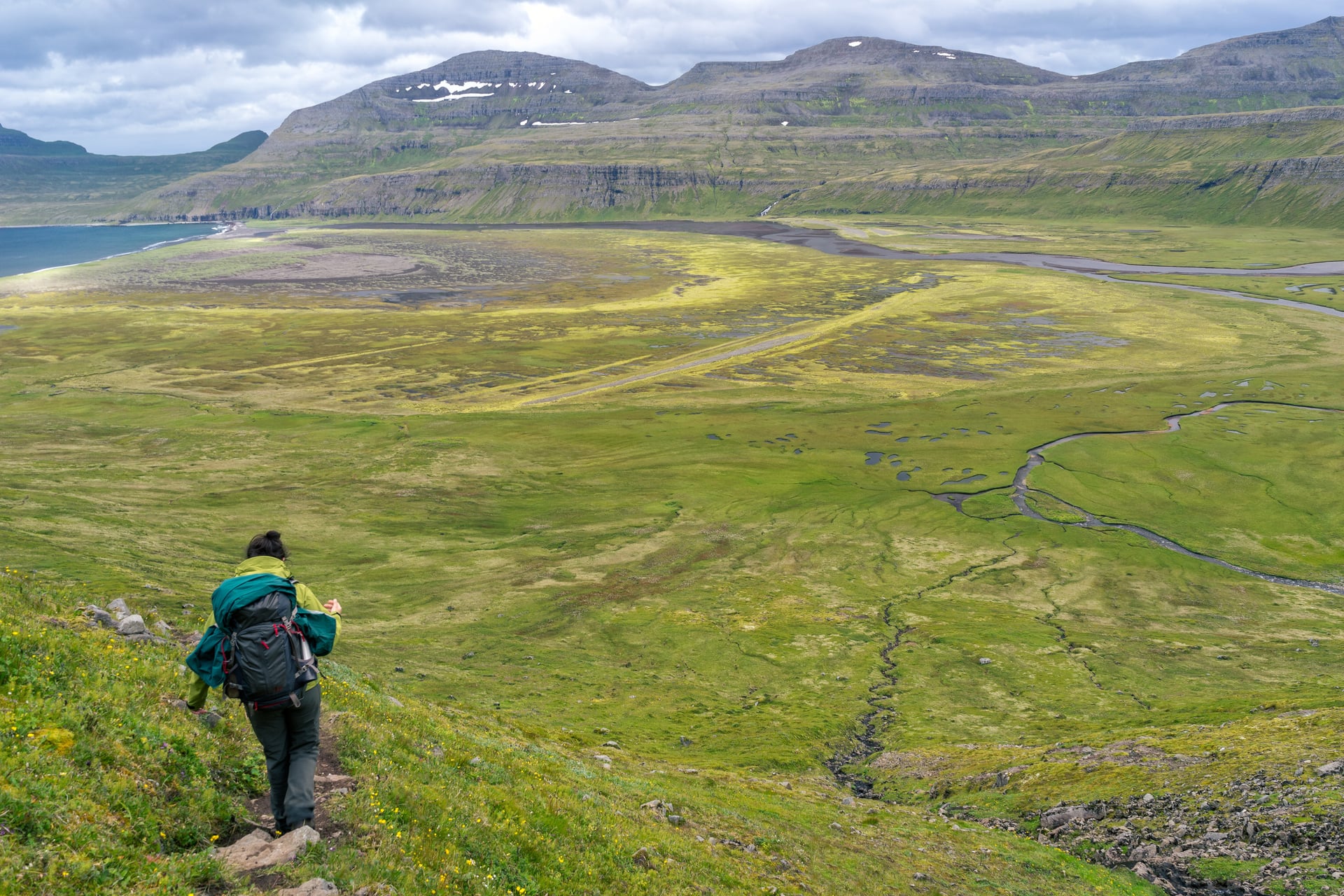
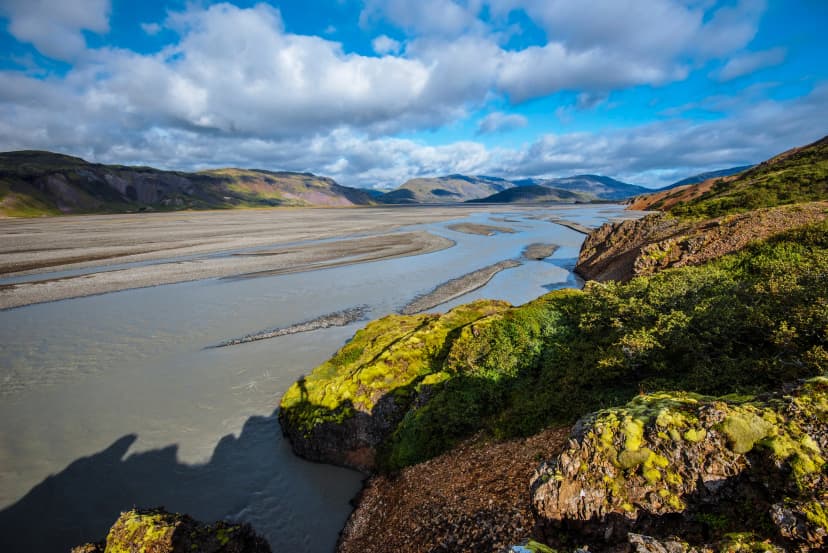
By August, summer in Iceland matures. The land is at its most green-and-russet, the lowland farms are baling, and the rhythm of the countryside is already turning toward harvest. Several specifically late-summer textures show up that aren't there in June or July.
What to Pack for Iceland in August
August packing is essentially the same as July: layers, waterproof everything, prepared for variability. Build for a thermometer that might read 14 °C in the morning and 6 °C with squally rain by mid-afternoon at altitude.
Clothing essentials
Waterproof, windproof shell jacket with hood (umbrellas are useless in Iceland)
Insulating mid-layer — fleece or light down
Thermal base layers, ideally merino wool
Waterproof hiking boots, broken in
Wool socks, three to five pairs
Hat, light gloves, buff (yes, even in August)
Quick-dry hiking pants + one pair of jeans for evenings
Long-sleeve and short-sleeve tops for layering
Other essentials
Head torch — newly useful in the last 10 days of August for early starts or late returns
Sleep mask (still useful in the first half of the month)
Swimsuit and quick-dry towel for hot springs
Reusable water bottle (Iceland's tap water is excellent)
Power adapter, Type F
Sunglasses and SPF — long days, low-angle sun, water reflection
Small container or bag — for berry-picking on trail edges
Daypack
Camera with spare batteries
For F-road or hut trips
50–65 L pack
Sleeping bag (huts are lightly heated and can get quite warm when crowded; mattresses are provided, but bedding isn’t)
Trekking poles
Gaiters for boggy ground and river edges
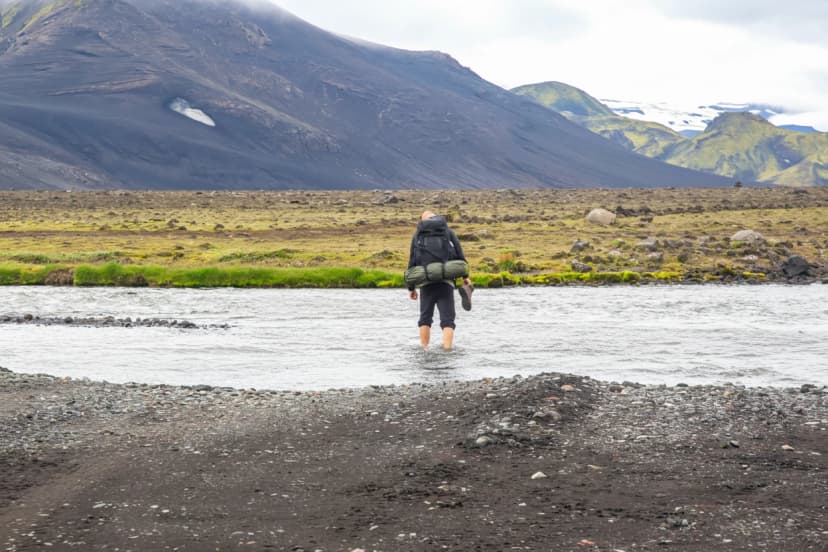
Sandals or quick-dry shoes for river crossings
Events and Holidays in August
A few dates in August affect Icelandic services and traffic in ways that matter for trip planning, even if you're focused on hiking rather than cultural events.
If a cultural weekend is part of the appeal, plan logistics — particularly Westman Islands ferries — months ahead. Otherwise, just be aware these dates affect what's open and how busy the roads are.
Booking an August Trip
August is the last full month of high-season hiking — everything is still open, but the runway is finite. If you have any uncertainty about your fitness, your gear, or your weather tolerance, August is the buffer-friendly choice. August is mild, generally pleasant, yet slightly less settled than July as the first Atlantic systems of the autumn begin pushing in.
For more on choosing the right month, see our complete guide to hiking in Iceland and other monthly guides.
Questions about timing or which route fits your dates? Send an inquiry for your desired trip. We'll help you find the most suitable tour for your preferences, time constraints, and abilities.

About this author
Anja is our lead travel advisor and a lifelong hiker who has planned countless adventures across Europe. She prefers sunsets to sunrises — unless coffee is involved — and, ever since her first rock-climbing course, joins friends on climbing trips whenever she can.
.jpeg&w=828&q=75)