Iceland in July: Peak Hiking Season and Trail Conditions
July in Iceland — every trail and hut open, the warmest highland weather of the year, near-endless daylight. A hiker's guide to peak season.

Jon
Published March 4, 2026
Edited March 17, 2025
12 min read
Don't want to read all this?
We've planned 2,000+ hiking trips. Send your dates, fitness and group size — we'll map the route and book every night.



July is the month for hikers who want absolute certainty that everything will be open — and who are willing to trade the highest prices and busiest trailheads of the year for that certainty.
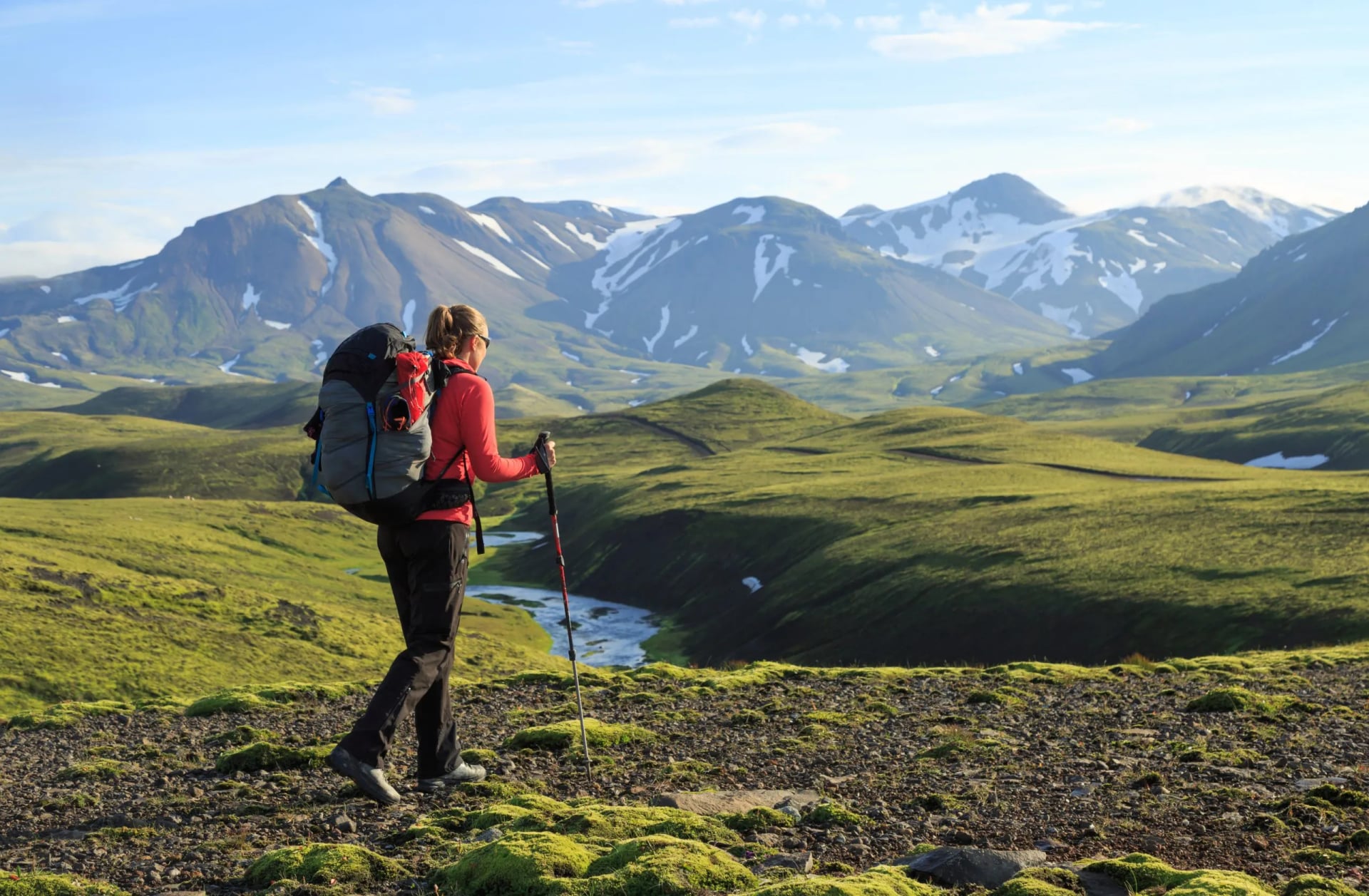
Every F-road into the highlands is in service. Every mountain hut is staffed and busy. The Laugavegur, Fimmvörðuháls, Þórsmörk, and Víknaslóðir are at the heart of their main season. The lowlands are at their warmest, the highland weather is at its most settled, and the long high-pressure stretches that produce Iceland's most photogenic hiking days happen more reliably in July than in any other month.
Best July Trails
When every Icelandic route is open, every hut is staffed, and every bus and boat is running, the useful question isn't what can I hike — it's which one is the right fit. The decisions below are the ones that actually matter when everything's available.
The Laugavegur Trail
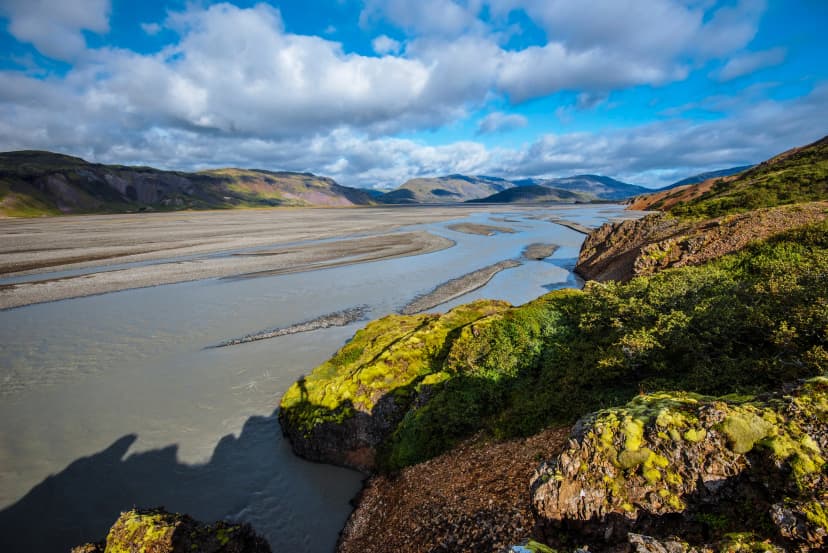
July is the Laugavegur's strongest weather and trail-condition month: drier path, snow patches gone from the high section, the most settled stretches of the year. If your dates and budget allow the full Laugavegur + Fimmvörðuháls (79 km, 6 days), that's the headline trip of the country, and the high pass between Eyjafjallajökull and Mýrdalsjökull is at its most reliably snow-free in July. No other month is likely to offer such reliable conditions.
Laugavegur Alternatives
Three real alternatives, mapped to what you wanted from the Laugavegur:
Víknaslóðir Trail in the East Fjords (~74 km, 4 days) — the same hut-to-hut format, gentler terrain, meaningfully less trafficked, with active puffin colonies at Borgarfjörður Eystri alongside the route.
Strútsstígur (~45 km, 3–4 days) — the highland traverse most often recommended to hikers who wanted Laugavegur-grade country with a fraction of the people. Tougher logistics, fewer hut options, real solitude.
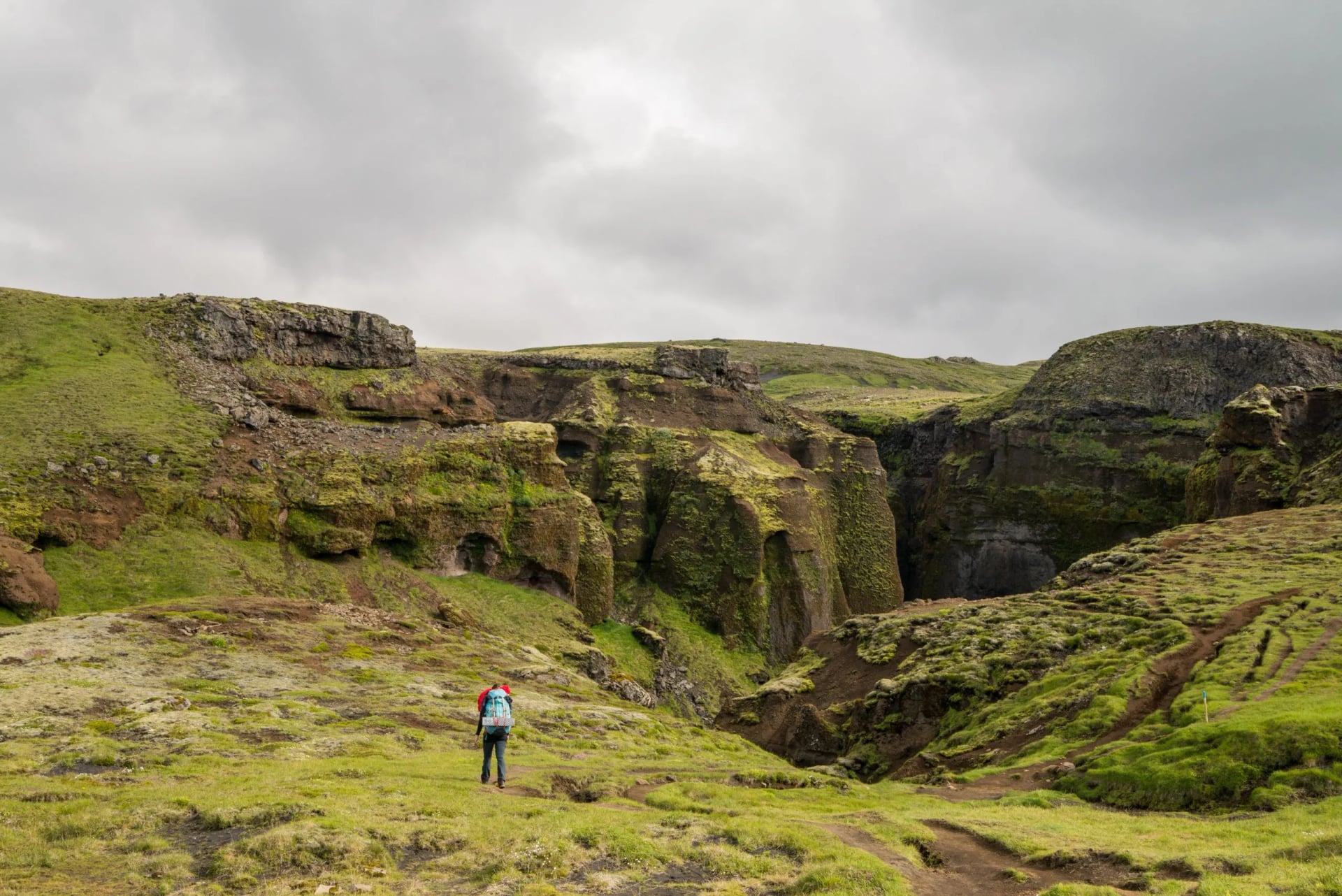
A Fimmvörðuháls Trek (~25 km, 2 days) — the most dramatic single section of the longer route, between Þórsmörk and Skógar, in 48 hours. The summer-peak answer to "I've only got a weekend."
Best wildlife hikes
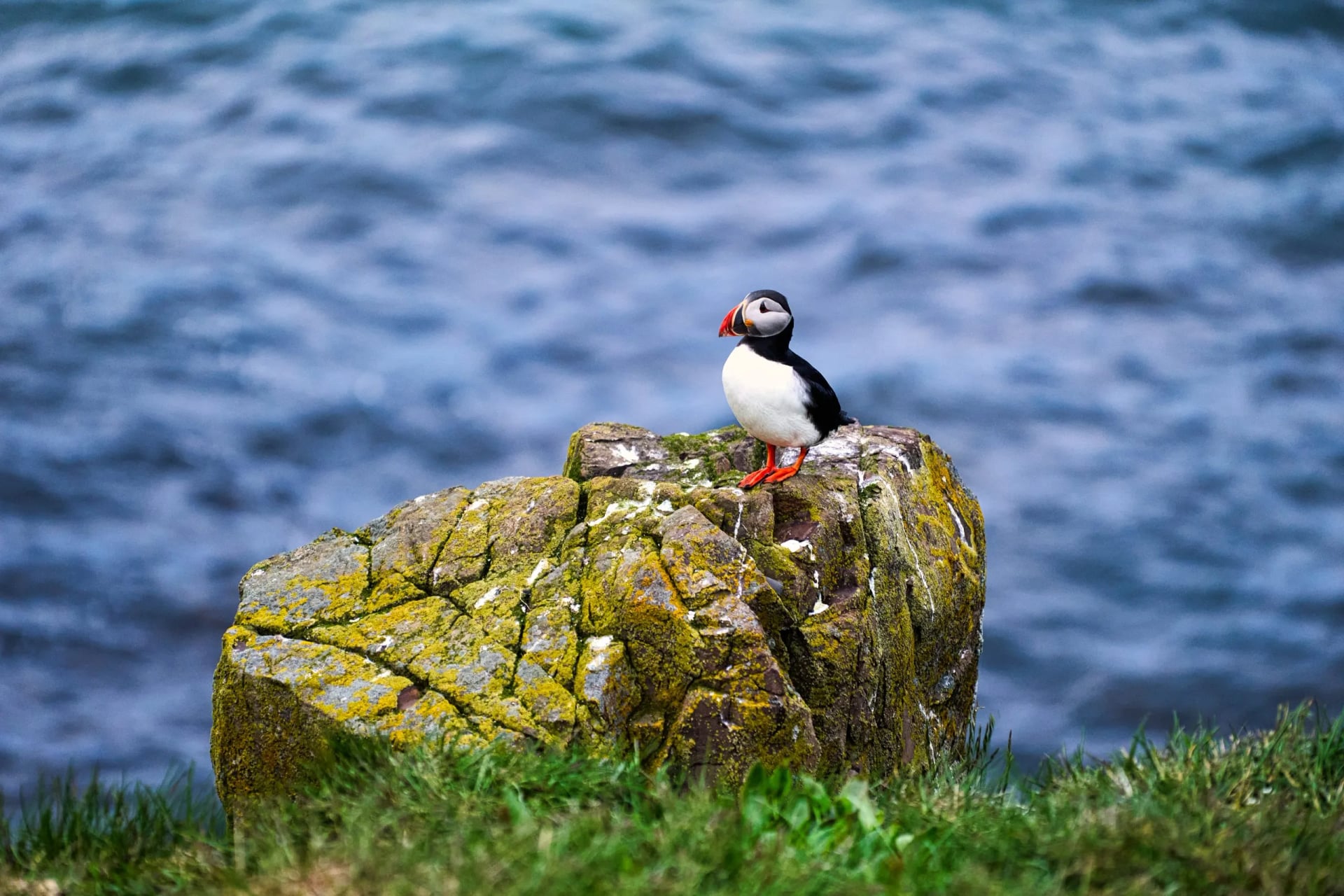
Late June through the first three weeks of July is the only stretch of the year where puffins are reliably on the cliffs and whales are at peak in the bays. The two routes that capture this best are the Víknaslóðir Trail (puffin colonies at Borgarfjörður Eystri throughout the month) and Hornstrandir Nature Reserve (arctic foxes and seabirds in Iceland's only protected fox habitat, accessible by boat from Ísafjörður). Pair either with a whale-watching day from Húsavík or Reykjavík.
Best scenery hikes
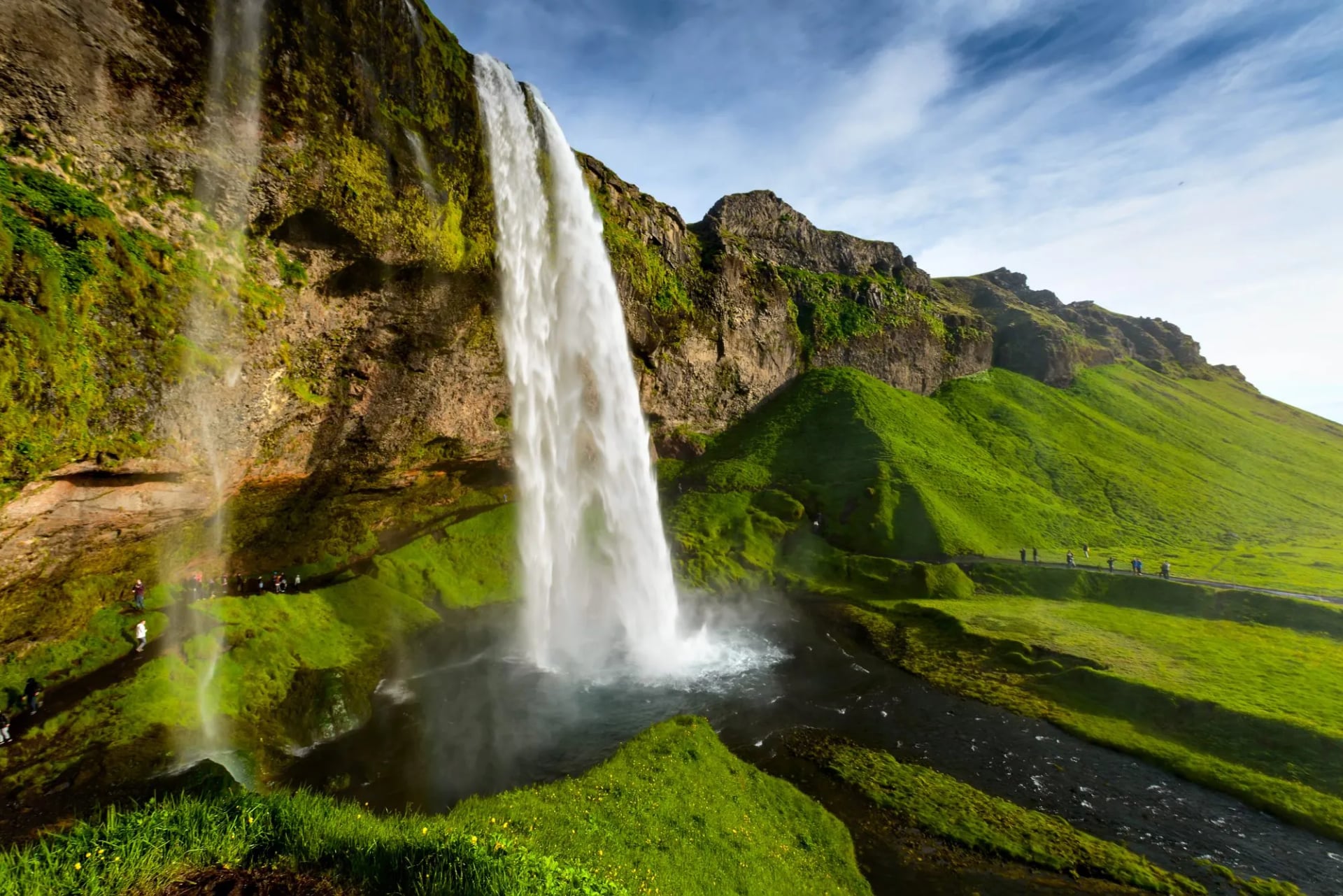
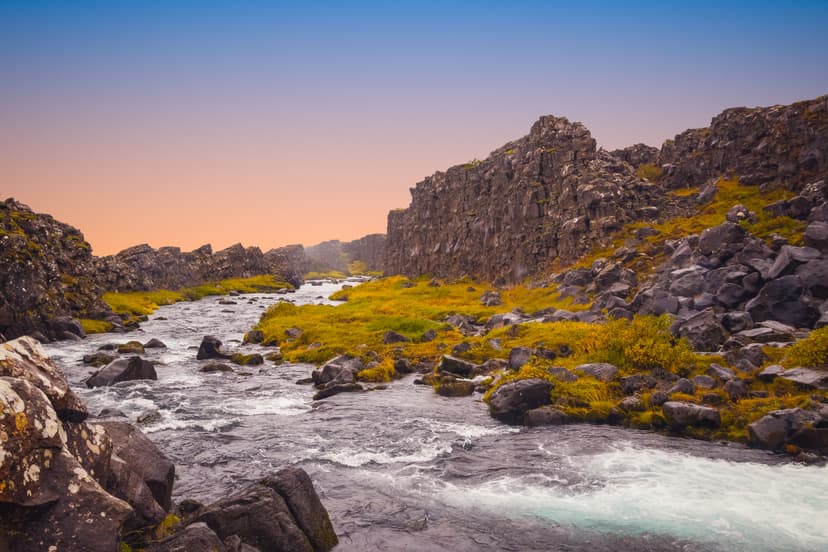
Route of South Coast highlights — Þingvellir, the south coast waterfalls, Skaftafell, Jökulsárlón — can run on inn accommodation instead of highland huts, with breakfast included. July gives it Iceland's warmest stretches and 18+ hours of usable evening light. The tougher single-day equivalent is the Kristínartindar circuit at Skaftafell (~17 km, 6–7 hours), which loops over glacier-tongue viewpoints from the same trailhead as the standard Svartifoss out-and-back — and is consistently quieter despite the shared start.
A short rule of thumb: if your dates are fixed, build around hut availability. If you couldn't secure huts and your dates can shift, target the first or last week of July — both run quieter than the mid-month peak — and reach for one of the East Fjords or highland alternatives. If you'd rather not handle this yourself, that's what we're here for — chained hut bookings, a GPS route via app, transfers, and 24/7 support throughout.
Planning a July Hike in Iceland
July's reliability is also what makes it the most logistically demanding month to plan. Every part of the country's hiking system runs at full capacity in July, which means every part of the system is in demand at the same time. The decisions below are the ones that consistently make or break a July trip.
How and when to book
Hut nights first, 6-9 months out. The huts on the Laugavegur and Fimmvörðuháls Trails are the single hardest thing to book in the peak season. Popular July dates routinely sell out within days of the booking window opening in late autumn. If your trip depends on a Laugavegur hut sequence, set a calendar reminder for that opening date.
Flights and rental cars 3-4 months out. Airfare into Keflavík firms meaningfully from April onward and stays elevated through August. Rental 4×4s for any F-road component go early.
Reykjavík hotels and south-coast guesthouses 1-2 months out. Tight, but with substitutes.
If your dates are inflexible, lock down hut nights first, then build flights, transfers, and lowland accommodation around them. The huts are the only piece of the trip that genuinely sells out — everything else has alternatives.
If your dates are flexible and you want July weather without July prices, consider the first week of July (still some shoulder pricing on flights and accommodation) or the last week (similar). The mid-July peak is the most expensive stretch.
What to expect on the trail
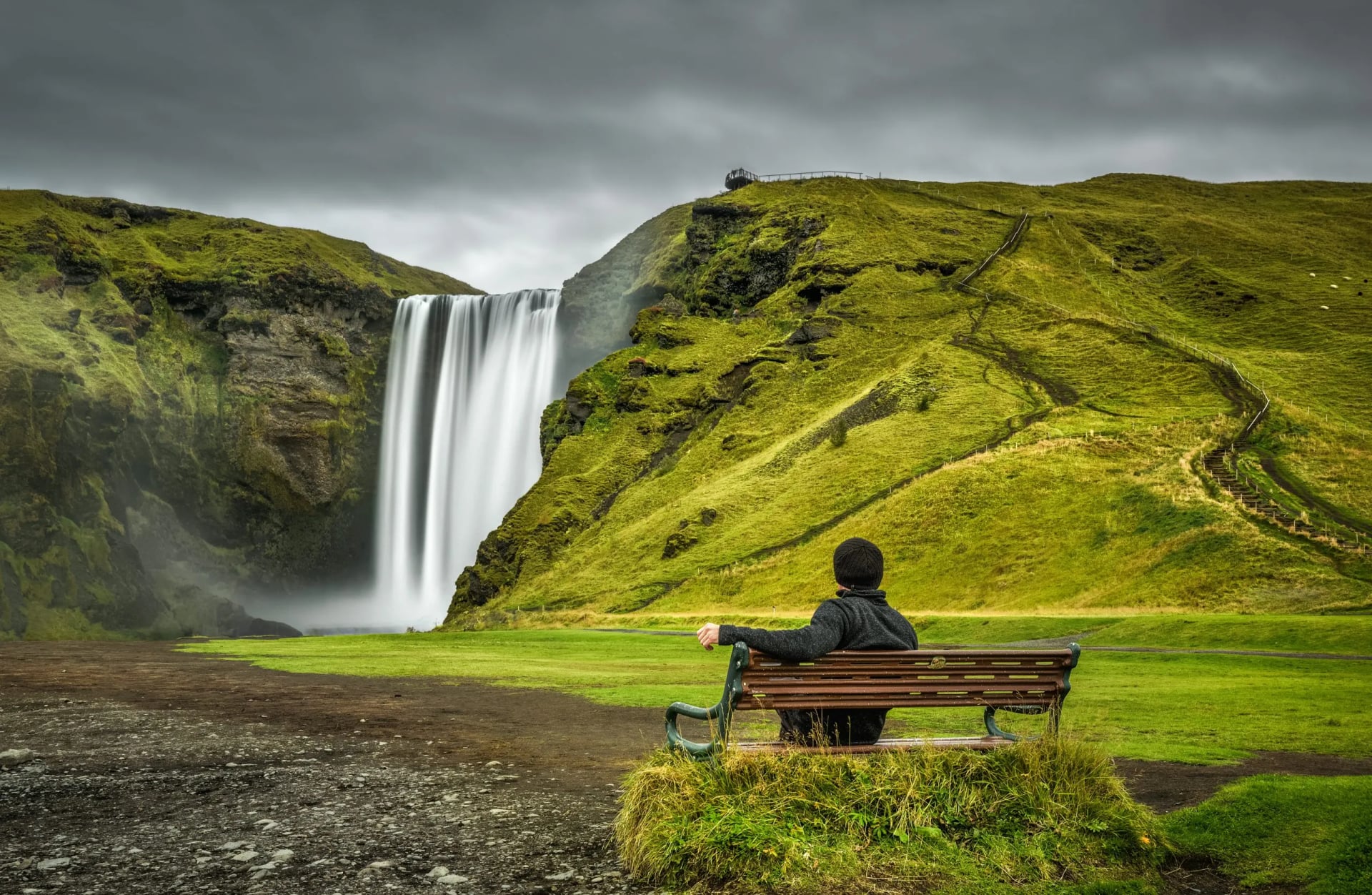
Trailhead crowds at peak hours (10:00–17:00) on the headline sights — Skógafoss, Seljalandsfoss, Reynisfjara, Geysir, the Landmannalaugar pool. Early starts and late finishes neutralize most of this.
Huts are at full capacity, with shared sleeping platforms fully booked, and full dinner tables. Bring a sleep mask, earplugs, and the social tolerance to match.
The amount of daylight is generous. A 9-hour hiking day finishing at 19:00 still leaves four hours of usable evening light.
How to avoid the crowds
July's crowds cluster in predictable places: the headline south-coast sights (Skógafoss, Seljalandsfoss, Reynisfjara, Geysir), the Laugavegur huts and trailheads, and the day-tripper-bus windows on otherwise quiet trails. None of it is unavoidable — but each tactic below addresses a specific pinch point.
Beat the touristic bus running window. Tour buses on the south coast run roughly 10:00–17:00. Visit Skógafoss and Seljalandsfoss before 09:00 or after 19:00 — both are walk-up with no closing time.
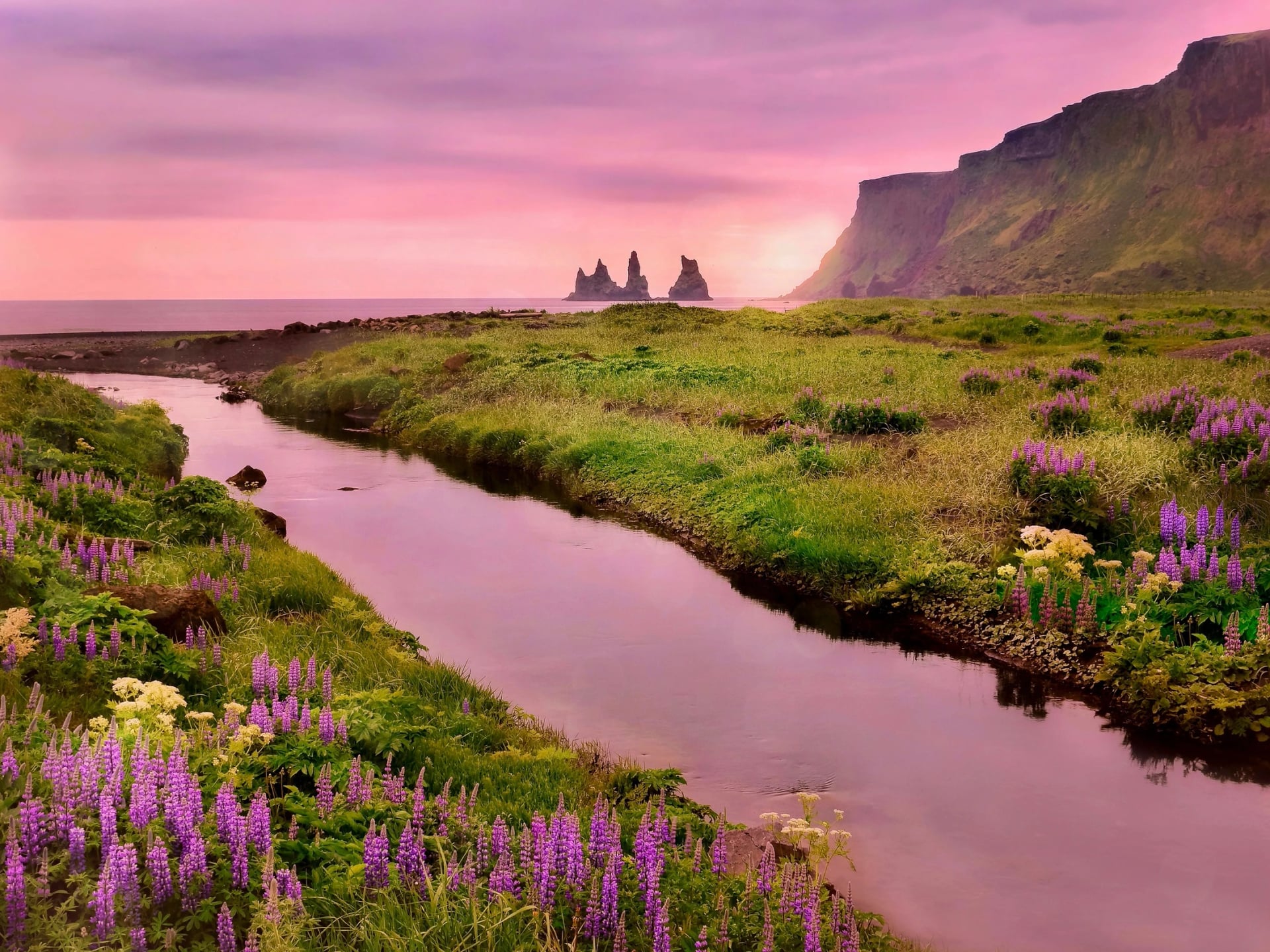
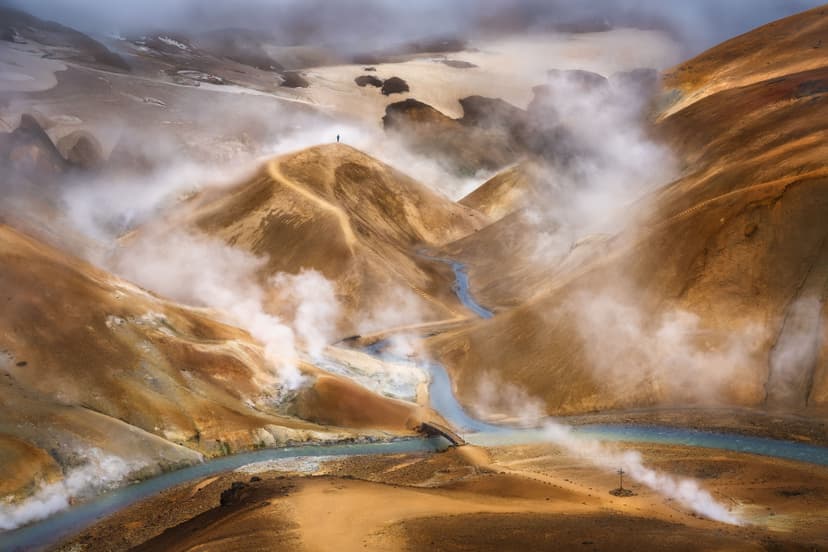
Swap one headline sight for its quieter twin. Stokksnes alongside or instead of Reynisfjara. Kerlingarfjöll alongside or instead of Landmannalaugar. The Kristínartindar circuit alongside Svartifoss. Snæfellsnes Peninsula instead of the Golden Circle. Borgarfjörður Eystri or Látrabjarg instead of Vestmannaeyjar for puffins.
Pick a quieter region for the non-Laugavegur portion of the trip. The East Fjords and Westfjords run at a fraction of the south-coast traffic. The Víknaslóðir Trail is the strongest single substitute for the Laugavegur if huts are sold out.
Time your trip carefully. The first and last weeks of July are meaningfully calmer than the middle two. Mid-July — roughly 10–22 July — is the genuine peak. The first week still has shoulder pricing on flights and accommodation; the last week shades toward August's softer rhythm.
Leave the hut early. Even on the busiest Laugavegur stretches, an early start puts you 1–2 hours ahead of the main pulse — your morning is in the best light, and you arrive at the next hut before the queue forms.
Pre-book your transfers. Bus seats to Landmannalaugar and from Þórsmörk (Trex, Reykjavík Excursions) sell out alongside hut nights. Turning up hoping to ride is a July-specific way to lose half a day.
Don't try to combine it all. Fitting Landmannalaugar, the Golden Circle, and the south coast into the same week as a Laugavegur trek puts you on the busiest infrastructure at the busiest hours. Pick the trek and one of the others.
Build in a buffer day. A single day of slack lets you swap a crowded morning for a quieter alternative, or shift a south-coast visit by 12 hours when the forecast or the bus schedule looks heavy.
Know before you go
Bookmark Vedur and Safetravel. Both are the official Icelandic services with reliable, up-to-date forecasts with important insight and various useful information. We provide 24/7 support if weather forces a change of plan mid-trip on our self-guided tours.
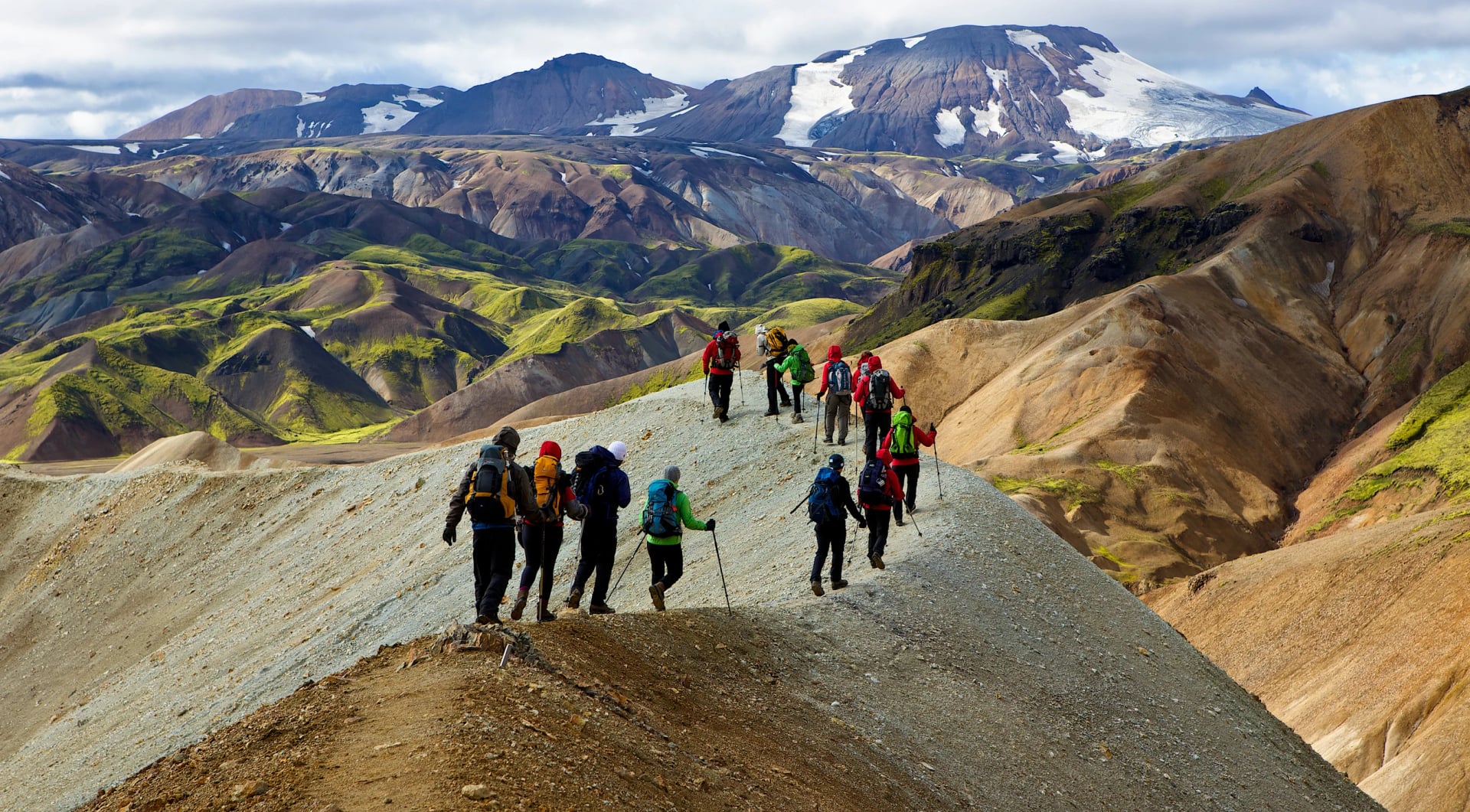
Set realistic daily distances. Laugavegur stages run 12–17 km with elevation in unpredictable weather. Don't compress the schedule. Our tours include a paced itinerary built around a realistic stage lengths.
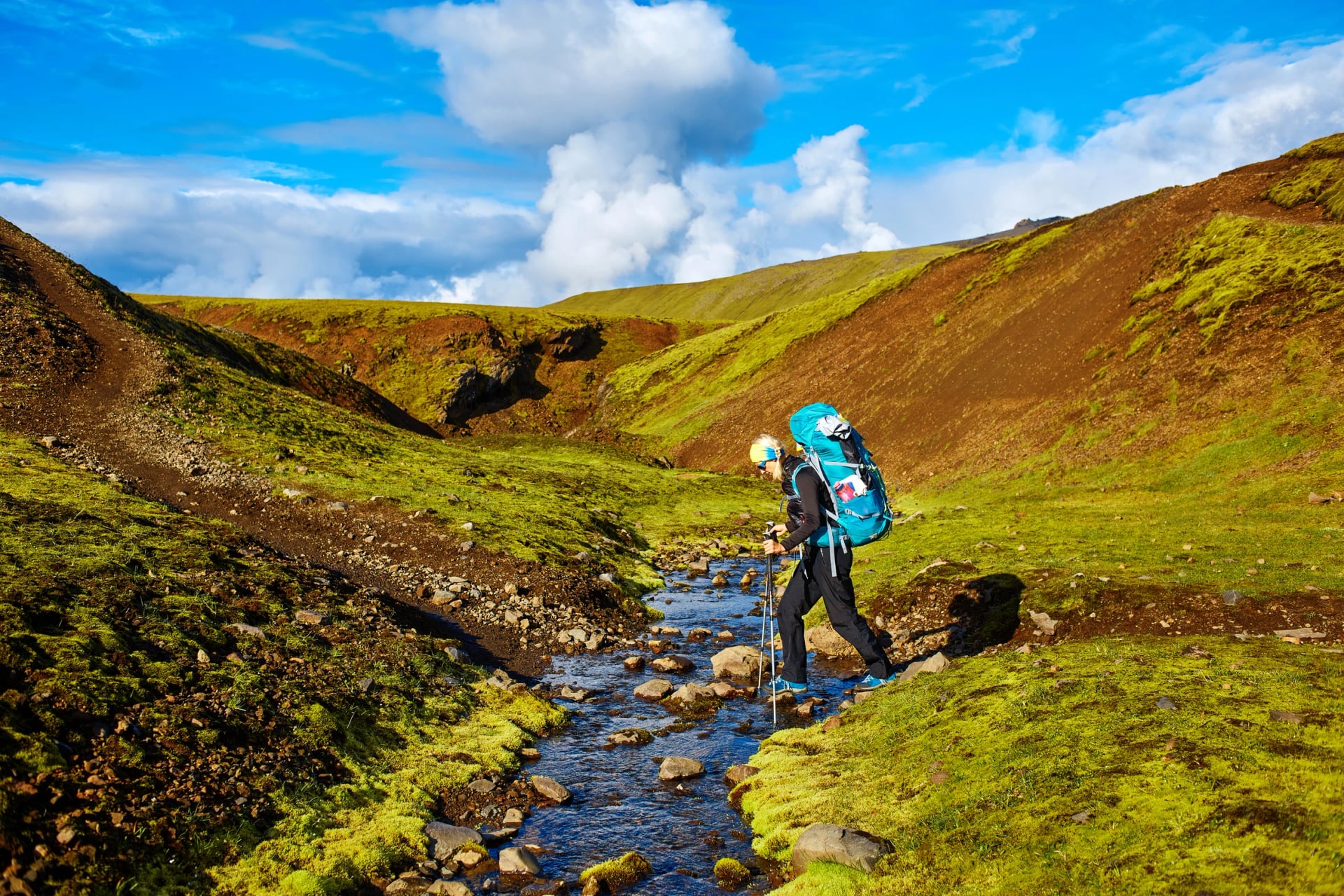
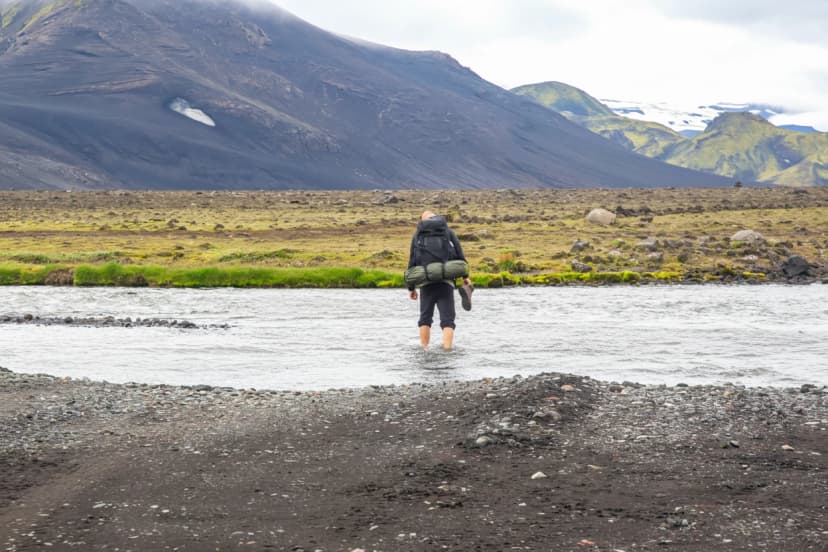
Pay attention to river crossings on the Laugavegur even in mid-July. The Þrönga, Bláfjallakvísl, and Innri-Emstruá are unbridged. Cross in the morning and never alone if water looks high.
Travel insurance with mountain cover. Standard policies often exclude unbridged river crossings and unmarked terrain.
Mobile coverage is patchy in the highlands, so don't expect to rely on Google Maps. By booking through us, you get a pre-made GPS route, and simple-to-use app for easy navigation.
Weather in July
July is Iceland's warmest, most settled, and most reliable hiking month. Daylight is still essentially endless, weather windows are generous, and severe weather is uncommon but not absent.
Daytime averages typically 11–15 °C (52–59 °F)
The most settled stretches of the year — long, clear, golden days when high pressure locks in
Daylight at near-solstice levels through the first three weeks
Daytime temperatures typically run 11–15 °C (52–59 °F). Inland valleys and the eastern interior can see afternoons in the high teens or low twenties during settled high-pressure spells — Iceland's warmest stretches of the year.
Frost is rare below ~700 m through July, but highland temperatures sit several degrees below the lowland forecast. Even in July, an exposed pass at 1,000 m can drop to near freezing.
Wind. Keep track of the wind gusts in the forecast, not just the rain. A 25 m/s gust on an exposed pass is a hazard.
Rain. Precipitation is at its summer minimum, but Atlantic systems still pass through every 7–10 days.
High-pressure spells. When a high parks over Iceland in July, you can get a week of clear, warm, almost windless weather.
July sits squarely inside Iceland's bright season. The country loses around 4-5 minutes of daylight per day.
Early July feels like the solstice — close to 24-hour functional light.
Mid July sees sunsets around 23:30 with twilight bridging straight into sunrise, with no real darkness.
Late July sunsets pull back to around 22:30.
What to Pack
July packing is the standard Iceland summer kit: layers, waterproof everything, prepared for variability. Build for a thermometer that might read 16 °C in the morning and 8 °C with squally rain by mid-afternoon at altitude.
Clothing essentials
Waterproof, windproof shell jacket with hood (umbrellas are useless in Iceland)
Insulating mid-layer — fleece or light down
Thermal base layers, ideally merino wool
Waterproof hiking boots, broken in
Wool socks, three to five pairs
Hat, light gloves, buff (yes, even in July)
Quick-dry hiking pants + one pair of jeans for evenings
Long-sleeve and short-sleeve tops for layering
Other essentials
Sleep mask — genuinely necessary for the entire month
Reusable water bottle (Iceland's tap water is excellent)
Power adapter, Type F
Sunglasses and SPF — long days, low-angle sun, water reflection — sunburn at altitude is real
Swimsuit and quick-dry towel for hot springs
Daypack
Camera with spare batteries
Insect repellent — midges (mýflugur) are at their summer peak around lakes (Mývatn especially) and in still-air valleys
For F-road or hut trips
50–65 L pack
Sleeping bag (huts are lightly heated and can get very warm when crowded; mattresses are provided, bedding isn’t)
Trekking poles
Gaiters for boggy ground and river edges
Sandals or quick-dry shoes for river crossings
High Summer on the Trails
July is when the country looks like the photographs. Some specific features show up that aren't there in earlier or later summer.
Wildflowers at peak
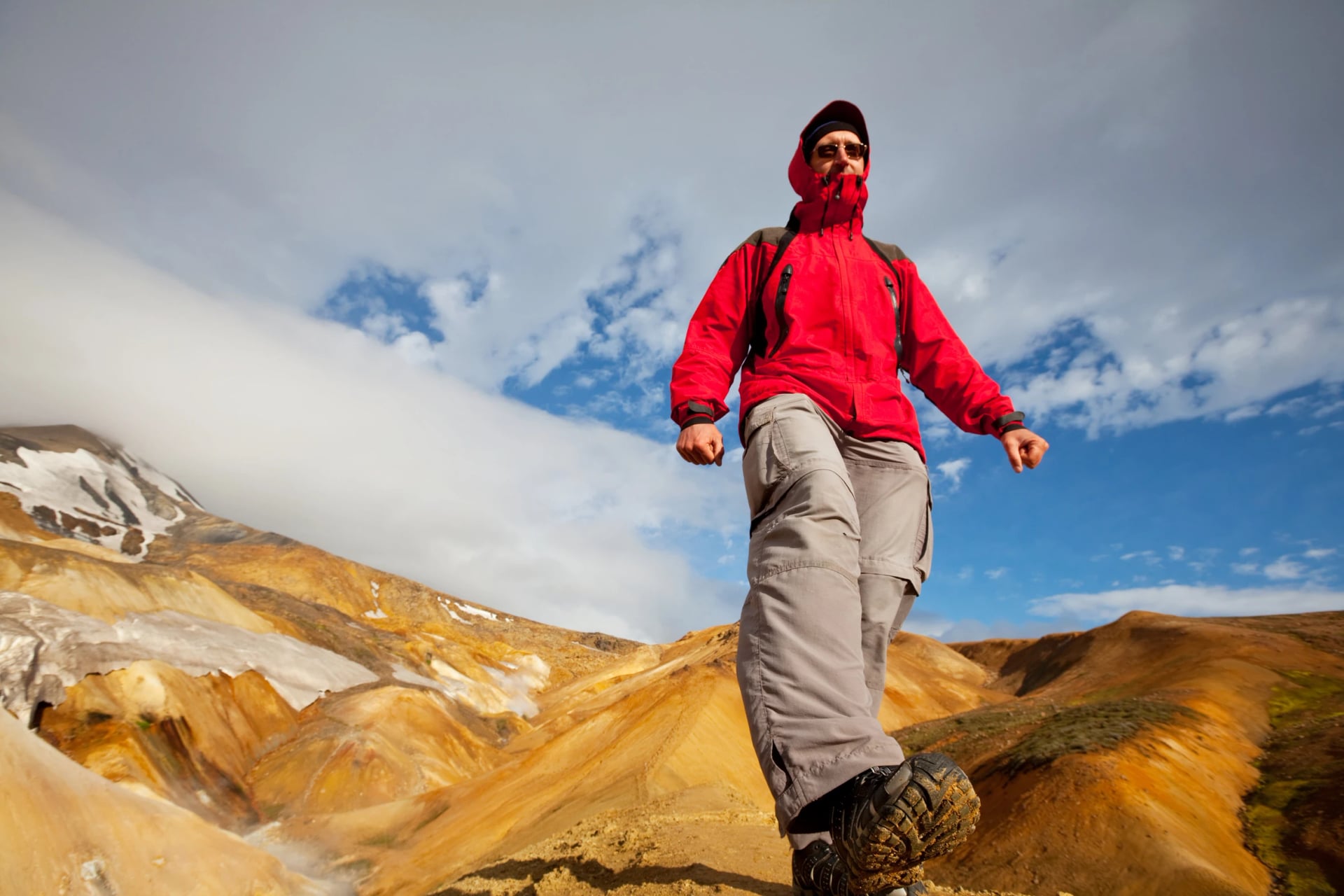
The highland and lowland meadows are at peak bloom from late June through mid-July. Lupins are at full purple in the south and west. Arctic thyme (blóðberg), mountain avens (holtasóley — Iceland's national flower), and moss campion color the highland flanks. By the time you reach Þórsmörk on the Laugavegur, the birch valleys are deeply green, and the shoulders above Emstrur are at their most vivid.
Puffins on the cliffs
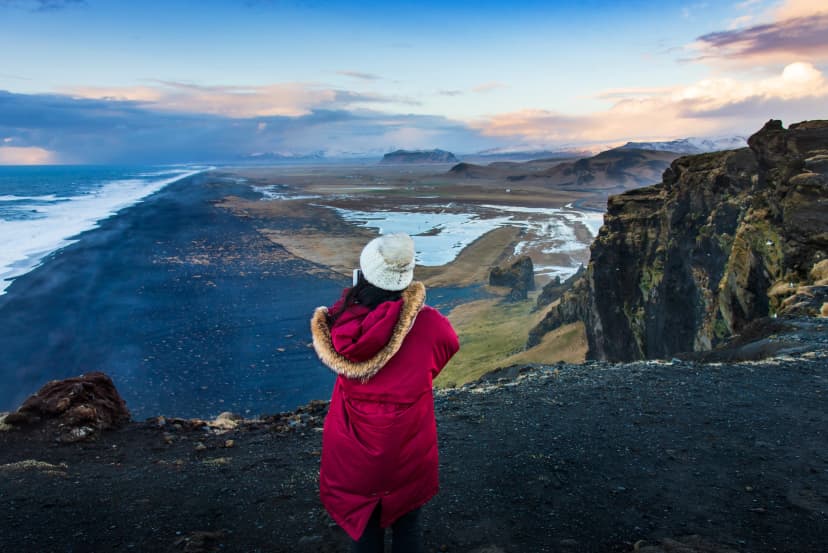
Atlantic puffins are in residence on the major Icelandic cliffs through July. The colonies at Látrabjarg in the West Fjords, Vestmannaeyjar off the south coast, Borgarfjörður Eystri in the East Fjords, and Dyrhólaey on the south coast are all active. They begin leaving from mid-August, so July is the most reliable window if puffin viewing is part of the trip.
Whales at peak in the bays
July is the strongest month for whale watching from Húsavík in the north — humpbacks, minkes, and white-beaked dolphins are reliably present in Skjálfandi Bay, with sightings rates among the highest in the world for the period. From Reykjavík, the corresponding tour operators in Faxaflói Bay see similar peaks.
If wildlife is a priority alongside hiking, July is one of the months when the swell in nature lines up with good trail conditions.
Booking a July Trip
For July, the most important practical advice is: book early. It is the most-booked hiking month in Iceland, and last-minute availability is rare. If July is your chosen month for hiking in Iceland, the time to commit is roughly 9 months before the trip.
Questions about timing or which route fits your dates? Send an inquiry or book a short free call — we'll help you find the right tour for your dates and abilities.

About this author
Jon is our travel advisor and an outdoor adventurer who is happiest on the move. While mountain biking is his personal passion, he thrives on crafting hiking adventures for others — planning routes and adding the little touches that turn a trip into a core memory.
.jpeg&w=828&q=75)