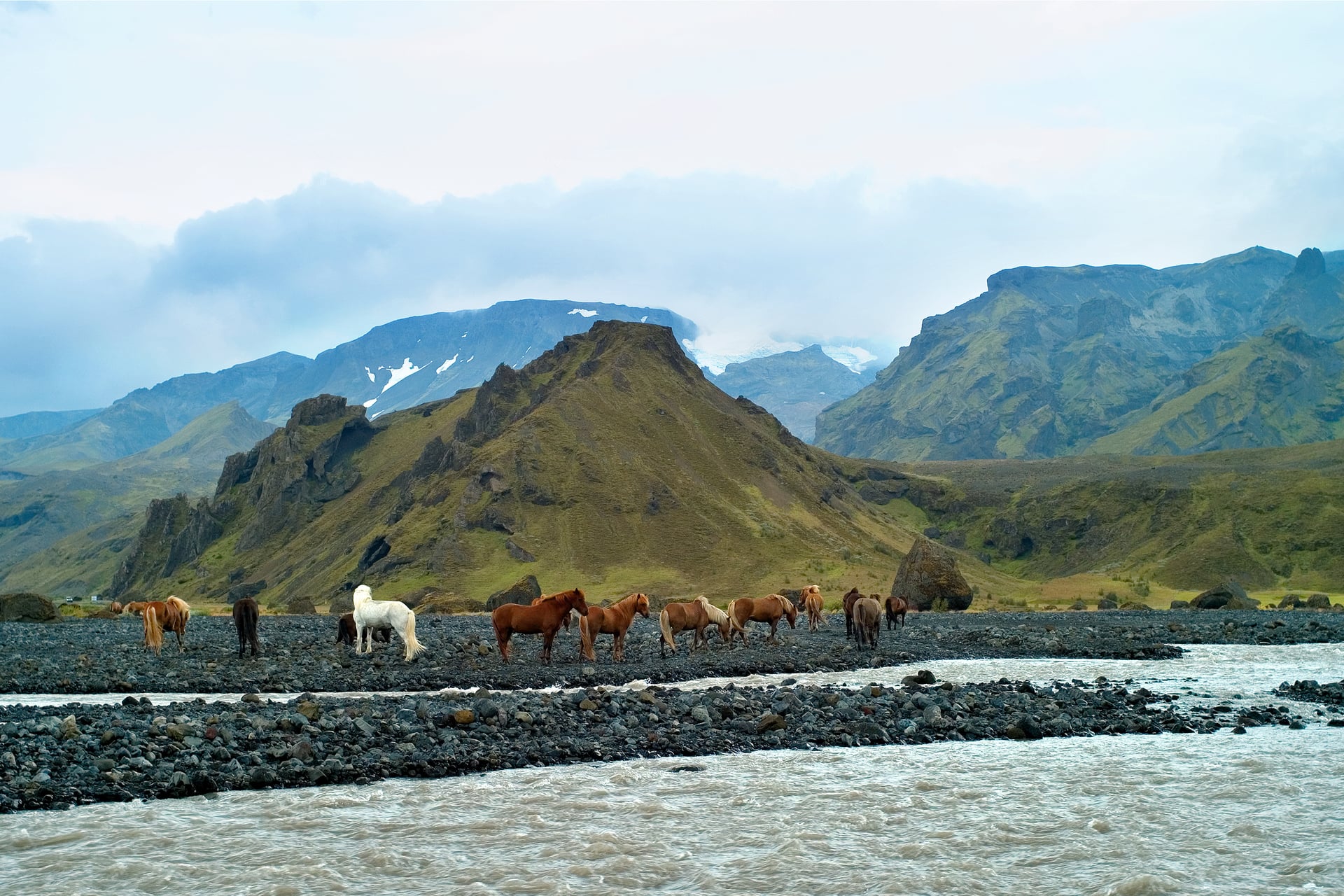
Hiking in Thorsmork: Where Iceland's Greatest Trails Meet
A complete guide to hiking in and around Thorsmork — best trails, what to expect, and how to plan your visit to one of Iceland's most breathtaking valleys.
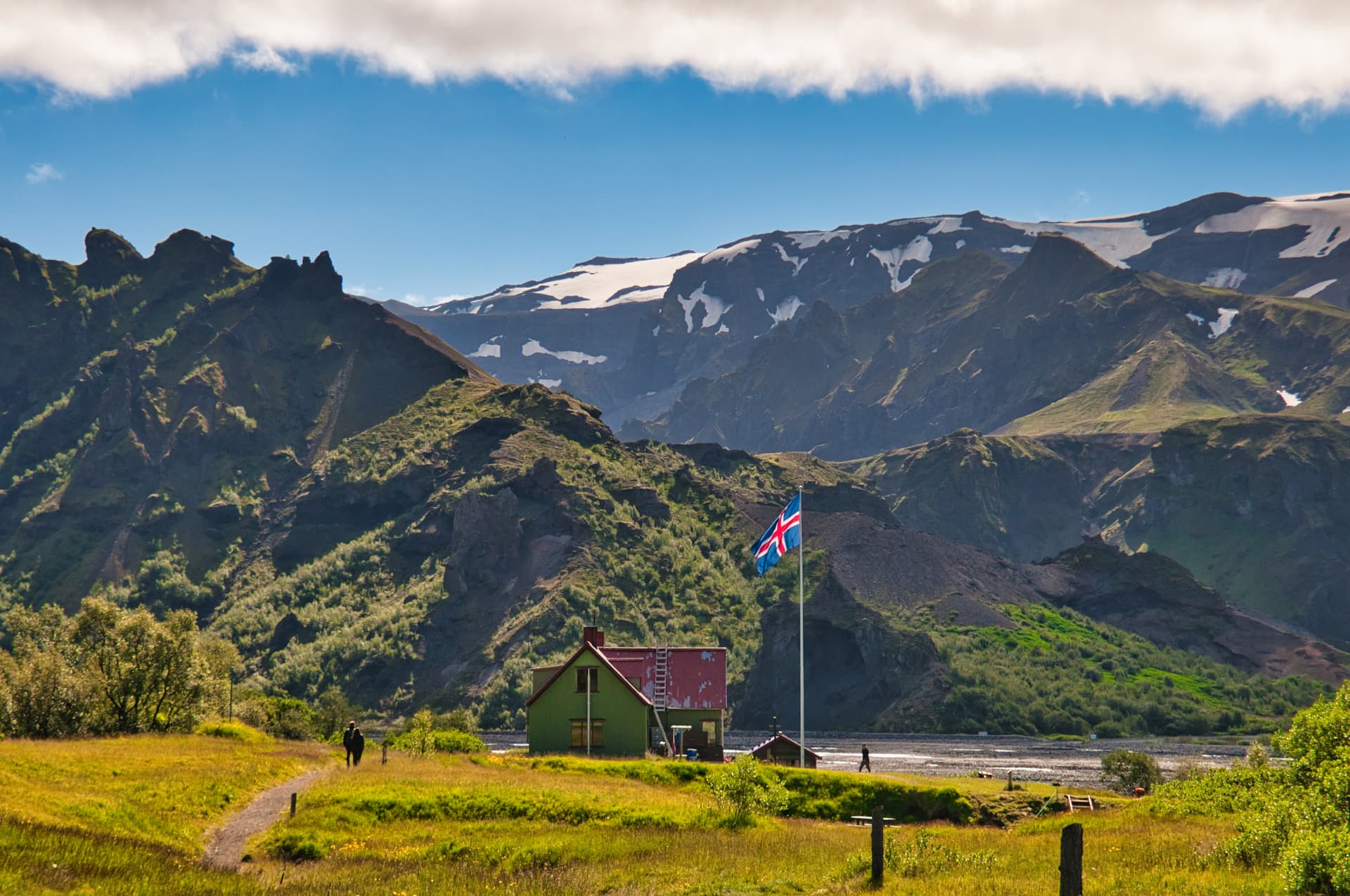
Deep in Iceland's Southern Highlands, tucked between three glaciers and cut off from the outside world by unbridgeable rivers, lies Thorsmork.
Named after the Norse god of thunder, its protected nature reserve combines dramatic glacier views, ancient birch forests, volcanic canyon trails and direct access to two of Iceland's greatest long-distance routes: the Laugavegur and the Fimmvörðuháls.
The full name — Thorsmork — resists clean translation and clean geography both: mörk in Old Norse means woodland or borderland, not valley, and even Icelandic maps don't fully agree on where Þórsmörk begins and ends. Strictly, it's the ridge between the Krossá and Þröngá rivers; the wider valley south of Krossá is properly Goðaland; the dwarf-birch flats further in have their own local names again.
In practice, hut wardens, FÍ guidebooks, tour operators, and hikers use Þórsmörk for the whole basecamp area — ridge, valley floor, woodland, and the glacier-cut river plain.
Call it a valley, a ridge, or a region; it is one of the most extraordinary hiking destinations in Europe.
About Thorsmork
Location | Southern Highlands, ~150 km from Reykjavík |
Season | Late June – mid-September |
Access | Specially modified bus |
Difficulty | Easy to challenging depending on trail |
Connecting routes | Laugavegur Trail (north) · Fimmvörðuháls (to Skógar) |
Thorsmork carries the name of Thor, god of thunder and storms — and the landscape earns that mythological mantle. Glacial rivers braid across the valley floor, ice-carved canyons split the hillsides, and the surrounding peaks catch harsh incoming weather systems. It is stunning and diverse enough to charm any hiking enthusiast.
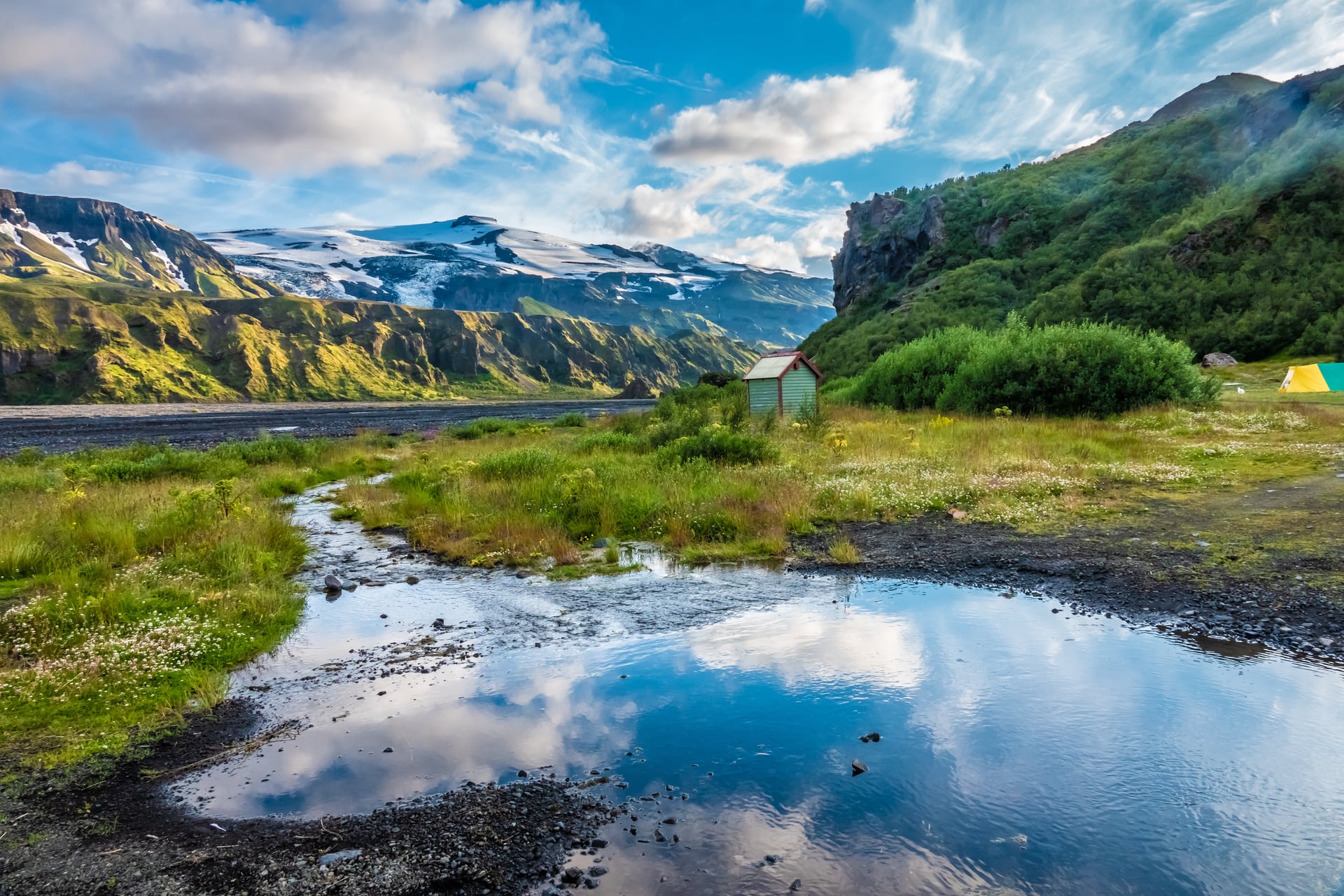
The valley sits in a rare position, nestled between three glaciers:
To the south rises Eyjafjallajökull — the ice-cap of a volcano whose 2010 eruption grounded flights across Europe.
To the east, the Krossarjökull tongue of Mýrdalsjökull glacier fills the horizon.
To the north, Tindfjallajökull glacier closes the valley, barring harsh winds and adding to the shelter for the basin.
Together, these glaciers create a microclimate unlike anywhere else in the Icelandic highlands — warmer temperatures, less wind, and enough moisture to sustain extensive birch woodland.
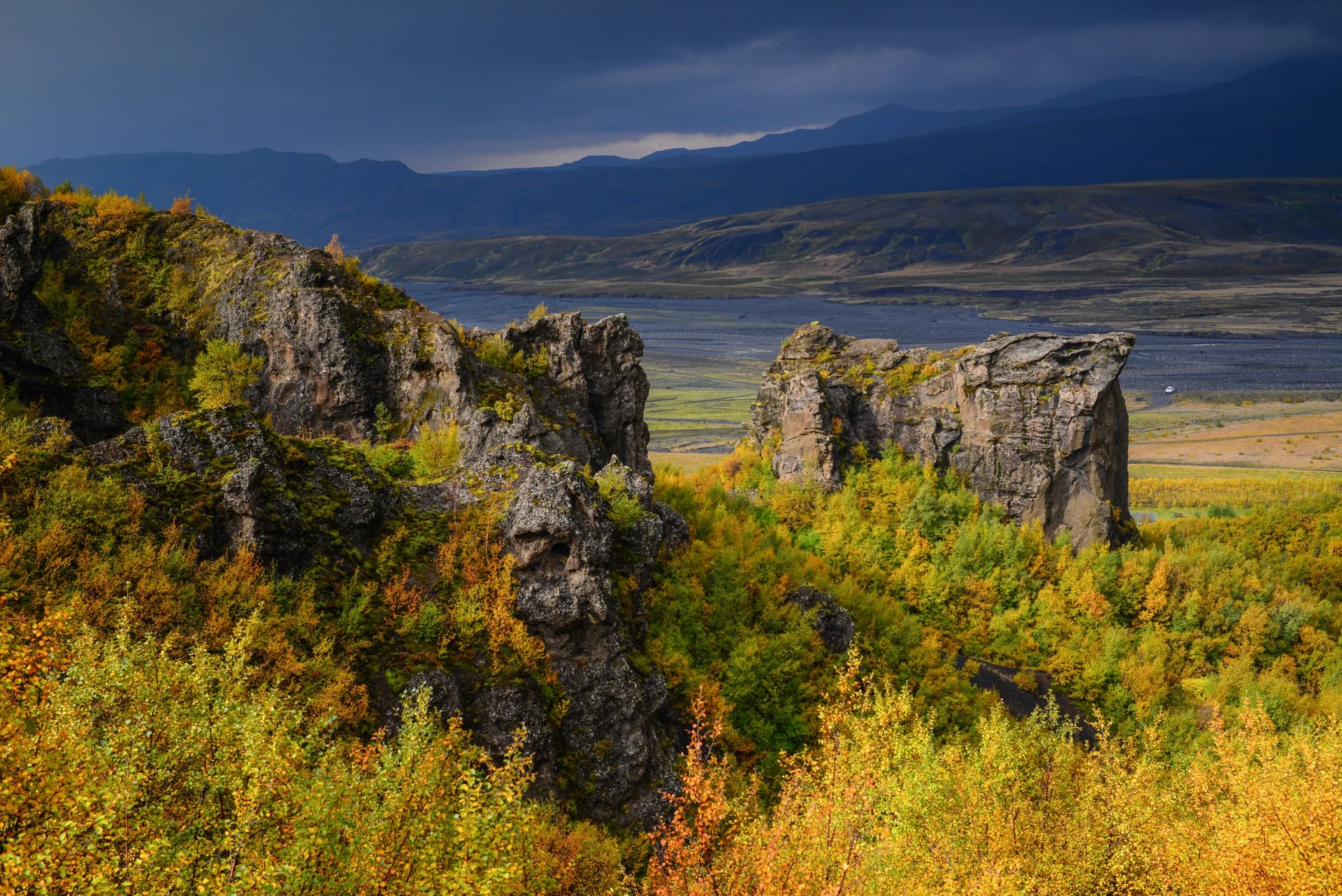
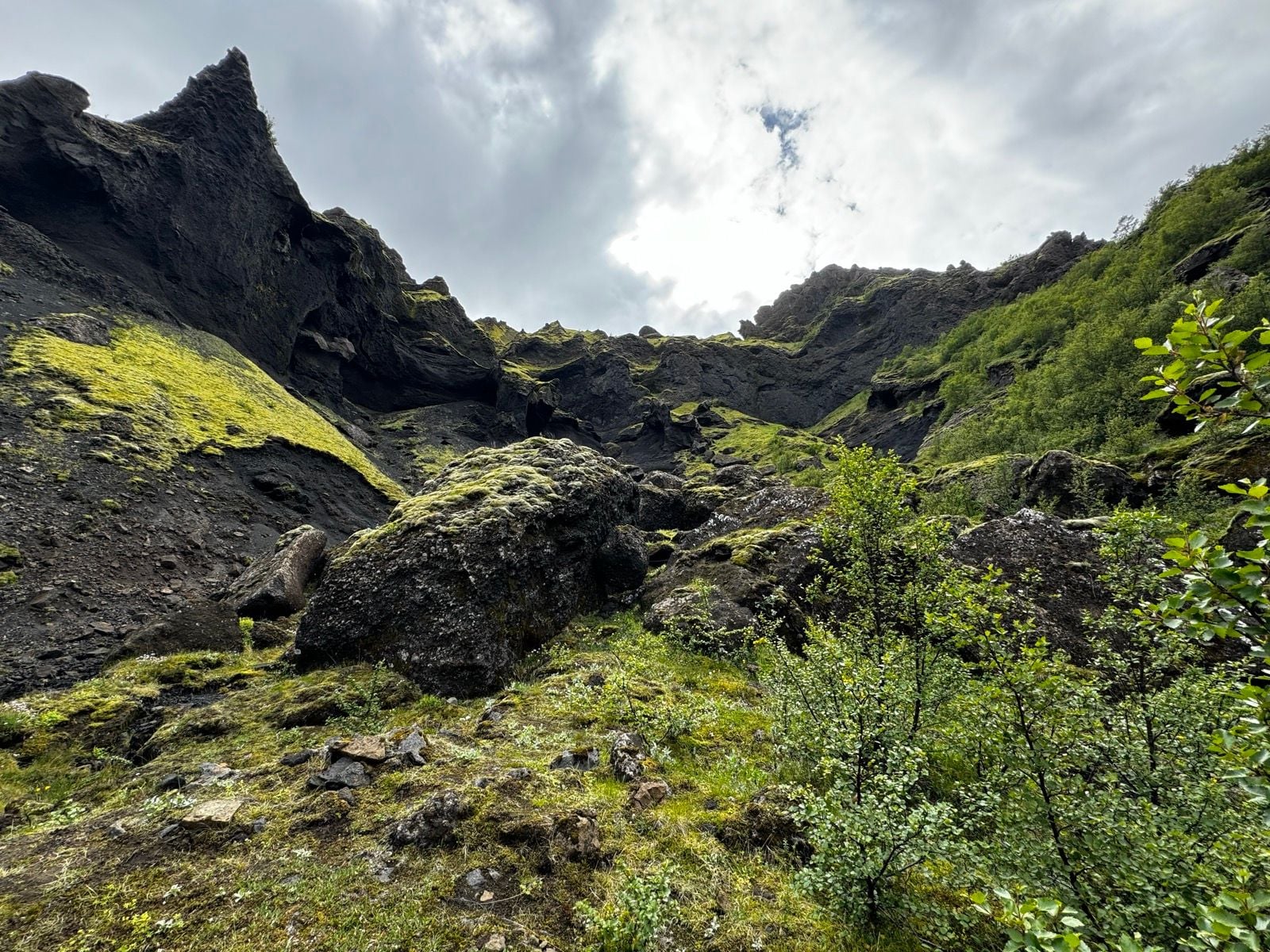
That forest matters more than it looks. When Norse settlers arrived in the 9th century, much of Iceland was covered in birch. Centuries of timber-cutting, charcoal-burning, and intensive sheep grazing stripped it away — and on Iceland's thin volcanic soils, it never grew back. Þórsmörk is one of the rare places where it survives, protected from grazing since the early 20th century. Walk through it and you're walking through one of the closest things Iceland has to its original landscape.
Þórsmörk valley also provides a habitat for a greater variety of birds than the rest of Iceland's Highlands, owing to its richer vegetation.
The Best Hiking Trails
Thorsmork is a hiker's paradise. Many visitors choose it as either a base for rewarding day hikes or a natural trailhead for multi-day routes. Its proximity to Reykjavík also makes it more accessible than most highland destinations, with good connections to established trails in every direction.
Getting There
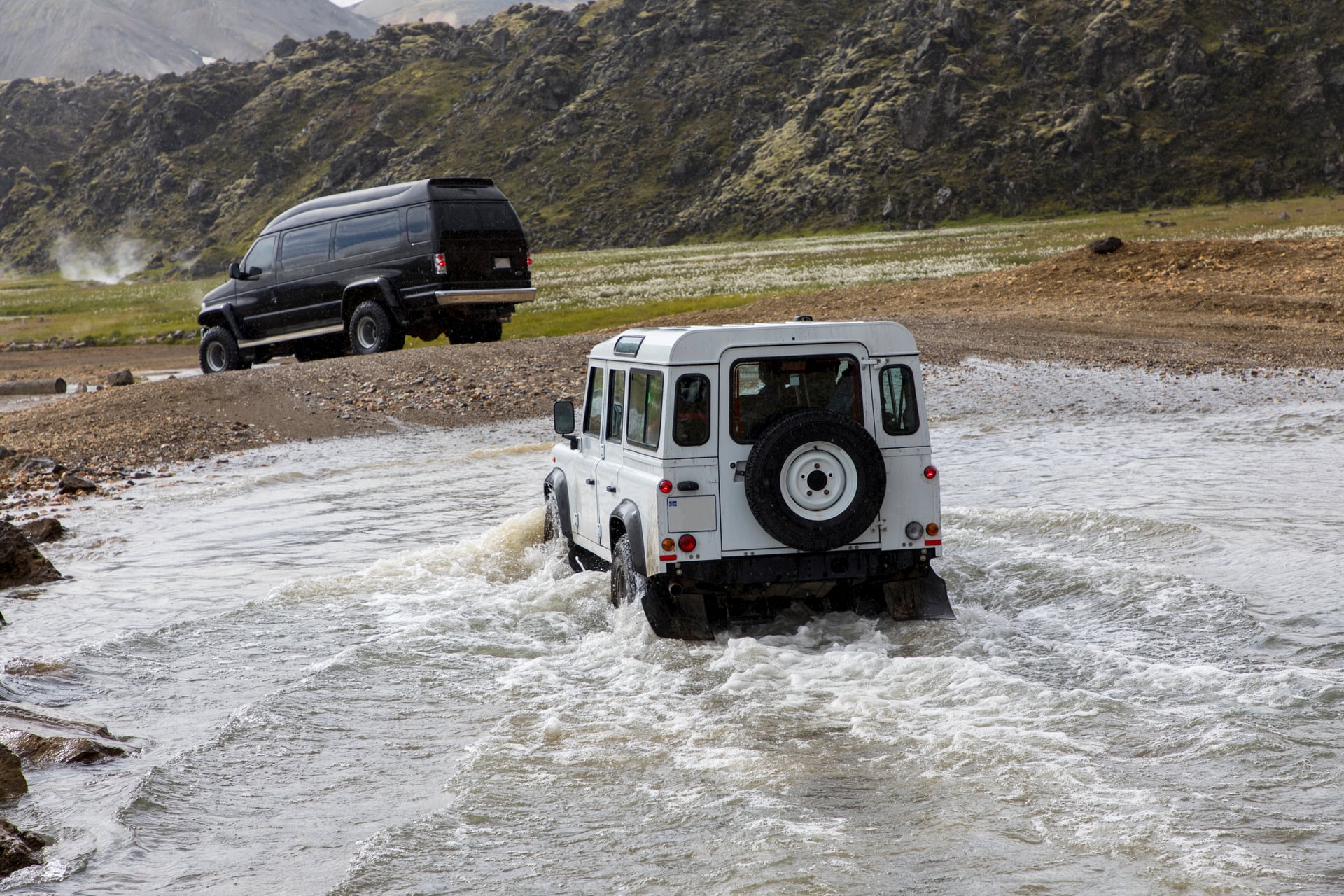
In short, you cannot drive to Thorsmork in a standard vehicle. The road to Thorsmork (F249 — Þórsmerkurvegur) is an F-road — a designated mountain road, legally restricted to 4×4 vehicles and only open from late June to early September.
However, most car rental companies prohibit driving their vehicles on F249 altogether, voiding all insurance for it. The main challenge on this road lies in several unbridged glacial river crossings, including the notorious Krossá River that is effectively closing Thorsmork to all but experienced drivers with specialised super jeeps and highland buses.
The most practical answer for reaching Thorsmork by road is a scheduled bus, run by private operators. You can catch scheduled services from Reykjavík throughout the summer season (typically June through mid-September) with stops along the south coast, dropping off at the main hut areas — Húsadalur, Langidalur, and Básar. Journey time is approximately 3–4 hours depending on road conditions.
It is also possible to make your way to the parking area on the near side of the Krossá with an F-road-approved 4×4, and board the scheduled bus only for the final stretch of the road.
Beware that the buses fill quickly in July and August, and missing your scheduled departure can leave you stranded without accommodation. If you are walking the Laugavegur Trail and arriving on foot, coordinate your departure bus at the time of booking.
When to Hike in Thorsmork Valley
The hiking season in Thorsmork runs from late June to mid-September, timed to the bus schedule and hut opening dates. Outside these months, access is effectively impossible without specialist equipment, and the huts are closed.
Best month overall: August
It still carries some snow at higher elevations, and river levels tend to be higher due to snowmelt. The Laugavegur trail officially opens in late June, but the first week or two can be challenging underfoot.
Read more in our guide to Iceland's trails in June.
The warmest month and offers the best conditions for the high-level routes like Tindfjöll and Fimmvörðuháls. Daylight is continuous — the midnight sun means no hard cutoff on hiking hours, which is genuinely useful on the longer routes. Trails and huts are at their busiest.
For more peak-season tips see our July hiking guide.
Offers a good balance of settled conditions and slightly fewer crowds than July. Days are still long, and the highland weather tends to be more stable than earlier in summer. River levels ease as snowmelt subsides.
Read more on hiking Icelandic trails in August.
Brings autumn color to the birch forests and noticeably fewer people on the trails. Morning temperatures drop sharply, and the chance of early snow at altitude increases. The final bus runs typically operate around 10–15 September, so confirm dates with the bus operators before booking late-season travel.
See our full guide on September hiking in Iceland.
Keep in mind: river crossings on the access road and across some trail routes are affected by rainfall and snowmelt. A single heavy rain event can raise river levels significantly within hours. Check conditions with your hut or bus operator on the day of travel.
For more detail, see our full guide to the best time to hike in Iceland.
Planning Your Visit
Where to Stay
Thorsmork has three separate hut complexes, each with a different character and location within the valley. They are not interchangeable — each sits at the base of different trails and is run by a different organisation.
Básar (west end of the valley) is operated by Ferðafélag Íslands (FÍ) and sits closest to the Fimmvörðuháls trailhead. It is the most basic of the three camps and tends to attract serious trekkers coming off or heading onto the long routes. Facilities include sleeping bag accommodation, kitchen and shower.
Langidalur (central valley) is also operated by FÍ and is the most popular starting point for day hikes, including Valahnúkur. It has similar facilities to Básar and is well-positioned for exploring the main ridge trails.
Húsadalur (east, also known as Volcano Huts or Midgard Base Camp) is the most comfortable option, with private rooms, a restaurant and guided activities available on-site. It sits closest to the canyon trail network and is the arrival point for the Reykjavík Excursions super jeep bus.
All three camps require booking in advance, especially in peak season. Booking opens in early spring and popular dates — particularly July weekends — sell out fast.
What to Pack
Conditions in Thorsmork can change fast, so it is best to stay prepared for cold weather at all times. Even in July, the temperature on exposed ridgelines above the valley can drop significantly within an hour.
Here are the essentials:
Waterproof shell jacket and pants
Insulating mid-layer (fleece or light down)
Warm base layers
Waterproof hiking boots (broken in)
Trekking poles
Hat and gloves
Headlamp
Water bottle (2L capacity)
Map or GPS device
For the Fimmvörðuháls route, add microspikes if you are travelling in June or September when snow patches linger on the pass. You can see the extensive packing list in our packing guide for hiking in Iceland.
Safety Considerations
Thorsmork is a well-established hiking destination with reliable infrastructure, clearly marked trails, and a long safety record. Still, sensible preparation and respect for the conditions is required.
Iceland's mountain rescue service (Landsbjörg) asks all hikers to register their route before setting out. Use the free Safetravel registry — this is how rescuers find you if something goes wrong in the highlands.
Check the official Iceland Met Office website for highland forecasts; standard lowland forecasts do not reflect conditions at elevation. Hike on marked trails, stay updated on weather changes, carry a basic first-aid kit, and have a way to call for help.
If you are travelling with us, we maintain regular contact throughout your hike and provide daily conditions updates so you always have current information and a direct point of contact.
Local emergency number: 112.
Recommended Fitness Level
Be realistic about your fitness level — the trails here are not casual walks. Terrain is uneven, elevation gains are significant, and distances can be deceptive on Iceland's volcanic rock.
A reasonable baseline is 3–4 hours of regular hiking per week in the months before your trip. If you can comfortably hike 3+ hours with a backpack and handle uneven mountain terrain, you will manage the routes here without difficulty.
Booking a Tour
For those planning a trek into Þórsmörk, managing the logistics can be complex — hut beds fill months in advance, highland buses run on tight summer-only schedules, and river crossings demand careful timing.
Pre-organized tours handle accommodations, luggage transfers, and essential trail information, making your adventure enjoyable and hassle-free, allowing you to fully focus on exploring the landscape.
Hike our Þórsmörk Glacier Valley Itinerary
We offer a fully planned self-guided package — hut bookings, highland bus transfers, route notes, and maps all sorted. You walk at your own pace; we handle everything around it.
Have more questions? Get in touch with our agent. We will help you decide if our route matches your experience, talk you through what to expect on the trail, and handle every booking.


HASSLE FREE
We handle itineraries, accommodations, and anything else you prefer not to deal with, so you can enjoy a carefree hike.

BOOK WITH CONFIDENCE
We are a financially protected company, fully bonded and insured, keeping your money safe and allowing you to travel with confidence.

TRIED & TESTED ADVENTURES
Only the best hut to hut hikes in the USA, cherry-picked by our local team with an in-depth knowledge of the region.

UNBEATABLE SUPPORT
Our 24/7 customer support is where we show our passion, bringing you a better experience by making your well-being our number one priority.